
Apr . 01, 2024 17:55 Back to list
en854 1te Hydraulic Hose Performance Analysis
Introduction
EN854 1TE designates a hydraulic hose conforming to the European standard EN 854, specifically categorized as a textile reinforced hose with a single steel wire spiral reinforcement. This hose type is critically positioned within the fluid power transmission industry, serving as a vital component in hydraulic systems across diverse sectors including construction machinery, agricultural equipment, material handling, and industrial manufacturing. Its primary function is the safe and reliable conveyance of hydraulic fluid under pressure, facilitating the operation of hydraulic actuators and motors. Core performance characteristics of EN854 1TE hoses center on their pressure rating (typically up to 350 bar), temperature range (-40°C to +100°C), and resistance to hydraulic fluids commonly employed in industrial applications. A key pain point in the industry is premature hose failure due to improper specification, exceeding pressure limits, or exposure to incompatible fluids, leading to costly downtime and potential safety hazards. Understanding the intricacies of material composition, manufacturing processes, and failure modes is crucial for effective hose selection and maintenance.
Material Science & Manufacturing
EN854 1TE hoses are typically constructed from multiple layers, each serving a distinct function. The inner tube, in contact with the hydraulic fluid, is commonly made from synthetic rubbers like nitrile (NBR), offering excellent resistance to petroleum-based hydraulic oils. Alternative inner tube materials include chloroprene (CR) for improved heat and ozone resistance, or fluoropolymers (FKM) for compatibility with aggressive fluids. The reinforcement layer consists of a single high-tensile steel wire spiral, providing the hose's primary pressure resistance. Surrounding the steel wire is a textile reinforcement layer, typically braided from high-strength synthetic fibers like polyester or aramid. This layer enhances burst pressure and prevents kinking. The outer cover is often composed of synthetic rubber, such as CR or SBR, providing abrasion and weather resistance.
Manufacturing involves several key stages. The inner tube is extruded through a die to achieve the desired bore diameter and wall thickness. The steel wire spiral is then applied, typically using a helical winding process. The textile reinforcement is braided over the steel wire, carefully controlling braid angle and tension to optimize performance. Finally, the outer cover is extruded, bonding to the underlying layers. Critical process parameters include extrusion temperature, cooling rate, braid tension, and vulcanization time and temperature. Vulcanization, a chemical process involving cross-linking of the rubber polymers, is essential for achieving the desired mechanical properties and fluid resistance. Quality control at each stage is paramount, including dimensional checks, pressure testing, and material analysis to ensure compliance with EN 854 specifications.
Performance & Engineering
The performance of EN854 1TE hoses is governed by several engineering principles. The steel wire spiral bears the majority of the hoop stress induced by internal pressure. The textile braid provides additional resistance to burst pressure and prevents axial shortening under pressure. Force analysis dictates that the tensile strength of both the steel wire and textile braid must exceed the maximum anticipated operating pressure, with a substantial safety factor. Environmental resistance is critical. Prolonged exposure to high temperatures accelerates rubber degradation, reducing flexibility and increasing the risk of cracking. Exposure to ozone and UV radiation can also cause surface cracking and embrittlement. Compatibility with the hydraulic fluid is paramount; incompatible fluids can cause swelling, softening, or degradation of the inner tube, leading to leaks and failure. Compliance with EN 854 mandates specific performance tests, including pressure testing to three times the working pressure, impulse testing to simulate pressure pulsations, and temperature cycling to assess thermal stability. The minimum bend radius is a critical engineering parameter; exceeding the specified bend radius can induce localized stress concentrations, leading to premature fatigue failure.
Technical Specifications
| Parameter | Unit | Typical Value (EN854 1TE) | Testing Standard |
|---|---|---|---|
| Working Pressure | bar | 250 | EN 854 |
| Burst Pressure | bar | 750 | EN 854 |
| Temperature Range | °C | -40 to +100 | EN 854 |
| Inner Tube Material | - | Nitrile Rubber (NBR) | ASTM D2000 |
| Reinforcement | - | Single Steel Wire Spiral | EN 854 |
| Outer Cover Material | - | Chloroprene Rubber (CR) | ASTM D2000 |
| Minimum Bend Radius | mm | 4D (D = Inner Diameter) | EN 854 |
Failure Mode & Maintenance
Common failure modes for EN854 1TE hoses include fatigue cracking at the connection points, especially during repeated flexing; burst failure due to exceeding the working pressure or damage to the reinforcement layers; pinhole leaks in the inner tube caused by abrasion from internal fluid particles or chemical attack; and cover degradation due to exposure to ozone, UV radiation, or abrasion. Fatigue cracking is often initiated by localized stress concentrations at the crimp sleeve or fitting interface. Burst failure typically occurs when the steel wire spiral breaks or the textile braid yields. Pinhole leaks can be difficult to detect but can lead to significant fluid loss.
Preventative maintenance is crucial. Regular visual inspections should be conducted to identify signs of wear, cracking, or swelling. Hoses should be protected from abrasion and exposure to extreme temperatures and chemicals. Proper routing and support are essential to minimize stress. Connections should be regularly checked for tightness. When replacing a hose, it is vital to use compatible fittings and ensure proper crimping. Hose assemblies should be pressure tested after installation and periodically thereafter. If a hose shows any signs of damage, it should be immediately removed from service and replaced. Consider implementing a hose management program to track hose usage, inspection dates, and replacement schedules.
Industry FAQ
Q: What is the impact of using an incompatible hydraulic fluid with an EN854 1TE hose?
A: Using an incompatible hydraulic fluid can lead to severe consequences. The fluid may cause the inner tube material to swell, soften, or degrade, resulting in leaks, reduced pressure capacity, and premature hose failure. Certain fluids can also attack the steel wire reinforcement, compromising its integrity. Always consult the hose manufacturer's compatibility chart to ensure the fluid is suitable for the hose's inner tube material.
Q: How does temperature affect the lifespan of an EN854 1TE hose?
A: Both high and low temperatures can significantly impact hose lifespan. High temperatures accelerate the degradation of the rubber compounds, leading to loss of flexibility, cracking, and reduced pressure capacity. Low temperatures can make the hose brittle and more susceptible to damage upon flexing. Operating the hose within the specified temperature range (-40°C to +100°C) is critical.
Q: What is the significance of the '1TE' designation in EN854 1TE?
A: The '1TE' designation specifies the hose construction. '1' indicates a single steel wire spiral reinforcement, and 'TE' designates a textile reinforcement layer between the steel wire and the outer cover. This construction provides a balance of pressure resistance, flexibility, and kink resistance.
Q: What are the key considerations when selecting fittings for an EN854 1TE hose?
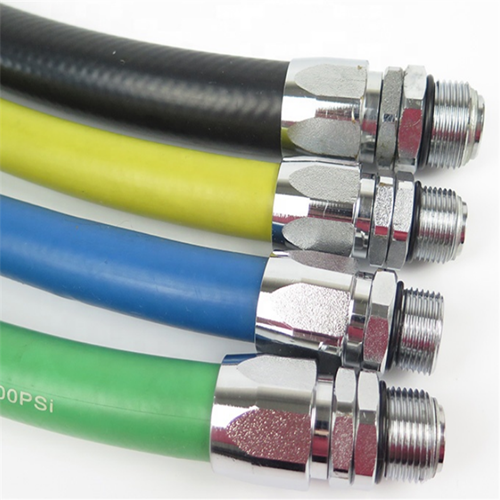
A: Fittings must be specifically designed for EN854 1TE hoses and must be properly crimped to ensure a leak-proof and secure connection. The fitting material must be compatible with both the hose and the hydraulic fluid. Incorrectly crimped fittings can lead to premature failure at the connection point. Using fittings from a reputable manufacturer is highly recommended.
Q: How often should EN854 1TE hoses be inspected for wear and tear?
A: The inspection frequency depends on the operating environment and the hose's usage. As a general guideline, hoses should be visually inspected at least monthly, or more frequently in demanding applications. Regular inspections should include checks for cracks, abrasion, swelling, leaks, and proper fitting connections. Detailed records of inspections and replacements should be maintained.
Conclusion
EN854 1TE hydraulic hoses represent a critical component in numerous industrial applications, demanding a thorough understanding of their material properties, manufacturing processes, and performance characteristics. Effective hose management hinges on proper specification based on application requirements, meticulous installation with compatible fittings, and diligent preventative maintenance to mitigate potential failure modes. Ignoring these factors can lead to costly downtime, safety hazards, and compromised system performance.
Future advancements in hydraulic hose technology are likely to focus on developing more durable and chemically resistant materials, as well as incorporating sensor technologies for real-time monitoring of hose condition and performance. Implementing predictive maintenance strategies based on sensor data can further enhance reliability and reduce lifecycle costs. Continuous adherence to industry standards, like EN 854, and ongoing research into material science will be essential for ensuring the continued safe and efficient operation of hydraulic systems.