
Apr . 01, 2024 17:55 Back to list
en 853 2sn hydraulic hose Performance Analysis
Introduction
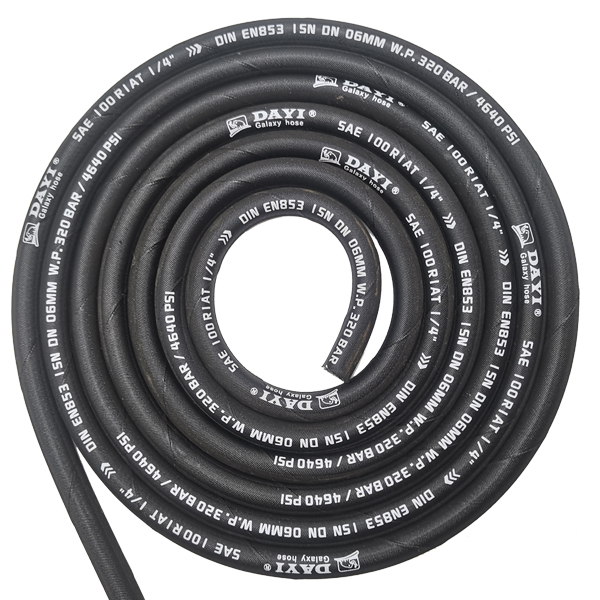
EN 853 2SN hydraulic hose is a critical component in hydraulic systems across numerous industries, including construction, agriculture, mining, and manufacturing. It conforms to the European standard EN 853, specifically denoting a two-layer steel wire reinforcement (2SN) construction. This hose is designed for the conveyance of hydraulic fluid under high pressure, offering a robust and reliable solution for demanding applications. Its technical position within the industrial chain lies between the hydraulic fluid power unit (pump, valves, reservoir) and the hydraulic actuators (cylinders, motors). Core performance characteristics include pressure resistance, flexibility, temperature resilience, and resistance to hydraulic fluid degradation. Understanding these properties is crucial for selecting the appropriate hose for a given application and ensuring the long-term integrity and safety of the hydraulic system. A key industry pain point is the premature failure of hoses due to improper specification, installation, or maintenance, leading to costly downtime and potential safety hazards.
Material Science & Manufacturing
The EN 853 2SN hose construction comprises several key materials. The inner tube is typically composed of a synthetic rubber compound, most commonly nitrile rubber (NBR) due to its excellent resistance to hydraulic fluids, particularly petroleum-based oils. NBR exhibits good tensile strength (typically 15-25 MPa) and elongation at break (200-400%). The reinforcement layers consist of two braids of high-tensile steel wire, adhering to stringent standards regarding wire diameter, tensile strength (minimum 1770 MPa), and coating for corrosion protection. The outer cover is generally made of a synthetic rubber such as chloroprene rubber (CR), known for its resistance to abrasion, ozone, weathering, and oil. CR provides a protective barrier against environmental factors and mechanical damage.
Manufacturing involves several distinct processes. The inner tube is extruded through a die to achieve the desired internal diameter and wall thickness. The steel wire braids are then applied helically over the inner tube, ensuring complete coverage and proper adhesion. This is a critical step, as inadequate bonding can lead to separation and hose failure. Following reinforcement, the outer cover is extruded over the braided structure. Key parameters controlled during manufacturing include extrusion temperature, curing time and temperature (typically 150-180°C for 15-30 minutes), braid tension, and dimensional accuracy. Post-production, rigorous testing is conducted to verify compliance with EN 853 requirements, including pressure testing, impulse testing, and dimensional inspection. The quality of the steel wire, the rubber compound formulations, and precise control of the manufacturing parameters significantly impact the hose's performance and longevity. Any deviation can compromise its integrity and lead to catastrophic failures.
Performance & Engineering
The performance of EN 853 2SN hose is dictated by several engineering considerations. Burst pressure is a primary design parameter, determined by the steel wire reinforcement and rubber compound strength. Hoses are typically rated for working pressures ranging from 20 MPa to 35 MPa, with burst pressures exceeding four times the working pressure. Flexibility is another crucial factor, impacting the hose's ability to navigate tight bends and maintain flow efficiency. The bend radius is specified by the manufacturer and must be adhered to during installation to prevent kinking and stress concentration. Impulse testing, simulating pressure pulsations within the hydraulic system, assesses the hose's resistance to fatigue failure. Temperature range is also critical; NBR and CR compounds have limitations regarding operating temperature. Extended exposure to high temperatures can accelerate degradation, while low temperatures can reduce flexibility and increase the risk of cracking. Hydraulic fluid compatibility must also be considered. NBR is compatible with most petroleum-based fluids, but compatibility with phosphate ester fluids or water-glycol fluids requires specialized rubber compounds.
Force analysis involves evaluating the tensile, compressive, and shear stresses within the hose structure under operating conditions. Finite element analysis (FEA) is often employed to model stress distribution and identify potential failure points. Compliance requirements dictate adherence to EN 853 standards, which specify testing procedures, performance criteria, and marking requirements. Proper installation is paramount to achieving optimal performance and preventing failures. This includes using appropriate fittings, avoiding sharp bends, protecting the hose from abrasion and direct sunlight, and regularly inspecting for signs of damage.
Technical Specifications
| Parameter | Unit | Specification (Typical) | Test Standard |
|---|---|---|---|
| Working Pressure | MPa | 25 | EN 853 |
| Burst Pressure | MPa | 100 | EN 853 |
| Inner Tube Material | - | Nitrile Rubber (NBR) | ASTM D2000 |
| Reinforcement | Layers | 2 Steel Wire Braid | EN 853 |
| Outer Cover Material | - | Chloroprene Rubber (CR) | ASTM D2000 |
| Temperature Range | °C | -40 to +100 | EN 853 |
Failure Mode & Maintenance
EN 853 2SN hydraulic hoses are subject to several potential failure modes. Fatigue cracking, initiated by repeated pressure pulsations and flexing, is a common cause of failure, particularly near fittings. Delamination, the separation of reinforcement layers from the inner tube or outer cover, can occur due to poor adhesion during manufacturing or exposure to harsh chemicals. Degradation of the rubber compounds due to exposure to ozone, UV radiation, or incompatible hydraulic fluids can lead to hardening, cracking, and loss of flexibility. Oxidation of the steel wire reinforcement can reduce its tensile strength and increase the risk of breakage. Pinholes or punctures in the inner tube can result in fluid leakage and system failure. Fittings are also a common point of failure, due to corrosion, improper tightening, or material incompatibility.
Preventative maintenance is crucial for extending hose life and preventing failures. Regular visual inspections should be conducted to identify signs of cracking, abrasion, swelling, or leakage. Hose assemblies should be properly supported to prevent excessive bending and stress concentration. Hydraulic fluid should be regularly analyzed for contamination and replaced as needed. Fittings should be inspected for corrosion and properly tightened. Damaged hoses should be replaced immediately. When replacing hoses, ensure the correct specifications are used, including pressure rating, temperature range, and fluid compatibility. Proper hose routing and protection are essential. Avoid sharp bends, direct contact with hot surfaces, and exposure to corrosive environments. A documented maintenance schedule and trained personnel are vital for maintaining the integrity of hydraulic systems and preventing costly downtime.
Industry FAQ
Q: What is the significance of the “2SN” designation in EN 853 2SN hose?
A: The “2SN” designation indicates that the hose features two layers of spiral-wound high-tensile steel wire reinforcement. This construction provides a significantly higher pressure capacity and burst strength compared to hoses with fewer reinforcement layers. The 'S' stands for steel and 'N' indicates the number of layers.
Q: How does temperature affect the performance of EN 853 2SN hose?
A: Extreme temperatures, both high and low, can significantly impact the hose's performance. High temperatures accelerate rubber degradation, reducing flexibility and potentially leading to cracking. Low temperatures can cause the rubber to become brittle and less flexible, increasing the risk of cracking during bending. The specified temperature range (-40°C to +100°C) should always be adhered to.
Q: What types of hydraulic fluids are compatible with a standard EN 853 2SN hose?
A: Standard EN 853 2SN hoses with NBR inner tubes are generally compatible with most petroleum-based hydraulic fluids. However, compatibility with phosphate ester fluids, water-glycol fluids, or other specialized fluids requires specialized rubber compounds. Always verify fluid compatibility before use.
Q: What is the correct procedure for installing EN 853 2SN hose fittings?
A: Proper fitting installation is crucial. Ensure the fittings are designed for hydraulic hose and compatible with the hose and fluid. Use a calibrated torque wrench to tighten fittings to the manufacturer's specified torque. Avoid over-tightening, which can damage the hose. Inspect fittings for corrosion and replace as needed.
Q: What are the key indicators that an EN 853 2SN hose needs to be replaced?
A: Key indicators include visible cracks, abrasion, swelling, or leakage. Any signs of delamination, kinking, or damage to the reinforcement layers also warrant immediate replacement. Regular inspection and adherence to a preventative maintenance schedule are crucial for identifying potential problems before they lead to failure.
Conclusion
The EN 853 2SN hydraulic hose represents a robust and reliable solution for high-pressure hydraulic fluid conveyance across a diverse range of industrial applications. Its construction, utilizing high-quality materials and precise manufacturing processes, ensures consistent performance and durability. However, optimal performance hinges on proper selection, installation, and maintenance. Understanding the material science, engineering principles, and potential failure modes is paramount for mitigating risks and maximizing the service life of these critical components.
Future advancements in hydraulic hose technology may focus on developing lighter-weight materials, improving resistance to extreme temperatures and corrosive fluids, and integrating smart sensors for real-time condition monitoring. The continued emphasis on standardization, quality control, and preventative maintenance will remain essential for ensuring the safety and efficiency of hydraulic systems. Implementing robust inspection protocols and investing in employee training are vital steps towards achieving long-term reliability and minimizing downtime.