
Apr . 01, 2024 17:55 Back to list
double fiber braid hydraulic hose Performance Analysis
Introduction
Double fiber braid hydraulic hose is a reinforced flexible assembly designed to transmit hydraulic fluid in a wide range of applications, spanning industrial machinery, construction equipment, agricultural implements, and automotive systems. Positioned as a critical component within hydraulic power systems, its primary function is to deliver fluid power with minimal pressure loss and maximal safety. Unlike single-braid hoses, the double braid construction significantly enhances pressure capacity, durability, and resistance to fatigue. Core performance characteristics include working pressure, burst pressure, temperature range, and fluid compatibility, all of which directly impact system reliability and operational longevity. A major industry pain point centers around hose failure leading to downtime, fluid leaks, and potential safety hazards, driving demand for hoses with superior performance and extended service life. Proper hose selection, installation, and maintenance are paramount to ensuring optimal system performance and preventing costly failures.
Material Science & Manufacturing
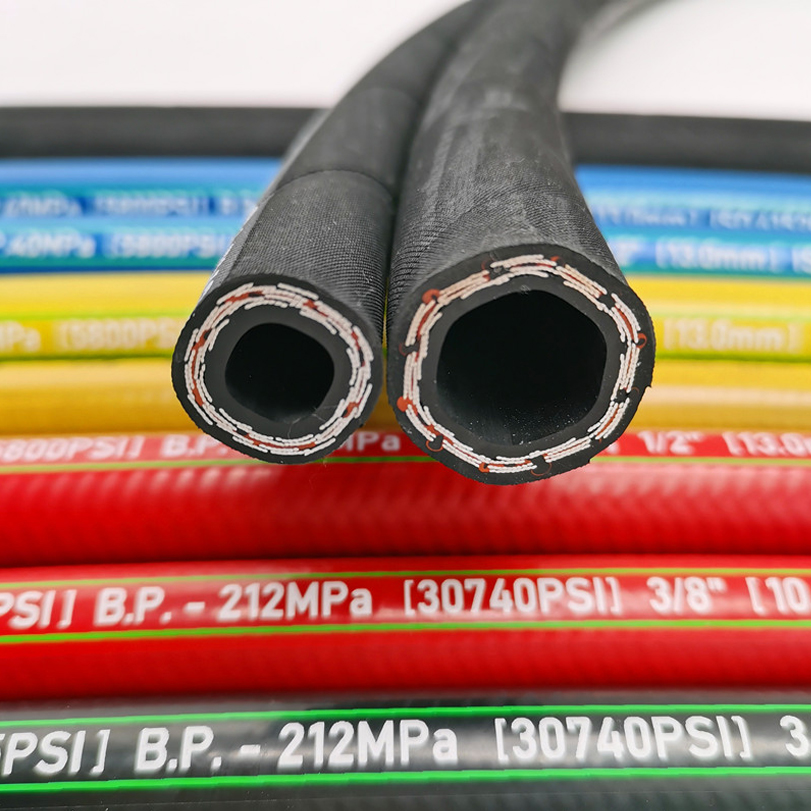
The construction of a double fiber braid hydraulic hose begins with the inner tube, typically composed of a synthetic rubber compound such as nitrile (NBR), ethylene propylene diene monomer (EPDM), or fluorocarbon (FKM), selected based on fluid compatibility requirements. NBR offers good resistance to petroleum-based oils, EPDM excels in phosphate ester fluids and high-temperature applications, and FKM provides exceptional resistance to aggressive chemicals and extreme temperatures. Reinforcement is the critical differentiator. Two layers of high-tensile strength fibers, commonly steel or aramid, are braided helically around the inner tube. The braid angle (typically 55-70 degrees) is a key manufacturing parameter influencing pressure resistance and flexibility. Steel braid offers high strength and abrasion resistance, while aramid provides a lighter weight solution with comparable pressure ratings. The outer cover is typically a synthetic rubber, often a blend of materials to provide abrasion, ozone, and UV resistance. Manufacturing processes include extrusion of the inner tube and outer cover, followed by precise braiding of the reinforcement layers. Post-braiding processes involve vulcanization, a chemical process that cross-links the rubber compounds, enhancing their strength, elasticity, and resistance to degradation. Quality control parameters include dimensional accuracy, braid coverage, tensile strength of the reinforcement, and leak testing. Chemical compatibility testing is crucial to confirm the hose’s suitability for the intended fluid application. The manufacturing process is highly sensitive to factors such as braid tension, curing temperature, and material purity, directly affecting the final product’s performance.
Performance & Engineering
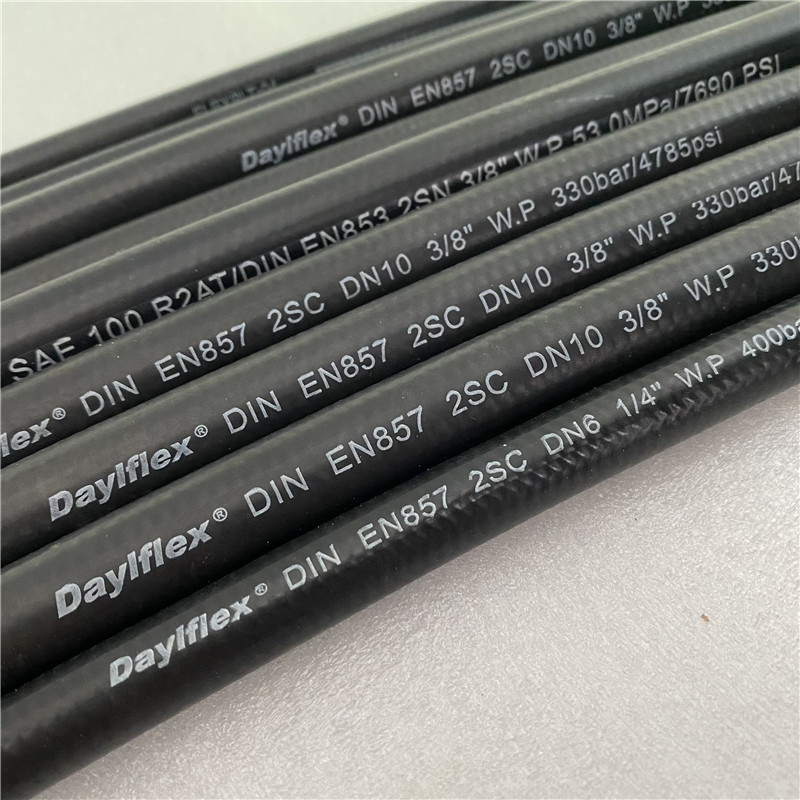
The performance of a double fiber braid hydraulic hose is governed by several key engineering principles. Burst pressure, defined as the maximum pressure the hose can withstand before failure, is directly proportional to the tensile strength of the reinforcement and the braid angle. Working pressure, typically specified as a percentage (e.g., 50%) of the burst pressure, represents the safe operating limit. Fatigue resistance is crucial in applications involving cyclical pressure fluctuations. Repeated flexing and pressurization can lead to fatigue cracking in the reinforcement layers. The hose's flexibility, quantified by its bend radius, affects its ability to navigate tight spaces and maintain flow efficiency. Environmental resistance is paramount, especially in outdoor applications. Ozone, UV radiation, and extreme temperatures can cause degradation of the rubber compounds, reducing their elasticity and strength. Force analysis during installation and operation must account for bending stresses, axial loads, and torsional forces. Compliance with industry standards such as SAE J517 and EN 856 is essential to ensure safety and reliability. Furthermore, considerations for fluid velocity and potential for erosion within the hose bore are critical to prevent premature failure. Proper end fitting selection and crimping procedures are also vital; insufficient crimping can lead to leakage, while over-crimping can damage the hose reinforcement. The selection of appropriate hose guards is necessary in environments with abrasive materials.
Technical Specifications
| Parameter | Unit | Typical Value (Steel Braid) | Typical Value (Aramid Braid) |
|---|---|---|---|
| Working Pressure | MPa | 35 | 28 |
| Burst Pressure | MPa | 140 | 112 |
| Temperature Range | °C | -40 to +100 | -40 to +85 |
| Inner Tube Material | - | NBR | EPDM |
| Outer Cover Material | - | Synthetic Rubber Blend | Synthetic Rubber Blend |
| Minimum Bend Radius | mm | 4D (D = hose diameter) | 6D (D = hose diameter) |
Failure Mode & Maintenance
Double fiber braid hydraulic hoses are susceptible to several failure modes. Fatigue cracking, occurring in the reinforcement layers due to cyclical pressure and flexing, is a common cause of failure. Corrosion, particularly in steel-braided hoses exposed to corrosive fluids or environments, can significantly reduce strength. Abrasion, resulting from external contact with abrasive surfaces, can damage the outer cover and eventually expose the reinforcement. Pinholes and leaks can develop in the inner tube due to permeation of fluid or degradation of the rubber compound. Fitting failure, often caused by improper crimping or corrosion, can lead to fluid leakage and hose separation. To mitigate these failures, regular visual inspections are essential, looking for signs of abrasion, cracking, blistering, or leakage. Hose routing should be carefully planned to avoid sharp bends, twisting, and contact with hot surfaces or abrasive materials. Fluid compatibility must be verified to prevent chemical attack on the inner tube. Properly sized and crimped fittings are crucial. Regular flushing of the hydraulic system to remove contaminants can extend hose life. Scheduled replacement based on operating conditions and manufacturer recommendations is vital. In case of damage, the entire hose assembly should be replaced; repair attempts are generally not recommended. Correct storage conditions (cool, dry, and dark) can prevent premature degradation.
Industry FAQ
Q: What is the primary advantage of a double braid hose over a single braid hose?
A: A double braid hose offers significantly higher pressure capacity and enhanced fatigue resistance compared to a single braid hose. The additional reinforcement layer provides greater strength and durability, making it suitable for more demanding applications with higher operating pressures and frequent pressure cycles.
Q: How does temperature affect the performance of a hydraulic hose?
A: Extreme temperatures can degrade the rubber compounds in both the inner tube and outer cover, reducing their elasticity, strength, and resistance to fluid permeation. High temperatures accelerate oxidation and chemical breakdown, while low temperatures can cause the rubber to become brittle and crack. Selecting a hose with a temperature range appropriate for the application is critical.
Q: What is the impact of improper hose routing on service life?
A: Improper hose routing can introduce excessive bending stresses, twisting, and abrasion, leading to premature failure. Sharp bends significantly reduce the hose's fatigue life. Contact with hot surfaces or abrasive materials can damage the outer cover. Careful hose routing, utilizing support clamps and avoiding obstructions, is crucial for maximizing service life.
Q: How important is the correct crimp specification for hose fittings?
A: The crimp specification is critically important. An insufficient crimp can result in leakage and hose separation under pressure, while an excessive crimp can damage the hose reinforcement and create stress concentrations, leading to premature failure. Proper crimping requires calibrated tooling and adherence to the fitting manufacturer’s specifications.
Q: What type of reinforcement is best suited for applications involving exposure to corrosive fluids?
A: Stainless steel reinforcement provides superior corrosion resistance compared to carbon steel. While more expensive, it is the preferred choice for applications where the hose is exposed to corrosive fluids or environments. Aramid reinforcement is also inherently corrosion-resistant, but its strength can be affected by prolonged exposure to certain chemicals.
Conclusion
Double fiber braid hydraulic hose represents a robust and reliable solution for transmitting hydraulic power in demanding industrial applications. Its superior pressure capacity, fatigue resistance, and environmental durability, stemming from the combined attributes of its materials and manufacturing process, address critical industry pain points related to downtime and safety. Careful consideration of application-specific requirements, including fluid compatibility, temperature range, and operating pressure, is paramount in selecting the appropriate hose.
Ongoing maintenance and adherence to recommended operating practices are crucial for maximizing service life and preventing premature failure. Future developments are likely to focus on advanced materials, such as thermoplastic composites, and improved manufacturing techniques to further enhance performance and reduce weight. Understanding the intricate relationship between material science, engineering principles, and operational considerations is essential for ensuring the optimal performance and longevity of double fiber braid hydraulic hose systems.