
Apr . 01, 2024 17:55 Back to list
competitive price hydraulic hose manufacturers Performance Analysis
Introduction
Hydraulic hoses are critical components in fluid power systems, transmitting pressurized hydraulic fluid to actuators and other components. Competitive price hydraulic hose manufacturers face a unique challenge: balancing cost-effectiveness with robust performance and adherence to stringent safety standards. This guide provides an in-depth technical overview of these hoses, covering material science, manufacturing processes, performance characteristics, failure modes, and relevant industry standards. The proliferation of hydraulic systems in industries ranging from construction and agriculture to manufacturing and mining drives demand, but budget constraints often dictate purchasing decisions. Consequently, understanding the technical trade-offs inherent in lower-cost options is paramount for engineers, procurement managers, and maintenance personnel. This guide will focus on the complexities that define hydraulic hose quality and reliability, particularly within a competitive pricing landscape.
Material Science & Manufacturing
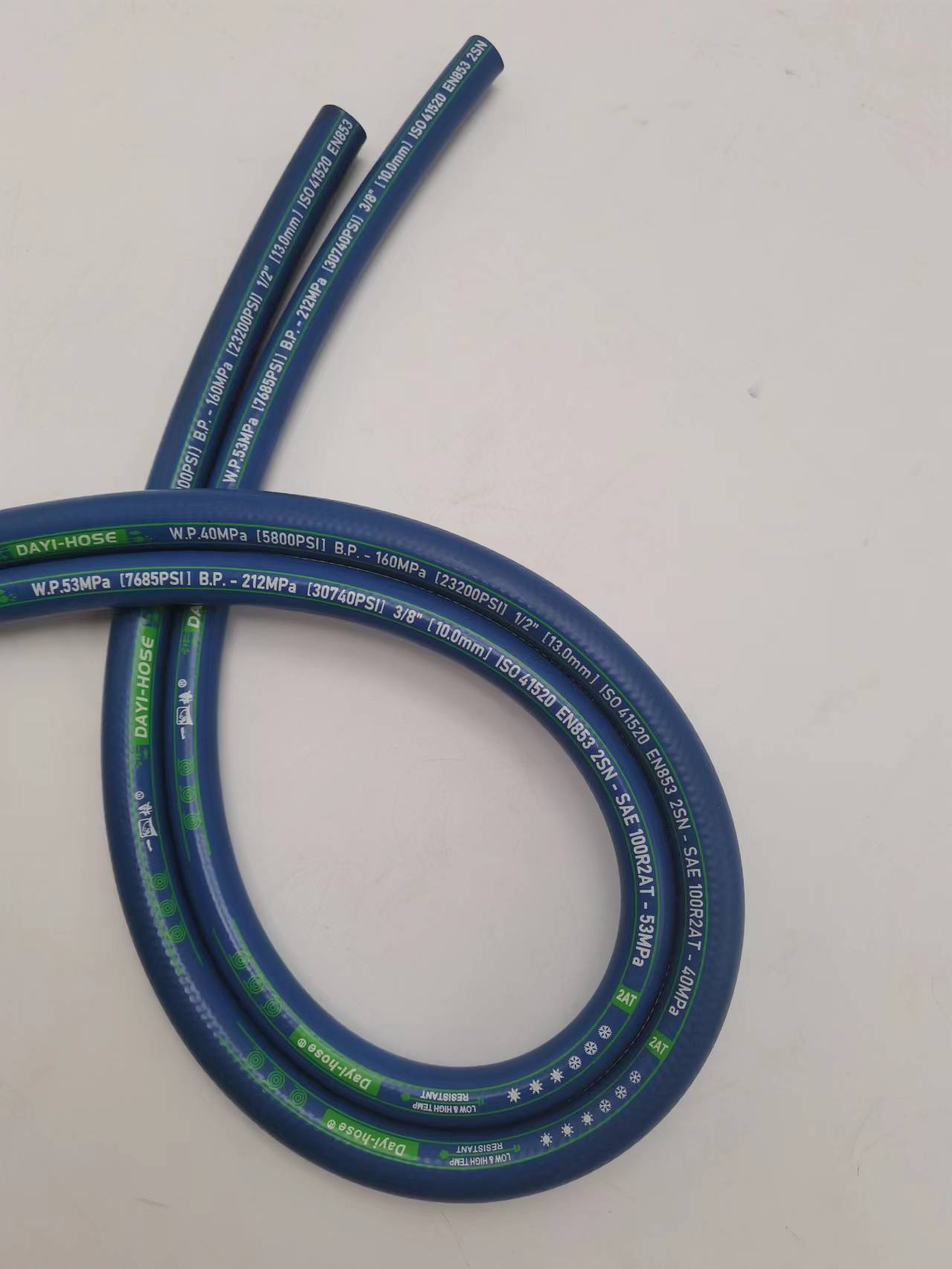
Hydraulic hoses are typically constructed from multiple layers, each serving a specific function. The inner tube, responsible for containing the fluid, is commonly made from synthetic rubbers such as nitrile (NBR), neoprene (CR), or ethylene propylene diene monomer (EPDM). NBR offers excellent resistance to petroleum-based fluids, making it prevalent in many applications. CR provides superior resistance to ozone, weathering, and moderate chemical exposure. EPDM excels in applications requiring high temperature resistance and compatibility with phosphate ester hydraulic fluids. The reinforcement layer, crucial for withstanding pressure, is commonly composed of multiple braids or spirals of high-strength steel wire. The number and construction of these layers directly impact the hose’s working pressure rating. A protective outer cover, usually made of synthetic rubber like polyurethane or polyester, shields the reinforcement from abrasion, environmental degradation, and chemical attack.
Manufacturing processes vary depending on hose type and complexity. The inner tube is typically extruded through a die, creating a seamless layer. Reinforcement layers are then applied via winding or braiding machines. Precise tension control during braiding is vital to ensure uniform pressure distribution and prevent premature failure. Following reinforcement, the outer cover is extruded. Critical parameters during manufacturing include rubber compound formulation (to meet specific fluid compatibility and temperature requirements), ply adhesion (between layers), and dimensional accuracy (inner diameter, outer diameter, and length). Improper vulcanization (curing) of the rubber can lead to reduced elasticity, decreased tensile strength, and potential leakage. Quality control involves rigorous testing of each layer and the final assembled hose, including pressure testing, burst testing, and dimensional inspections. Low-cost manufacturers may compromise on rubber compound quality, reinforcement material grade, or process control, leading to reduced performance and lifespan.

Performance & Engineering
The performance of a hydraulic hose is dictated by several key engineering parameters. Working pressure, expressed in PSI or bar, is the maximum pressure the hose can safely withstand during continuous operation. Burst pressure, typically four times the working pressure, represents the pressure at which the hose will fail catastrophically. Tensile strength, measured in MPa or PSI, indicates the hose’s resistance to axial pulling forces. Elongation at break, expressed as a percentage, measures the amount the hose can stretch before fracturing. Fatigue resistance is crucial in applications involving cyclic pressure fluctuations; repeated stress can lead to fatigue cracking and eventual failure. Environmental resistance, encompassing factors like temperature extremes, ozone exposure, and chemical compatibility, significantly impacts hose lifespan.
Force analysis in hydraulic hose design involves calculating the hoop stress (circumferential stress) within the hose wall under pressure. This stress is proportional to the pressure and the inner diameter of the hose and inversely proportional to the wall thickness. Reinforcement layers are designed to resist this stress and prevent hose expansion or rupture. Compliance requirements, such as those stipulated by SAE (Society of Automotive Engineers) and EN (European Norms), dictate minimum performance standards for hydraulic hoses. For example, SAE J517 specifies performance requirements for non-reinforced and reinforced hydraulic hoses. Proper hose routing, avoiding sharp bends and abrasion points, is crucial for preventing damage and premature failure. The selection of appropriate fittings, compatible with the hose material and operating conditions, is equally important. Incorrect fittings can lead to leakage, reduced pressure capacity, and potential safety hazards.
Technical Specifications
| Parameter | Typical Value (Low-Cost Hose) | Typical Value (Mid-Range Hose) | Typical Value (High-Performance Hose) |
|---|---|---|---|
| Working Pressure (PSI) | 2000 | 3000 | 5000 |
| Burst Pressure (PSI) | 8000 | 12000 | 20000 |
| Inner Tube Material | NBR | NBR/CR Blend | EPDM/Fluoropolymer |
| Reinforcement Type | 2-Wire Braid | 4-Wire Braid | Spiral Wire Reinforcement |
| Outer Cover Material | Polyurethane | Polyurethane/Polyester Blend | Super Polyurethane |
| Temperature Range (°F) | -40 to +212 | -40 to +250 | -67 to +302 |
Failure Mode & Maintenance
Hydraulic hose failures typically fall into several categories. Fatigue cracking, often initiated at braid crossover points or fitting connections, is a common failure mode in applications with cyclic pressure. Abrasion, caused by rubbing against other components, can damage the outer cover and expose the reinforcement to corrosion. Kinking, resulting from excessive bending, can restrict fluid flow and create localized stress concentrations. Chemical attack, from incompatible fluids, can degrade the inner tube and lead to leakage. Heat exposure can accelerate rubber degradation and reduce hose lifespan. Fitting-related failures, such as improper crimping or corrosion, can lead to leakage or complete separation.
Preventive maintenance is crucial for maximizing hose lifespan and preventing catastrophic failures. Regular visual inspections should be conducted to identify signs of abrasion, kinking, cracking, or leakage. Hose routing should be carefully checked to ensure proper support and avoid contact with sharp objects. Fluid compatibility should be verified to prevent chemical attack. Fittings should be inspected for corrosion and proper crimping. Hoses should be replaced at recommended intervals, based on operating conditions and manufacturer’s guidelines. When replacing a hose, it is essential to use fittings that are compatible with the hose material and operating pressure. Crimping should be performed using calibrated equipment to ensure proper connection strength. Proper handling during installation and storage is also important to prevent damage.
Industry FAQ
Q: What is the impact of steel wire quality on the burst pressure of a hydraulic hose?
A: The tensile strength and yield strength of the steel wire directly influence the hose's burst pressure. Higher-grade steel wire with increased tensile strength allows the hose to withstand greater internal pressure before failure. Low-cost manufacturers might use lower-grade steel, reducing the safety factor and increasing the risk of rupture.
Q: How does the choice of inner tube material affect fluid compatibility and hose lifespan?
A: The inner tube material must be chemically compatible with the hydraulic fluid to prevent swelling, softening, or degradation. NBR is generally suitable for petroleum-based fluids, but it may not be compatible with phosphate ester fluids. EPDM offers excellent compatibility with phosphate esters, while fluoropolymers provide broad chemical resistance but are more expensive.
Q: What are the key differences between braided and spiral reinforced hydraulic hoses?
A: Braided hoses utilize multiple layers of interwoven steel wire, providing flexibility and resistance to bending. Spiral hoses use a single wire wound in a helical pattern, offering higher pressure ratings and greater resistance to kinking but reduced flexibility.
Q: How do temperature extremes affect the performance and longevity of hydraulic hoses?
A: High temperatures accelerate rubber degradation, reducing tensile strength and elasticity. Low temperatures can cause rubber to become brittle and crack. The specified temperature range for a hose should be carefully considered to ensure compatibility with the operating environment.
Q: What is the role of proper crimping in ensuring a leak-free hydraulic hose assembly?
A: Proper crimping creates a secure mechanical bond between the hose and the fitting, preventing leakage under pressure. Insufficient or excessive crimping can compromise the integrity of the connection. Calibrated crimping machines and qualified technicians are essential for achieving optimal results.
Conclusion
Competitive price hydraulic hoses represent a trade-off between cost and performance. While lower-cost options can provide adequate service in less demanding applications, understanding the technical implications of material selection, manufacturing processes, and performance characteristics is critical. Compromises in these areas can lead to reduced lifespan, increased failure rates, and potential safety hazards.
Prioritizing quality control, proper installation, and regular maintenance are essential for maximizing the reliability and longevity of any hydraulic hose system. Engineers and procurement professionals should carefully evaluate the specific application requirements and select a hose that meets those needs while balancing cost considerations. Adherence to relevant industry standards, such as those established by SAE and EN, provides a benchmark for performance and safety.