
Apr . 01, 2024 17:55 Back to list
clutch hydraulic hose Performance Analysis
Introduction
Clutch hydraulic hoses are critical components within vehicle hydraulic clutch systems, responsible for transmitting fluid pressure from the master cylinder to the slave cylinder. This pressure actuation disengages the clutch, allowing for gear changes. These hoses differ from general fluid transfer lines due to the high pressures involved, demanding superior burst strength, thermal stability, and resistance to hydraulic fluids. In the automotive manufacturing chain, hydraulic hoses represent a mid-level component, reliant on rubber compounding, reinforcement material production, and precision assembly techniques. Core performance characteristics include pressure capacity, dimensional accuracy, and resistance to aging and degradation. A failure in a clutch hydraulic hose directly impacts vehicle operability, leading to clutch disengagement failure and potentially causing safety hazards, making reliability paramount. The industry faces challenges related to minimizing weight while maintaining structural integrity and adapting to increasingly aggressive hydraulic fluids.
Material Science & Manufacturing
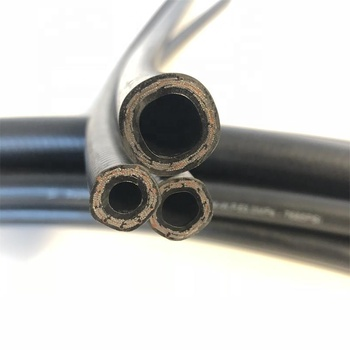
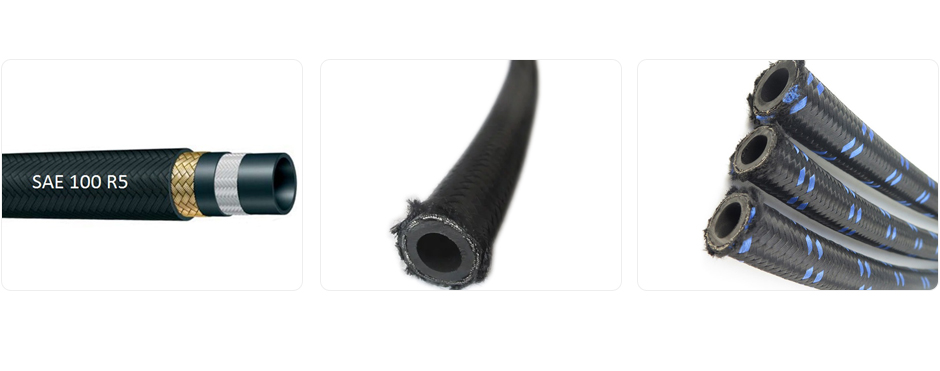
Clutch hydraulic hoses are typically constructed from an inner tube, reinforcement layers, and an outer cover. The inner tube is commonly made from synthetic rubbers like nitrile butadiene rubber (NBR), ethylene propylene diene monomer (EPDM), or fluorocarbon elastomer (FKM/Viton). NBR offers good resistance to petroleum-based hydraulic fluids, EPDM provides excellent heat and weather resistance, and FKM delivers superior chemical resistance, particularly to aggressive fluids like DOT 5 silicone brake fluid. Reinforcement layers usually consist of braided high-tensile steel wire or aramid fiber. Steel wire provides high burst strength and durability, while aramid fiber offers a lighter weight solution with comparable strength, albeit with lower crush resistance. The outer cover is typically composed of chloroprene rubber (CR) or EPDM, providing abrasion, ozone, and weather protection.
Manufacturing begins with extrusion of the inner tube to precise dimensions. The reinforcement layer is then braided or spiraled onto the inner tube. This step requires strict control of tension and layer coverage to ensure consistent burst pressure ratings. Following reinforcement, the outer cover is extruded over the assembly. Key parameters during extrusion include die temperature, screw speed, and cooling rate, all impacting the final hose dimensions and material properties. Curing is a critical step involving vulcanization of the rubber compounds under controlled temperature and pressure, establishing the final material crosslinking and mechanical properties. Post-curing inspection includes burst pressure testing, leak testing, and dimensional checks. Crimping of hose ends with fittings is a precision operation utilizing specialized tooling to ensure a secure and leak-proof connection. The process is influenced by material flexibility and requires careful calibration to prevent damage to the hose during assembly.
Performance & Engineering
The primary performance parameter for clutch hydraulic hoses is burst pressure, dictated by vehicle specifications and safety factors. Force analysis involves calculating hoop stress within the hose wall under pressure, considering material properties and hose dimensions. Finite Element Analysis (FEA) is frequently used to optimize hose design and predict stress concentrations. Environmental resistance is crucial; hoses must withstand exposure to temperature extremes, road salts, oils, and other contaminants. Hydraulic fluid compatibility is paramount to prevent swelling, degradation, and loss of performance. Compliance requirements include regulations related to vehicle safety (FMVSS in the US, ECE regulations in Europe) and material restrictions (REACH, RoHS).
Engineering considerations include minimizing hose length to reduce pressure drop and improve response time. Hose routing must avoid sharp bends and contact with hot engine components. Flexibility is also important to accommodate engine movement and chassis flex. The hose must resist kinking, which can restrict fluid flow. Thermal expansion and contraction due to temperature fluctuations must be accounted for in the design to prevent stress buildup. Fatigue life is a critical parameter, as hoses are subjected to cyclic pressure loading during clutch operation. The industry is increasingly focused on reducing hose weight through the use of lighter materials like aramid reinforcement and thinner rubber compounds, while maintaining or improving performance characteristics.
Technical Specifications
| Parameter | Unit | Typical Value (NBR Inner Tube, Steel Braided) | Typical Value (FKM Inner Tube, Aramid Reinforced) |
|---|---|---|---|
| Burst Pressure | MPa | 20.7 | 24.1 |
| Working Pressure | MPa | 10.3 | 12.1 |
| Inner Diameter | mm | 8.7 | 9.5 |
| Outer Diameter | mm | 14.3 | 15.9 |
| Minimum Bend Radius | mm | 40 | 50 |
| Temperature Range | °C | -40 to +120 | -20 to +150 |
Failure Mode & Maintenance
Common failure modes for clutch hydraulic hoses include burst failure due to exceeding pressure limits, cracking due to aging and environmental exposure, leakage at the crimped connections, and internal degradation of the rubber liner. Burst failures typically occur due to fatigue cracking initiated at stress concentrations, often near the crimp areas. Aging leads to rubber hardening and loss of elasticity, increasing susceptibility to cracking. External abrasion can damage the outer cover, exposing the reinforcement layer to corrosion. Internal degradation can be caused by incompatible hydraulic fluids, leading to swelling and weakening of the rubber liner.
Maintenance involves regular visual inspection for signs of cracking, swelling, or leakage. Hoses should be replaced if any damage is detected. Crimped connections should be inspected for corrosion and tightness. It is crucial to use the correct type of hydraulic fluid specified by the vehicle manufacturer. Avoid sharp bends during installation and ensure the hose is adequately supported to prevent chafing. When replacing hoses, ensure proper torquing of fittings to prevent leaks. Periodic pressure testing can help identify potential weaknesses before a catastrophic failure occurs. Preventive replacement based on mileage or time intervals is recommended to mitigate the risk of failure.
Industry FAQ
Q: What is the impact of using DOT 5 silicone brake fluid in a clutch hydraulic hose designed for DOT 3 or DOT 4 fluid?
A: DOT 5 silicone fluid is incompatible with many common rubber compounds used in hydraulic hoses designed for glycol-ether based fluids (DOT 3 & 4). DOT 5 can cause the NBR inner liner to swell and degrade, leading to reduced hose life and potential failure. Using a hose specifically designed and certified for DOT 5 fluid, typically utilizing FKM/Viton materials, is essential.
Q: How does aramid reinforcement compare to steel wire reinforcement in terms of durability and performance?
A: Steel wire offers superior burst strength and crush resistance, making it suitable for high-pressure applications and environments where physical impact is a concern. Aramid fiber is lighter weight, reducing overall system mass, but provides lower crush resistance and may be more susceptible to damage from abrasion. The choice depends on the specific application requirements and trade-offs between weight and durability.
Q: What are the key factors to consider when selecting a hose for an application with high vibration?
A: High vibration can lead to fatigue failure at the hose ends and crimped connections. Select a hose with robust crimp fittings and consider using vibration dampening measures, such as hose clamps or isolators. A hose with a tighter braid and higher reinforcement density will also be more resistant to vibration-induced fatigue.
Q: What testing is typically performed to ensure the quality and reliability of a clutch hydraulic hose?
A: Typical testing includes burst pressure testing (to several times the working pressure), impulse testing (simulating pressure pulsations), leak testing, dimensional checks, and accelerated aging tests (exposure to high temperature, humidity, and fluids). Material composition is also verified through chemical analysis.
Q: How do environmental factors such as ozone and UV exposure affect the service life of a hydraulic hose?
A: Ozone and UV exposure can cause cracking and degradation of the outer rubber cover, reducing its protective properties. EPDM rubber offers better ozone and UV resistance than chloroprene rubber. Using a hose with a UV-stabilized outer cover and protecting the hose from direct sunlight exposure can extend its service life.
Conclusion
Clutch hydraulic hoses are engineered critical components requiring a blend of material science, precision manufacturing, and rigorous testing to ensure reliable performance and safety. The selection of appropriate materials, including rubber compounds and reinforcement layers, directly impacts burst pressure, temperature resistance, and chemical compatibility. Understanding the potential failure modes, such as fatigue cracking and degradation, is essential for implementing effective preventative maintenance strategies.
Future advancements in hydraulic hose technology will likely focus on developing lighter weight materials, improving hose durability, and enhancing resistance to new hydraulic fluids. The integration of smart sensors within hoses to monitor pressure, temperature, and structural health is also a promising area of development. Adherence to industry standards and best practices, combined with continuous improvement in design and manufacturing processes, will remain paramount to ensuring the long-term reliability and safety of clutch hydraulic systems.