
Apr . 01, 2024 17:55 Back to list
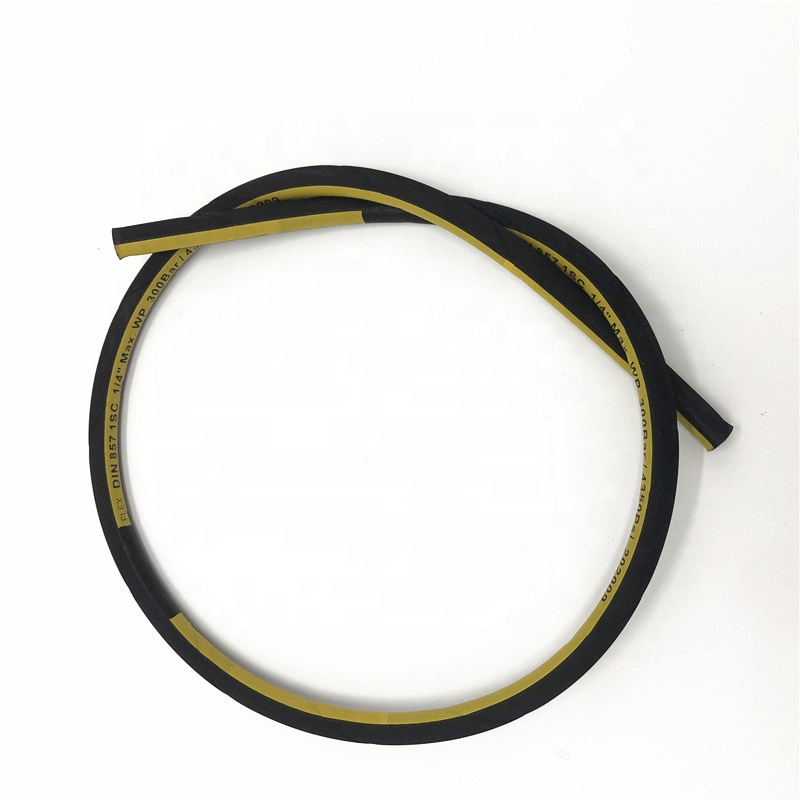
china yellow high pressure hydraulic hose Performance Analysis
Introduction
China yellow high-pressure hydraulic hose is a critical component in hydraulic systems across numerous industries, including construction, agriculture, manufacturing, and materials handling. Distinguished by its characteristic yellow exterior, this hose is engineered to safely convey hydraulic fluid under substantial pressure, enabling the transmission of power for a diverse range of applications. Technically, it occupies a vital position in the power transmission chain, functioning as the flexible conduit between pumps, valves, actuators, and other hydraulic components. Core performance characteristics center around burst pressure, working pressure, temperature resistance, and fluid compatibility. Unlike low-pressure hoses, high-pressure hydraulic hoses require multi-layered construction to contain the generated forces, representing a significant engineering challenge in materials selection and manufacturing precision. A key industry pain point lies in ensuring consistent performance and longevity in demanding operating conditions, specifically concerning abrasion resistance, ozone cracking, and compatibility with evolving hydraulic fluid formulations.
Material Science & Manufacturing
The construction of china yellow high-pressure hydraulic hose typically involves four primary layers. The innermost layer, the tube, is commonly composed of a synthetic rubber compound – often nitrile rubber (NBR) due to its excellent resistance to petroleum-based hydraulic fluids. Other options include chloroprene rubber (CR) for enhanced heat and oil resistance, and fluorocarbon rubber (FKM/Viton) for specialized applications requiring compatibility with aggressive fluids and high temperatures. The reinforcement layer is the critical component defining the hose’s pressure capability. This is traditionally comprised of multiple plies of high-tensile steel wire, spirally wound to provide strength and flexibility. The number and diameter of these wires directly correlate to the hose’s working and burst pressure ratings. Between the tube and reinforcement, a bonding layer, usually a specialized rubber formulation, ensures adhesion between these disparate materials. Finally, the outer cover, typically a synthetic rubber such as polyurethane or a blended rubber compound, provides abrasion resistance, weather protection, and resistance to ozone cracking.
Manufacturing involves several key processes. The tube is extruded through a die to achieve the desired inner diameter and wall thickness. The steel wire reinforcement is then helically wound onto the tube. This winding process requires precise tension control to ensure uniform pressure distribution. The bonding layer is applied, followed by extrusion of the outer cover. Post-extrusion, the hose undergoes vulcanization – a curing process involving heat and pressure – to crosslink the rubber compounds, imparting elasticity and chemical resistance. Quality control measures at each stage are crucial. Parameters monitored include rubber hardness, wire tension, dimensional accuracy, and adhesion strength. Furthermore, pneumatic testing to specified burst pressures is essential to verify the hose's integrity. Chemical compatibility testing, involving immersion in representative hydraulic fluids, confirms the rubber compounds' resistance to degradation.
Performance & Engineering
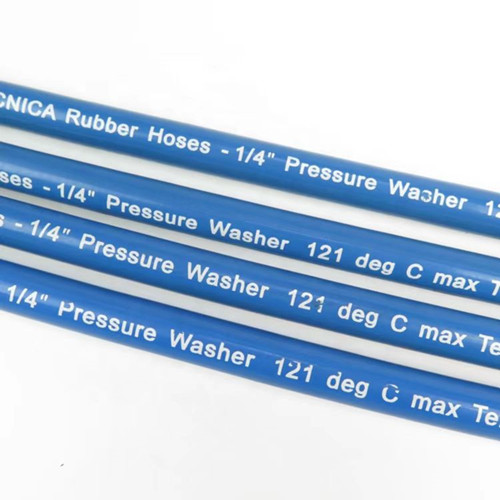
The performance of a high-pressure hydraulic hose is governed by principles of fluid mechanics and material stress-strain relationships. Force analysis focuses on hoop stress – the tensile stress acting circumferentially within the hose wall due to internal pressure. This stress is directly proportional to the internal pressure and the hose's inner diameter, and inversely proportional to the wall thickness. Reinforcement layers are designed to counteract this hoop stress, preventing hose rupture. Fatigue analysis is critical, considering the cyclical pressure fluctuations experienced during operation. Repeated pressure cycles can lead to fatigue cracking in the reinforcement wires, eventually resulting in failure. Environmental resistance is paramount. Exposure to extreme temperatures (both high and low) affects the rubber compounds' elasticity and strength. Ozone cracking, caused by atmospheric ozone, degrades the outer cover. Ultraviolet (UV) radiation also contributes to material degradation.
Compliance requirements vary by region but generally adhere to standards established by organizations like SAE International (Society of Automotive Engineers). SAE J517, for example, specifies performance requirements for hydraulic hoses. Furthermore, local regulations may dictate specific testing procedures and material restrictions. Functional implementation requires careful consideration of hose routing, bend radius, and fitting selection. Sharp bends can induce stress concentrations, reducing hose life. Incorrectly sized or improperly installed fittings can create leak paths and compromise safety. Proper hose guarding is also essential to protect against abrasion, kinking, and impact damage. The selection of appropriate hose length is critical, avoiding excessive slack or strain.
Technical Specifications
| Parameter | Unit | Typical Value (DN13 - 1/2" ID) | Testing Standard |
|---|---|---|---|
| Working Pressure | MPa | 20.7 | SAE J517 |
| Burst Pressure | MPa | 82.7 | SAE J517 |
| Temperature Range | °C | -40 to +100 | SAE J517 |
| Inner Tube Material | - | NBR (Nitrile Rubber) | ASTM D2000 |
| Reinforcement | - | 2 Wire Braid (Steel) | SAE J517 |
| Outer Cover Material | - | Polyurethane | ASTM D2000 |
Failure Mode & Maintenance
Common failure modes for china yellow high-pressure hydraulic hoses include burst failure due to exceeding the working pressure; fatigue cracking resulting from cyclical pressure loading and vibration; abrasion damage caused by contact with abrasive surfaces; ozone cracking leading to degradation of the outer cover; and fitting failure due to corrosion, improper installation, or material incompatibility. Internal abrasion can also occur if contaminated hydraulic fluid is used, causing wear on the inner tube. Kinking, caused by excessively sharp bends, can damage the reinforcement wires. Delamination, the separation of layers, indicates a breakdown in bonding and reduces the hose's strength. Oxidation of the rubber compounds, accelerated by high temperatures, leads to loss of elasticity and cracking.
Preventative maintenance is crucial. Regular visual inspections should be conducted to identify signs of wear, cracking, or abrasion. Hose routing should be optimized to avoid sharp bends and contact with abrasive surfaces. Hydraulic fluid should be regularly filtered to remove contaminants. Fittings should be inspected for corrosion and proper torque. Hose assemblies should be replaced at predetermined intervals, based on operating conditions and manufacturer recommendations. When replacing a hose, ensure the replacement has the same or greater pressure rating and temperature range. During installation, avoid twisting the hose, and use properly sized and lubricated fittings. Proper storage, away from direct sunlight and extreme temperatures, will extend hose life. If a hose exhibits any signs of damage, it should be immediately removed from service and replaced.
Industry FAQ
Q: What is the significance of the wire braid construction in a high-pressure hose?
A: The wire braid, typically steel, is the primary load-bearing element that provides the hose's resistance to internal pressure. The number of braids and the wire diameter directly dictate the maximum working and burst pressures the hose can withstand. More braids and larger diameter wires increase the hose’s strength but also reduce its flexibility. The specific braid angle also influences performance – optimal angles maximize strength and minimize distortion under pressure.
Q: How does hydraulic fluid compatibility impact hose selection?
A: Hydraulic fluid compatibility is paramount. Different fluids contain varying chemical compositions that can cause degradation of the inner tube material. For example, phosphate ester fluids require specific hose materials like FKM/Viton, while petroleum-based fluids are generally compatible with NBR. Using an incompatible fluid can lead to swelling, softening, or cracking of the tube, resulting in leaks and hose failure.
Q: What is the impact of improper bend radius on hose life?
A: Exceeding the minimum recommended bend radius places undue stress on the hose’s reinforcement layers. This stress can lead to premature fatigue cracking and ultimately, hose failure. Sharp bends create stress concentrations, accelerating the damage process. Proper hose routing and support are essential to maintain a safe bend radius.
Q: How important is the outer cover material for hose durability?
A: The outer cover provides critical protection against external factors like abrasion, ozone, UV radiation, and oil. A durable cover material, such as polyurethane, significantly extends hose life, particularly in harsh environments. A compromised outer cover can lead to reinforcement wire exposure and subsequent corrosion or damage.
Q: What are the key considerations when selecting hose fittings?
A: Fittings must be compatible with the hose material and the hydraulic fluid. Incorrectly sized or improperly crimped fittings can create leak paths and compromise the hose’s pressure rating. The fitting material should also be resistant to corrosion. Furthermore, the fitting’s pressure rating must equal or exceed the hose’s working pressure.
Conclusion
China yellow high-pressure hydraulic hose is a sophisticated engineering component demanding careful consideration of materials, manufacturing processes, and operating conditions. Its reliable performance is crucial for the safe and efficient operation of hydraulic systems across a multitude of industries. The layered construction, with its specific material selections for the tube, reinforcement, and cover, is optimized to withstand high pressures, temperature fluctuations, and environmental degradation. Understanding the potential failure modes and implementing preventative maintenance procedures are essential for maximizing hose life and minimizing downtime.
Future trends in hydraulic hose technology include the development of more durable and lightweight materials, smart hoses with integrated sensors for monitoring pressure and temperature, and bio-based rubber compounds offering improved sustainability. Continued adherence to rigorous industry standards, coupled with advancements in material science and manufacturing techniques, will drive further improvements in the performance, reliability, and longevity of china yellow high-pressure hydraulic hose.