
Apr . 01, 2024 17:55 Back to list
china wrapped surface hydraulic hose Performance Analysis
Introduction
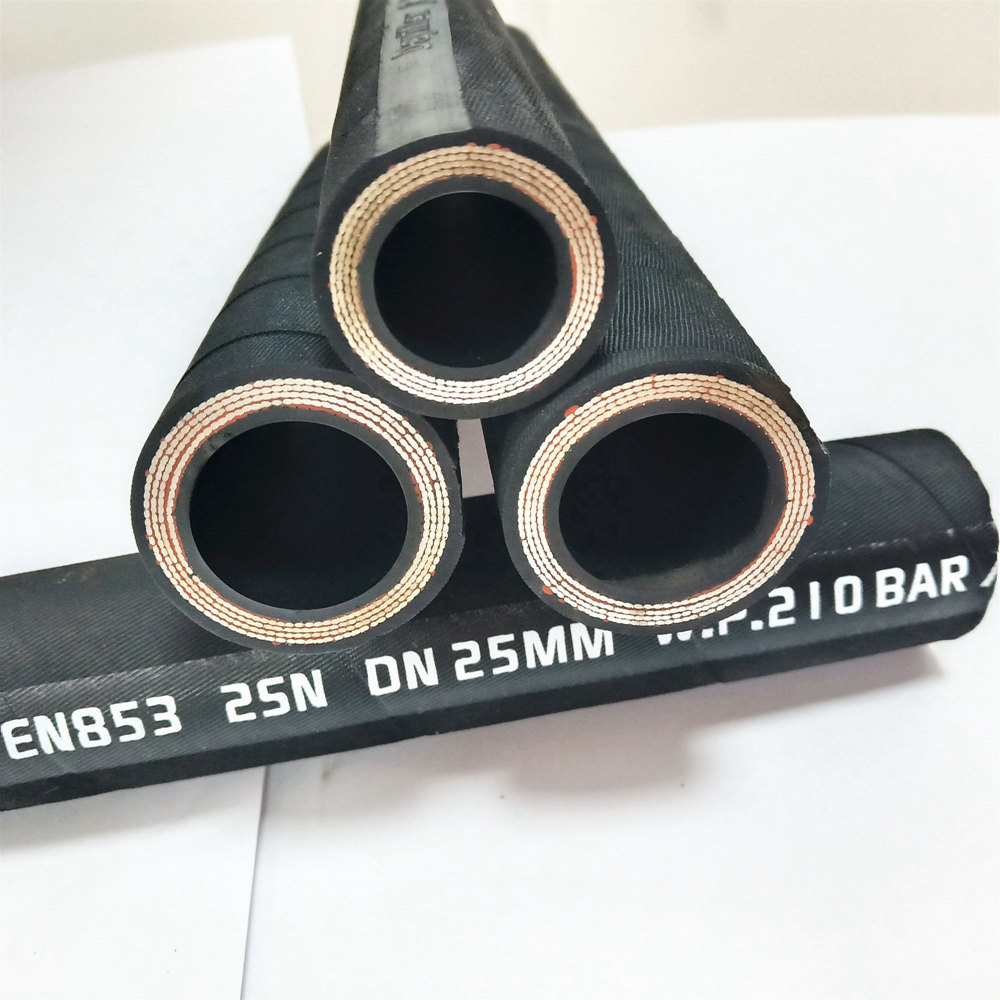
China wrapped surface hydraulic hose represents a significant component in fluid power systems across a diverse range of industrial applications, including construction equipment, agricultural machinery, and manufacturing processes. These hoses are characterized by a synthetic rubber inner tube reinforced with multiple layers of high-tensile steel wire, encased within a durable, abrasion-resistant outer cover. Their construction is specifically designed to withstand high pressures, temperature fluctuations, and exposure to harsh operating environments. Unlike smooth-bore hydraulic hoses, the wrapped surface provides enhanced resistance to abrasion and kinking, improving longevity and reliability in demanding conditions. Critical performance parameters include burst pressure, working pressure, temperature range, and fluid compatibility. The proliferation of this hose type is directly linked to the increasing demands for robust, dependable hydraulic systems requiring efficient fluid transfer and extended operational life. A key market driver is the competitive pricing structure offered by Chinese manufacturers, necessitating a thorough understanding of material compositions and quality control processes to ensure performance meets application-specific requirements.
Material Science & Manufacturing
The construction of china wrapped surface hydraulic hose relies on a carefully selected combination of materials. The inner tube is typically composed of nitrile rubber (NBR) for its excellent oil resistance, or ethylene propylene diene monomer (EPDM) for applications requiring water and phosphate ester fluid compatibility. The reinforcement layers consist of high-strength steel wire, often drawn to precise tolerances to maximize tensile strength and flexibility. Wire surface treatment, such as zinc plating, is crucial to prevent corrosion and enhance adhesion to the surrounding rubber compounds. The outer cover commonly utilizes a blend of synthetic rubbers, including Chloroprene (CR) for its abrasion and weathering resistance, or a combination of CR and NBR for enhanced oil and heat resistance. Manufacturing begins with the extrusion of the inner tube, followed by the precise winding of the steel wire reinforcement layers. Critical parameters during winding include tension control and layer overlap to ensure uniform pressure distribution. Subsequently, the outer cover is extruded over the reinforcement, and the hose undergoes vulcanization – a curing process utilizing heat and pressure – to crosslink the rubber polymers, imparting the final mechanical properties. Quality control at each stage, including dimensional checks, pressure testing, and material composition analysis, is paramount. Variations in the rubber formulation, wire gauge, and vulcanization time directly impact the hose’s performance characteristics and lifespan. Batch-to-batch consistency is a major industry challenge, demanding rigorous process monitoring and adherence to international standards.
Performance & Engineering
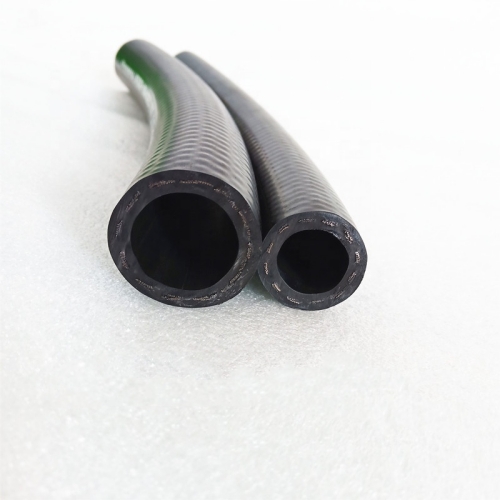
The performance of a china wrapped surface hydraulic hose is dictated by its ability to withstand internal pressure without failure, resist external damage, and maintain dimensional stability across a defined temperature range. Force analysis focuses on hoop stress within the inner tube and the load-bearing capacity of the steel wire reinforcement. Burst pressure, typically four times the working pressure, is a critical safety parameter. Environmental resistance encompasses resistance to ozone degradation, UV exposure, and chemical attack from the conveyed fluid. Fluid compatibility is essential; incompatibility can lead to swelling, cracking, or loss of elasticity in the rubber components. Compliance requirements vary by region and application, often mandated by organizations such as SAE International (J517, J518) and EN 856. Engineering considerations include the hose’s bend radius, which impacts its susceptibility to kinking and fatigue cracking. Proper fitting selection and installation are critical; mismatches or improper crimping can lead to premature failure. Fatigue life is a significant factor in dynamic applications, necessitating assessment of the hose's resistance to cyclical pressure and bending. The hose's ability to dissipate heat generated by fluid friction is also an important consideration, particularly in high-flow applications. Finite element analysis (FEA) is increasingly used to model hose behavior under various loading conditions and optimize design parameters.
Technical Specifications
| Parameter | Unit | Typical Value (DN20 Hose) | Testing Standard |
|---|---|---|---|
| Working Pressure | MPa | 20 | SAE J517 |
| Burst Pressure | MPa | 80 | SAE J517 |
| Temperature Range | °C | -40 to +100 | EN 856 4SH |
| Inner Tube Material | - | NBR | ASTM D2000 |
| Reinforcement | Layers | 4 Spiral Steel Wire | ISO 14330 |
| Outer Cover Material | - | CR | ASTM D2000 |
Failure Mode & Maintenance
Failure modes in china wrapped surface hydraulic hoses are diverse and often interconnected. Fatigue cracking, initiated by repeated bending and pressure cycles, is a common cause of failure, typically originating at stress concentration points near fittings or at areas of localized damage. Delamination, the separation of reinforcement layers from the rubber matrix, can occur due to inadequate bonding during vulcanization or exposure to aggressive fluids. Abrasion damage to the outer cover compromises the hose's protection against corrosion and further degradation. Oxidation and ozone cracking, particularly in CR covers exposed to UV radiation, can lead to loss of flexibility and eventual rupture. Internal degradation of the rubber liner, caused by fluid incompatibility or excessive heat, results in swelling, softening, and reduced pressure resistance. Corrosion of the steel wire reinforcement, if not adequately protected, reduces its tensile strength and contributes to catastrophic failure. Preventive maintenance includes regular visual inspection for signs of abrasion, cracking, and leakage. Hose should be replaced if any damage is detected. Proper storage in a cool, dry place away from direct sunlight is crucial. Fluid cleanliness is paramount; particulate contamination can accelerate wear and damage internal components. Regular fluid analysis helps identify potential compatibility issues. Crimping procedures must adhere to manufacturer’s specifications to ensure a secure and reliable connection. Avoid sharp bends and twisting the hose during installation and operation.
Industry FAQ
Q: What is the impact of different steel wire grades on the hose’s burst pressure?
A: Higher tensile strength steel wire directly translates to increased burst pressure capability. The grade of steel, its diameter, and the number of reinforcement layers are all critical factors. Higher grade alloys, while more expensive, offer superior resistance to stress corrosion cracking and improved fatigue life under high-pressure cyclic loading. The precise calculation of burst pressure involves complex material property analysis and finite element modeling.
Q: How does the choice of outer cover material affect the hose’s service life in outdoor applications?
A: The outer cover material is the primary defense against environmental degradation. CR (Chloroprene) offers excellent resistance to ozone, UV radiation, and abrasion, making it ideal for outdoor use. However, CR can be susceptible to oil swelling. A blend of CR and NBR provides a balance of oil resistance and weathering protection. EPDM offers superior ozone and weathering resistance but typically has lower abrasion resistance.
Q: What are the critical considerations for fluid compatibility when selecting a hydraulic hose?
A: Fluid compatibility is paramount. NBR is generally suitable for petroleum-based hydraulic fluids. EPDM is preferred for phosphate ester fluids, water-glycol fluids, and some synthetic lubricants. Incorrect fluid compatibility can cause swelling, softening, or degradation of the inner tube, leading to premature failure. Refer to the fluid manufacturer’s compatibility chart and the hose manufacturer's specifications.
Q: What are the common causes of hose kinking, and how can it be prevented?
A: Kinking occurs when the hose is bent beyond its minimum bend radius, causing internal collapse and restricting fluid flow. Factors contributing to kinking include insufficient reinforcement, improper hose routing, and excessive pressure. Prevention involves selecting a hose with an appropriate bend radius for the application, ensuring proper hose routing to avoid sharp bends, and using hose guards to provide additional support.
Q: What quality control measures are typically implemented during the manufacturing process to ensure consistent performance?
A: Rigorous quality control measures are essential. These include raw material inspection, dimensional checks at each stage of production, pressure testing to verify burst and working pressures, adhesion testing to ensure proper bonding between layers, and visual inspection for defects. Statistical process control (SPC) is used to monitor critical parameters and maintain consistent manufacturing quality. Periodic destructive testing is conducted to validate performance characteristics and compliance with industry standards.
Conclusion
China wrapped surface hydraulic hose, while offering a cost-effective solution for fluid power transmission, demands a thorough understanding of its material science, manufacturing processes, and potential failure modes. The hose's performance is intrinsically linked to the quality of raw materials, precise control of manufacturing parameters, and adherence to stringent quality control procedures. The selection of appropriate materials, including the inner tube, reinforcement, and outer cover, must be based on the specific application requirements, considering fluid compatibility, temperature range, and exposure to environmental factors.
Looking ahead, advancements in hose technology will likely focus on developing materials with enhanced durability, improved chemical resistance, and reduced weight. The integration of smart sensors into hose constructions to provide real-time monitoring of pressure, temperature, and structural integrity is also a promising area of development. Continued adherence to international standards and a commitment to rigorous quality control are essential to ensure the long-term reliability and safety of these critical components in demanding industrial applications.