
Apr . 01, 2024 17:55 Back to list
china wrapped cover steel wire braided hydraulic hose Performance Analysis
Introduction
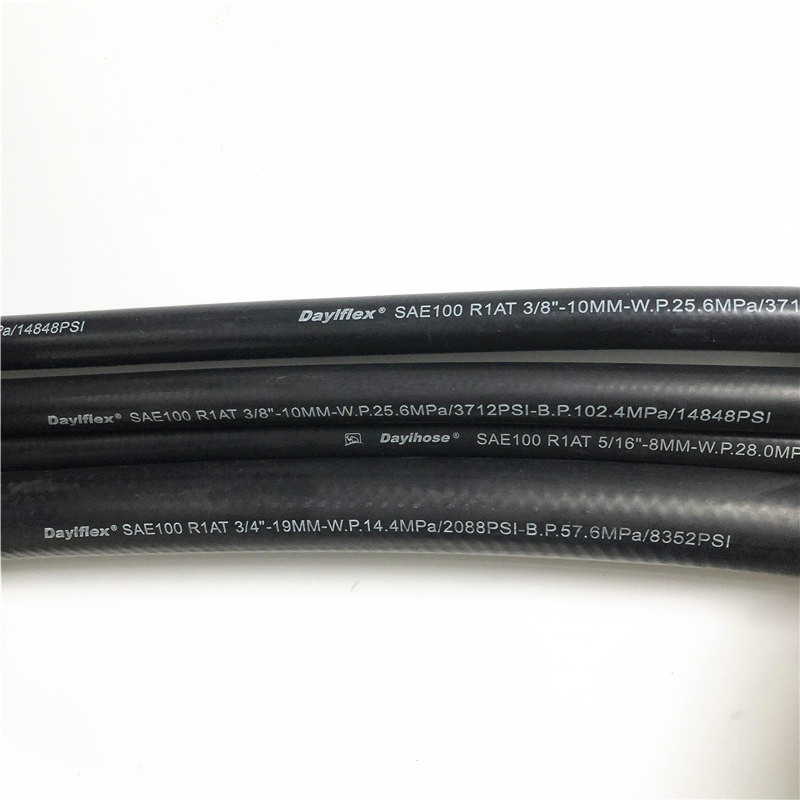
China wrapped cover steel wire braided hydraulic hose represents a critical component in fluid power systems across diverse industries, including construction machinery, agricultural equipment, material handling, and industrial manufacturing. These hoses are engineered to convey hydraulic fluid under high pressure, facilitating the operation of hydraulic cylinders, motors, and other actuators. The “wrapped cover” construction denotes a robust external layer designed for abrasion and weather resistance, while the internal steel wire braiding provides the necessary reinforcement to withstand significant pressures and prevent bursting. This hose type typically utilizes a synthetic rubber inner tube compatible with a wide range of hydraulic fluids. Its performance is characterized by pressure rating, burst pressure, temperature range, and fluid compatibility. A key differentiator within the market is cost-effectiveness, often stemming from manufacturing efficiencies within China, though quality control and adherence to international standards are paramount concerns for discerning buyers. Understanding the material science, manufacturing processes, and failure modes of these hoses is crucial for ensuring operational safety and longevity.
Material Science & Manufacturing
The construction of a China wrapped cover steel wire braided hydraulic hose relies on a carefully selected combination of materials. The inner tube is typically comprised of nitrile rubber (NBR), which exhibits excellent resistance to petroleum-based hydraulic fluids, or ethylene propylene diene monomer (EPDM) rubber, providing superior resistance to heat, ozone, and weathering. NBR's tensile strength generally ranges from 15-30 MPa, while EPDM boasts superior aging characteristics. The reinforcement layer consists of high-tensile steel wire, often drawn to a specific diameter and treated with a corrosion-inhibiting coating (typically zinc plating) to enhance durability and prevent rust. Steel wire typically has a tensile strength exceeding 2000 MPa. The cover is typically constructed from a blend of synthetic rubbers, including chloroprene (CR) which provides excellent resistance to oil, ozone and abrasion, and often contains textile reinforcement for added strength. The manufacturing process begins with the extrusion of the inner tube to the specified dimensions. Subsequently, the steel wire is spirally wound around the extruded tube, forming the reinforcement layer. This winding tension is a critical parameter, directly impacting the hose's burst pressure. The cover is then extruded over the braided reinforcement. Key process controls include temperature monitoring during extrusion, precise wire tension control, and ensuring proper bonding between the layers via vulcanization. Vulcanization, typically utilizing sulfur, accelerates the crosslinking of rubber polymers, enhancing the hose’s elasticity, strength, and resistance to degradation. Post-production testing includes hydrostatic testing to verify pressure capabilities and dimensional checks to confirm adherence to specifications.
Performance & Engineering
The performance of these hydraulic hoses is dictated by several engineering considerations. The primary concern is withstanding the operating pressure and preventing catastrophic failure. The burst pressure, typically four times the working pressure, is a critical specification. Force analysis involves calculating hoop stress within the hose wall based on internal pressure and reinforcement layer geometry. Finite element analysis (FEA) is increasingly employed to optimize reinforcement design and predict stress concentrations. Environmental resistance is also paramount. Exposure to extreme temperatures, UV radiation, and corrosive fluids can degrade the rubber components, reducing flexibility and increasing the risk of cracking. The hose must also exhibit acceptable flexibility, allowing for installation in confined spaces and minimizing pressure loss due to bending. Dynamic performance, specifically fatigue life, is influenced by pressure pulsations and cyclic loading. Compliance with industry standards, such as SAE J517 (hydraulic hose specifications) and ISO 6898 (hydraulic fluid power – hose assemblies) is essential to ensure safety and interoperability. Hose assemblies, including end fittings, must be tested to meet or exceed these standards. The selection of appropriate end fittings (e.g., crimped fittings, field attachable fittings) is critical for maintaining the hose’s integrity and preventing leaks. Factors like fitting material compatibility and crimp quality directly affect long-term performance.
Technical Specifications
| Parameter | Unit | Typical Value (SAE 100R4 Equivalent) | Tolerance |
|---|---|---|---|
| Working Pressure | MPa | 20.7 | ±10% |
| Burst Pressure | MPa | 82.7 | ±15% |
| Temperature Range | °C | -40 to +100 | ±5°C |
| Inner Tube Material | - | NBR (Nitrile Rubber) | - |
| Reinforcement | - | Steel Wire Braiding (4 Spiral) | - |
| Cover Material | - | Chloroprene (CR) | - |
Failure Mode & Maintenance
Failure modes in China wrapped cover steel wire braided hydraulic hoses are diverse. Fatigue cracking, stemming from repeated pressure cycles and bending, is common, particularly at the hose ends near the fittings. This is exacerbated by improper routing or excessive bending radius. Delamination, the separation of layers (inner tube, reinforcement, cover), can occur due to inadequate bonding during vulcanization or prolonged exposure to harsh chemicals. Oxidation of the steel wire reinforcement, resulting from corrosion, reduces the hose's strength and can lead to bursting. Rubber degradation, caused by UV exposure, ozone cracking, and chemical attack, leads to reduced flexibility and eventual failure. Abrasion damage to the cover is prevalent in exposed applications. Internal erosion from particulate contamination in the hydraulic fluid can also damage the inner tube over time. Preventative maintenance includes regular visual inspections for cracks, bulges, and abrasion. Hose routing should minimize bending and avoid contact with sharp objects. Hydraulic fluid should be filtered to remove contaminants. Hoses should be replaced proactively based on manufacturer’s recommendations or after a defined service life. Crimped fittings should be inspected for tightness and corrosion. Proper storage, away from direct sunlight and extreme temperatures, is crucial for extending hose lifespan. If damage is detected, immediate replacement is recommended rather than attempting repairs, as repairs can compromise the hose’s structural integrity.
Industry FAQ
Q: What is the impact of hydraulic fluid type on the lifespan of the hose?
A: The compatibility of the hydraulic fluid with the inner tube material is crucial. Using incompatible fluids can cause swelling, softening, or degradation of the rubber, leading to premature failure. For example, using petroleum-based fluids with an EPDM inner tube will lead to rapid deterioration. NBR is generally compatible with most petroleum-based fluids, but specialized fluids may require alternative inner tube materials like fluoroelastomer (FKM).
Q: How does the steel wire braiding contribute to the hose’s pressure rating?
A: The steel wire braiding provides the primary reinforcement against internal pressure. The number of braids (typically 4 spiral in standard applications) and the wire diameter directly influence the hose’s ability to withstand pressure without bursting. Higher wire density and diameter lead to increased burst pressure, but also reduced flexibility.
Q: What are the key considerations when selecting hose end fittings?
A: The end fittings must be compatible with both the hose and the hydraulic system. Material compatibility (avoiding galvanic corrosion between dissimilar metals) is vital. The fitting must be properly crimped onto the hose to create a leak-proof seal and withstand the operating pressure. The fitting’s pressure rating must meet or exceed the hose’s working pressure.
Q: What are the limitations of using these hoses in extreme temperature environments?
A: Extreme temperatures can significantly impact the hose’s performance. High temperatures accelerate rubber degradation and reduce the hose's flexibility. Low temperatures can cause the rubber to become brittle and susceptible to cracking. Exceeding the specified temperature range will compromise the hose’s structural integrity and potentially lead to failure.
Q: What testing is typically performed to ensure quality control during manufacturing?
A: Typical quality control tests include hydrostatic testing (to verify burst pressure), impulse testing (to evaluate fatigue life), dimensional checks (to ensure adherence to specifications), and material analysis (to confirm rubber compound composition and steel wire properties). Leak testing is also performed on assembled hoses.
Conclusion
China wrapped cover steel wire braided hydraulic hoses are essential components in numerous industrial applications, providing a cost-effective solution for conveying hydraulic fluid under high pressure. Their performance is governed by a complex interplay of material science, manufacturing processes, and engineering design. Understanding the inherent failure modes, such as fatigue cracking, delamination, and rubber degradation, is crucial for implementing effective preventative maintenance strategies and ensuring long-term operational reliability. Selecting the appropriate hose based on application-specific requirements, including pressure, temperature, fluid compatibility, and environmental conditions, is paramount.
The continued evolution of materials and manufacturing techniques will likely lead to improvements in hose performance, durability, and safety. Furthermore, adherence to stringent international standards, coupled with rigorous quality control procedures, will be increasingly important for maintaining the reliability and competitiveness of these critical hydraulic components. Future developments may focus on incorporating smart sensing technologies into hoses to monitor internal pressure, temperature, and structural health, enabling predictive maintenance and reducing the risk of catastrophic failures.