
Apr . 01, 2024 17:55 Back to list
china wire spiral high pressure hydraulic hose Performance Analysis

Introduction
China wire spiral high pressure hydraulic hose is a reinforced flexible conduit designed to transmit hydraulic fluid under high pressure in a variety of industrial and mobile applications. Positioned within the hydraulic power transmission industry chain, these hoses are crucial components in systems spanning construction equipment, agricultural machinery, manufacturing processes, and material handling. Core performance characteristics center around pressure capacity, burst strength, impulse resistance, and fluid compatibility. Unlike rubber hoses without reinforcement, or those utilizing braided reinforcement, the spiral wire construction provides superior pressure handling capability and resistance to kinking under bending stress. This makes them particularly well-suited for applications where space is constrained and dynamic movement is present. The primary pain points addressed by advancements in this hose technology include extended service life in harsh operating environments, improved safety through reliable performance under extreme conditions, and reduced maintenance downtime due to minimized failure rates. This guide will comprehensively detail the materials, manufacturing, performance, failure modes, and industry standards associated with these critical hydraulic components.
Material Science & Manufacturing
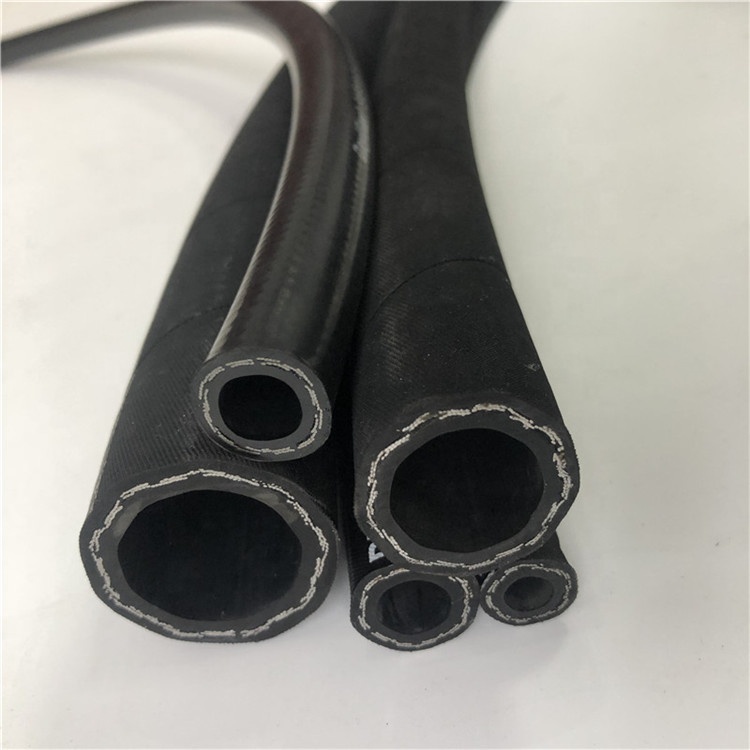
The construction of a china wire spiral high pressure hydraulic hose fundamentally relies on a multi-layered composition. The inner tube, typically composed of a specialized nitrile rubber (NBR) compound or, for enhanced chemical resistance, a fluoroelastomer (FKM) such as Viton, provides fluid compatibility and prevents permeation. NBR offers good resistance to petroleum-based hydraulic fluids, water, and many dilute chemicals, but its temperature range is limited (typically -40°C to 100°C). FKM provides superior temperature resistance (-20°C to 200°C) and chemical inertness, making it suitable for aggressive fluids and extreme environments. The reinforcement layer consists of multiple high-tensile steel wires spirally wound around the inner tube. The steel wire’s material properties – specifically tensile strength (typically >1770 MPa) and yield strength – are critical for determining the hose’s pressure rating. The wire is often treated with a zinc-phosphate coating to improve adhesion to the surrounding rubber compounds and enhance corrosion resistance. Finally, the outer cover is usually a synthetic rubber compound such as Chloroprene (CR) or polyurethane (PU) providing abrasion resistance, weathering protection, and oil resistance.
Manufacturing involves a continuous extrusion process. The inner tube is extruded to the desired dimensions, followed immediately by the spiraling of the high-tensile steel wires. Precise control of the wire pitch (distance between wire spirals) is paramount; a tighter pitch increases pressure capacity but reduces flexibility. The entire assembly is then vulcanized—a chemical process involving heat and pressure—to bond the rubber compounds to the steel wire and create a cohesive structure. Vulcanization parameters (temperature, time, pressure) are carefully monitored to ensure optimal cross-linking of the rubber polymers, achieving the desired physical properties. Post-vulcanization, the hose undergoes rigorous testing, including hydrostatic pressure testing, impulse testing, and leak testing to verify compliance with industry standards. Quality control procedures include dimensional inspection, visual defect analysis, and material composition verification. The precision of the wire winding process and the consistency of the vulcanization process are key variables affecting the hose's overall performance and reliability.
Performance & Engineering
The performance of a wire spiral hydraulic hose is dictated by a complex interplay of material properties and geometric design. Force analysis focuses on the hoop stress within the hose wall when subjected to internal hydraulic pressure. Hoop stress (σ) is calculated as σ = (P r) / t, where P is the internal pressure, r is the inner radius, and t is the wall thickness. The spiral wire reinforcement significantly reduces hoop stress, allowing for higher pressure ratings. The wire's helical angle also influences the hose's flexibility and resistance to kinking. A shallower angle improves flexibility but compromises pressure capacity. Impulse resistance—the ability to withstand pressure pulsations—is crucial in many hydraulic systems. The steel wire provides damping, absorbing energy from pressure surges. Impulse testing involves subjecting the hose to repeated pressure cycles at a specified frequency and amplitude.
Environmental resistance is a major engineering consideration. Exposure to extreme temperatures, UV radiation, ozone, and corrosive fluids can degrade the rubber compounds. The outer cover material selection is critical for weathering protection. Hydraulic fluids themselves can also pose challenges. Fluid compatibility testing ensures that the hose materials do not swell, soften, or degrade when exposed to the specific fluid. Compliance requirements vary by region and application. For example, SAE J517 (USA) and EN 856 (Europe) specify performance standards for hydraulic hoses. These standards dictate pressure ratings, burst pressures, impulse ratings, and testing procedures. Furthermore, in certain applications, such as food processing or medical equipment, hoses must meet specific material requirements to ensure non-toxicity and prevent contamination. Finite element analysis (FEA) is often employed during the design phase to optimize hose geometry and reinforcement configuration for specific operating conditions and to predict stress distribution under various loads.
Technical Specifications
| Parameter | Unit | SAE 100 R12 | EN 856 4SH |
|---|---|---|---|
| Working Pressure | MPa | 31.5 | 31.5 |
| Burst Pressure | MPa | 105 | 105 |
| Temperature Range | °C | -40 to +100 | -40 to +100 |
| Inner Tube | Material | NBR | NBR |
| Reinforcement | Material | High Tensile Steel Wire Spiral | High Tensile Steel Wire Spiral |
| Outer Cover | Material | CR | CR |
Failure Mode & Maintenance
Wire spiral hydraulic hoses are subject to various failure modes in practical applications. Fatigue cracking, particularly at the hose ends or around fittings, is a common issue caused by repeated bending and pressure cycling. This is exacerbated by improper fitting installation or excessive bending radius. Delamination, the separation of the rubber layers from the steel wire reinforcement, can occur due to inadequate vulcanization or exposure to aggressive fluids. Oxidation of the steel wire can lead to corrosion and weakening of the reinforcement, especially in humid or corrosive environments. Abrasion of the outer cover can expose the reinforcement to damage, accelerating corrosion and increasing the risk of bursting. Another failure mode is kinking, which occurs when the hose is bent beyond its minimum bend radius, restricting fluid flow and potentially damaging the inner tube.
Preventive maintenance is crucial for extending hose life and ensuring safe operation. Regular visual inspection should be conducted to identify signs of abrasion, cracking, swelling, or leakage. Hoses should be replaced if any damage is detected. Fittings should be inspected for proper tightening and corrosion. The hose should be protected from excessive bending, kinking, and exposure to extreme temperatures or corrosive substances. Proper hose routing and support are essential to prevent stress concentration. Fluid contamination should be minimized by using appropriate filtration systems. When replacing a hose, it's critical to use fittings that are compatible with the hose type and pressure rating. Avoid using mismatched components. Periodically check the hose for flexibility; a stiff or inflexible hose may indicate internal degradation. A scheduled replacement program, based on operating conditions and hose usage, is recommended for critical applications.
Industry FAQ
Q: What is the impact of wire pitch on the hose’s performance characteristics?
A: Wire pitch is a critical parameter. A tighter wire pitch (more wires per inch) generally increases the hose’s pressure capacity and burst strength, as it provides greater reinforcement. However, it also reduces the hose’s flexibility and increases its resistance to bending, potentially making it more prone to kinking in confined spaces. A looser wire pitch offers greater flexibility but compromises pressure handling capability. The optimal pitch is determined by balancing these competing requirements based on the specific application.
Q: How does the outer cover material influence the hose’s lifespan?
A: The outer cover provides crucial protection against environmental factors. CR (Chloroprene) offers good resistance to oil, weathering, and abrasion, making it a common choice for general-purpose applications. PU (Polyurethane) provides superior abrasion resistance and is often used in demanding environments where the hose is exposed to harsh conditions. The cover material’s resistance to UV radiation and ozone is also important, especially for outdoor applications. Degradation of the outer cover can expose the reinforcement to corrosion and reduce the hose’s overall lifespan.
Q: What are the key considerations when selecting a hose for high-temperature applications?
A: For high-temperature applications, the inner tube material is paramount. NBR has a limited temperature range, typically up to 100°C. FKM (Viton) offers superior temperature resistance, up to 200°C or higher. The hose’s construction must also be capable of maintaining its integrity at elevated temperatures. The reinforcement wire should be protected from corrosion, and the outer cover should be resistant to heat degradation. Furthermore, compatibility with the hydraulic fluid at the operating temperature must be verified.
Q: What are the common causes of hose failure in hydraulic systems?
A: Common causes include exceeding the hose’s pressure rating, improper installation (e.g., excessive bending, incorrect fitting tightening), exposure to incompatible fluids, abrasion and damage to the outer cover, fatigue cracking due to repeated bending and pressure cycling, and corrosion of the steel wire reinforcement. Contamination of the hydraulic fluid can also contribute to hose failure by accelerating wear and tear.
Q: How do I determine the appropriate hose size and pressure rating for my application?
A: Determining the appropriate hose size requires calculating the required flow rate and velocity. The hose diameter should be sufficient to maintain the desired flow rate without excessive pressure drop. The pressure rating must exceed the maximum system pressure, including pressure spikes and surge pressures. It's essential to consider a safety factor when selecting the pressure rating. Consulting the hose manufacturer’s specifications and application guidelines is crucial.
Conclusion
China wire spiral high pressure hydraulic hose represents a robust and reliable solution for fluid power transmission in demanding applications. Its construction, leveraging a spiral wire reinforcement within a multi-layered rubber composite, provides exceptional pressure handling capabilities and impulse resistance. Understanding the material science, manufacturing processes, and performance characteristics is essential for selecting the appropriate hose for a given application and ensuring its long-term reliability.
Future advancements in this technology will likely focus on the development of lighter-weight materials, improved corrosion resistance, and enhanced fluid compatibility. Continued refinement of manufacturing processes and quality control procedures will also play a vital role in minimizing failure rates and extending hose service life. Proper maintenance and adherence to industry standards remain critical for maximizing the performance and safety of these essential hydraulic components.