
Apr . 01, 2024 17:55 Back to list
china wire braided high pressure hydraulic hose Performance Analysis

Introduction
China wire braided high pressure hydraulic hose is a reinforced flexible assembly designed to transmit hydraulic fluid under substantial pressure in a variety of industrial and mobile applications. Positioned within the fluid power industry chain as a critical component connecting hydraulic pumps, valves, cylinders, and other actuators, its performance dictates system efficiency and reliability. These hoses are constructed of an inner tube, multiple layers of high-tensile steel wire braiding for reinforcement, and an outer cover providing environmental protection. Core performance characteristics center around pressure rating, burst pressure, temperature resistance, and fluid compatibility, addressing the escalating demands for increased system operating pressures and longer service life within sectors like construction, agriculture, mining, and manufacturing. The industry faces ongoing challenges related to hose longevity, leak prevention, and adherence to stringent safety standards, driving advancements in material science and manufacturing techniques.
Material Science & Manufacturing
The construction of china wire braided high pressure hydraulic hose relies on a carefully selected combination of materials. The inner tube is typically composed of a synthetic rubber compound, most commonly nitrile (NBR) for oil-based hydraulic fluids, or EPDM for phosphate ester fluids, chosen for their fluid resistance, flexibility, and temperature tolerance. NBR offers good abrasion resistance and cost-effectiveness, while EPDM excels in high-temperature and weather resistance. The reinforcement layer consists of high-tensile strength steel wire, typically carbon steel, wound in a braided pattern. The number of braids, and the wire diameter, directly correlate to the hose’s pressure rating. The outer cover utilizes a synthetic rubber compound, often a blend of SBR and NBR, providing abrasion, ozone, and weathering protection. Key manufacturing processes include inner tube extrusion, wire braiding – a precise process controlling braid angle and tension to ensure uniform stress distribution – and outer cover extrusion. Vulcanization, a thermal curing process, is critical for crosslinking the rubber compounds, imparting elasticity and resilience. Parameter control during extrusion and braiding is paramount. Extrusion temperature, screw speed, and die pressure influence tube dimensions and homogeneity. Braiding tension and pitch must be meticulously controlled to achieve the desired pressure capacity and prevent wire protrusion. Quality control includes hydrostatic testing to verify burst pressure and impulse testing to assess fatigue resistance.
Performance & Engineering
The performance of china wire braided high pressure hydraulic hose is dictated by complex engineering principles. Force analysis centers on the hoop stress within the hose wall under internal pressure. The steel wire braid bears the majority of this stress, while the rubber layers provide containment and flexibility. Burst pressure is typically four times the working pressure, providing a safety factor. Impulse pressure, which represents pressure spikes in the hydraulic system, presents a significant challenge. Repeated impulse loading can lead to fatigue failure of the wire braid. Hose bend radius is critical; exceeding the minimum bend radius induces localized stress concentration and potential failure. Environmental resistance encompasses temperature effects, ozone degradation, and fluid compatibility. Elevated temperatures reduce rubber elasticity and increase permeability, while prolonged exposure to ozone causes cracking. Fluid incompatibility can lead to swelling, softening, or degradation of the inner tube. Compliance requirements, such as those outlined in SAE J517 and EN 853, specify minimum performance standards for pressure rating, temperature range, and fluid resistance. Finite element analysis (FEA) is increasingly used in hose design to optimize braid configuration, rubber compound selection, and overall hose geometry for specific application requirements.
Technical Specifications
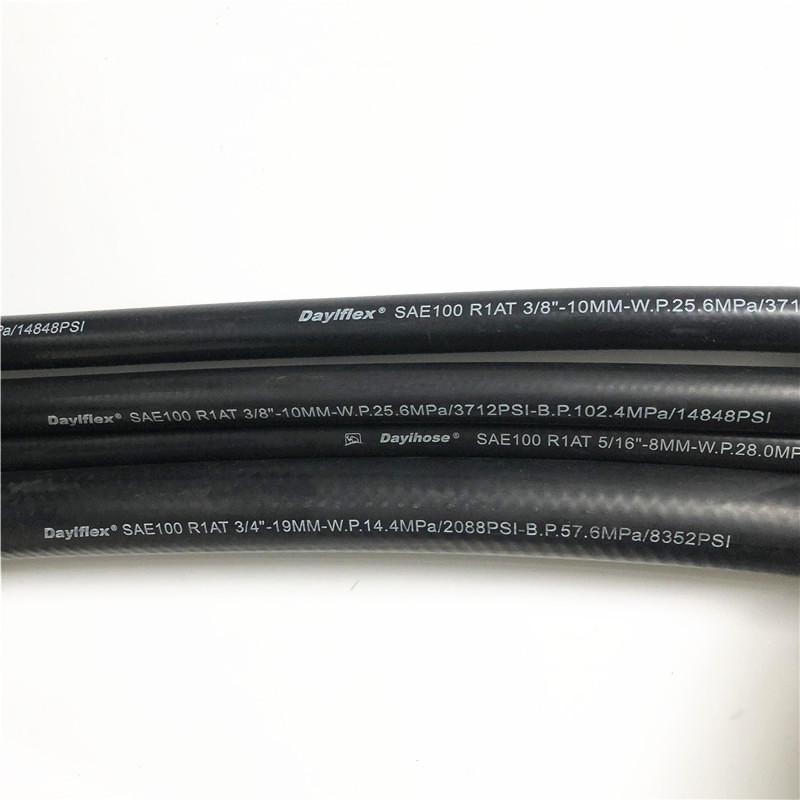
| Parameter | Unit | SAE 100R2AT | SAE 100R1AT |
|---|---|---|---|
| Working Pressure | MPa | 31.5 | 20.7 |
| Burst Pressure | MPa | 126 | 82.7 |
| Temperature Range | °C | -40 to +100 | -40 to +70 |
| Inner Tube | Material | Synthetic Rubber (NBR) | Synthetic Rubber (NBR) |
| Reinforcement | Layers | 2 Steel Wire Braids | 1 Steel Wire Braid |
| Outer Cover | Material | Synthetic Rubber (SBR/NBR Blend) | Synthetic Rubber (SBR/NBR Blend) |
Failure Mode & Maintenance
China wire braided high pressure hydraulic hose is susceptible to several failure modes. Fatigue cracking, initiated by repeated pressure impulses and bending stresses, is a common cause of failure, particularly in applications involving vibration or dynamic loading. Wire protrusion, resulting from braid relaxation or damage, can occur due to exceeding the minimum bend radius or exposure to abrasion. Delamination, where the rubber layers separate from the wire braid, is often caused by poor bonding during vulcanization or prolonged exposure to high temperatures. Degradation of the rubber compounds, due to ozone attack, UV exposure, or fluid incompatibility, leads to loss of flexibility and increased susceptibility to cracking. Oxidation of the steel wire can weaken the braid and reduce its pressure capacity. Regular inspection is crucial. This includes visual examination for cracks, abrasions, bulges, and wire protrusion. Hose should be replaced if any signs of damage are observed. Proper routing and support, avoiding sharp bends and abrasion points, is essential. Maintaining clean hydraulic fluid and adhering to recommended fluid change intervals prevents internal damage. Correct hose assembly, including proper fitting selection and crimping, ensures a secure and leak-proof connection. Periodic pressure testing can verify hose integrity. Storage of hoses in a cool, dry, and dark environment minimizes degradation.
Industry FAQ
Q: What is the significance of the "dash size" designation for hydraulic hoses (e.g., -6, -8, -10)?
A: The dash size refers to the inner diameter of the hose in sixteenths of an inch. Therefore, a -6 hose has a 6/16 inch (or 3/8 inch) inner diameter, a -8 hose has an 8/16 inch (or 1/2 inch) inner diameter, and so on. The dash size is a critical parameter for determining flow rate and pressure drop within the hydraulic system. Selecting the correct dash size is essential for optimal performance and preventing system inefficiencies.
Q: How does the number of wire braids affect the hose's pressure rating?
A: The number of wire braids directly correlates to the hose's pressure rating. Each additional layer of braiding increases the hose’s ability to withstand internal pressure. A hose with two braids will generally have a significantly higher pressure rating than a hose with one braid. However, increasing the number of braids also reduces the hose’s flexibility.
Q: What are the primary differences between SAE J517 and EN 853 hydraulic hose standards?
A: SAE J517 is a North American standard, while EN 853 is a European standard. While both standards define performance requirements for hydraulic hoses, there are differences in testing methods and performance criteria. EN 853 generally specifies more stringent testing requirements, particularly regarding impulse testing and aging resistance. It's crucial to ensure the hose meets the standard relevant to the operating region.
Q: What is the role of the hose fitting in preventing leaks and ensuring system integrity?
A: The hose fitting is a critical component. A properly selected and crimped fitting creates a permanent, leak-proof connection between the hose and the hydraulic system components. The fitting must be compatible with the hose type and the fluid being conveyed. Incorrect crimping can lead to premature failure and leaks. Fittings are categorized by connection type (e.g., crimped, field-attachable, threaded) and material.
Q: How important is fluid compatibility when selecting a hydraulic hose?
A: Fluid compatibility is paramount. Using a hose with an inner tube material that is incompatible with the hydraulic fluid can lead to swelling, softening, degradation, and ultimately, hose failure. Different hydraulic fluids (e.g., mineral oil, synthetic fluids, phosphate ester fluids) require different inner tube materials. Always verify the hose's fluid compatibility before installation.
Conclusion
China wire braided high pressure hydraulic hose remains a foundational component within fluid power systems, demanding a comprehensive understanding of material science, manufacturing processes, and performance characteristics. Its ability to reliably transmit hydraulic energy under demanding conditions hinges on meticulous attention to detail throughout the entire lifecycle – from material selection and production to installation, maintenance, and eventual replacement. The escalating demands for increased operating pressures, improved durability, and enhanced safety necessitate ongoing innovation in hose design and materials, alongside adherence to rigorous industry standards.
Future advancements will likely focus on developing new rubber compounds with enhanced temperature and chemical resistance, optimizing braid configurations for improved fatigue life, and integrating smart sensing technologies for real-time hose condition monitoring. Implementing predictive maintenance strategies, based on data collected from these sensors, can further minimize downtime and optimize system performance. The evolution of hydraulic hose technology will be integral to the continued efficiency and reliability of industries reliant on fluid power.