
Apr . 01, 2024 17:55 Back to list
china top quality high pressure hydraulic hose Performance Analysis
Introduction
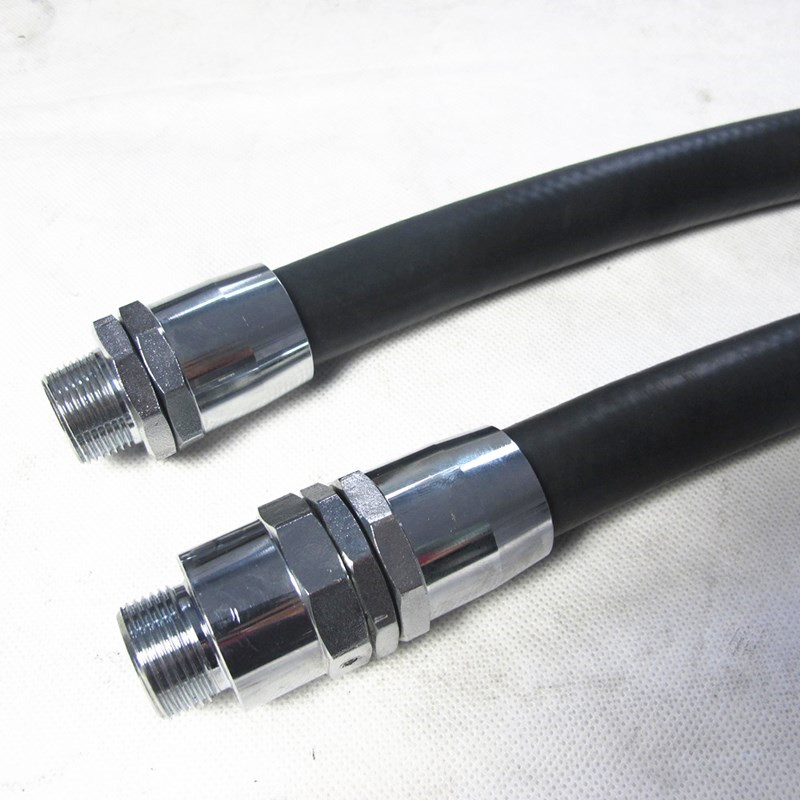
High-pressure hydraulic hose is a critical component in fluid power systems across a multitude of industries, including construction, agriculture, manufacturing, and oil & gas. These hoses are designed to transmit hydraulic fluid under significant pressure to power actuators and machinery. “China top quality high pressure hydraulic hose” refers to products manufactured within China adhering to stringent quality control standards, often exceeding international benchmarks for burst pressure, impulse resistance, and abrasion resistance. This guide provides a comprehensive technical overview of these hoses, encompassing material science, manufacturing processes, performance characteristics, failure modes, and relevant industry standards. A primary industry pain point centers around hose failure leading to costly downtime, safety hazards, and fluid leaks, driving the demand for superior hose quality and predictive maintenance strategies. Achieving consistent performance and longevity in demanding applications requires a deep understanding of the underlying engineering principles and material properties.
Material Science & Manufacturing
The construction of a high-pressure hydraulic hose typically involves four primary layers: the inner tube, reinforcement layers, outer cover, and in some cases, an intermediate protective layer. The inner tube is commonly composed of nitrile rubber (NBR) for its excellent resistance to petroleum-based hydraulic fluids, or fluorocarbon rubber (FKM/Viton) for applications requiring compatibility with aggressive fluids at elevated temperatures. NBR offers good abrasion resistance and cost-effectiveness, while FKM provides superior temperature and chemical resistance but at a higher cost. The reinforcement layer is crucial for withstanding high pressures and preventing hose bursting. This layer traditionally consists of multiple plies of high-tensile steel wire, spirally wound or braided. The wire type (high carbon steel, alloy steel) and braiding angle significantly impact the hose’s pressure rating and flexibility. Recent advancements include synthetic fiber reinforcement (aramid, polyester) offering lighter weight and improved flexibility, though often with reduced pressure capacity compared to steel. The outer cover is typically made of chloroprene rubber (CR) providing resistance to abrasion, ozone, weathering, and oil. Manufacturing processes begin with extrusion of the inner tube and outer cover. The reinforcement layers are then applied through a winding or braiding process. Crucially, proper adhesion between layers is paramount; this is achieved through surface treatment and bonding agents. Parameters like wire tension, ply angle, and vulcanization time (curing process) are meticulously controlled to ensure optimal hose performance. Post-manufacturing, hoses undergo rigorous pressure testing and dimensional inspection to verify conformance to specifications. Quality control addresses common defects like porosity in the inner tube, uneven reinforcement, and cover cracking.

Performance & Engineering
The performance of a high-pressure hydraulic hose is defined by several key parameters: working pressure, burst pressure, impulse pressure, temperature range, and bend radius. Working pressure is the maximum continuous operating pressure recommended by the manufacturer, typically expressed in PSI or MPa. Burst pressure is the pressure at which the hose is expected to fail catastrophically. A safety factor, typically 4:1, is applied between working and burst pressures. Impulse pressure refers to the hose's ability to withstand pressure fluctuations (pulsations) commonly encountered in hydraulic systems. These pulsations can cause fatigue failure over time. Finite element analysis (FEA) is extensively used in hose design to optimize reinforcement layer configuration and predict stress distribution under varying pressure and bending conditions. Hose bend radius is critical; exceeding the minimum bend radius can induce kinking and localized stress concentrations, leading to premature failure. Material selection significantly impacts temperature performance. NBR typically operates within a temperature range of -40°C to 100°C, while FKM can withstand temperatures up to 200°C. Compliance with industry standards (SAE J517, DIN EN 853, GB/T 3682) is essential, dictating minimum performance requirements for various hose types. Corrosion resistance is also an important engineering consideration; steel wire reinforcement can be susceptible to corrosion, particularly in harsh environments. Protective coatings or stainless-steel wire options mitigate this risk.
Technical Specifications
| Parameter | Unit | SAE 100R2AT | SAE 100R6A |
|---|---|---|---|
| Working Pressure | MPa | 31.5 | 21.0 |
| Burst Pressure | MPa | 105 | 63 |
| Temperature Range | °C | -40 to +100 | -40 to +70 |
| Reinforcement | - | Two steel wire braids | Four spiral steel wire |
| Inner Tube | - | NBR | NBR |
| Outer Cover | - | CR | CR |
Failure Mode & Maintenance
High-pressure hydraulic hoses are susceptible to several failure modes, including burst failure, impulse failure, erosion, abrasion, and kinking. Burst failure occurs when the pressure exceeds the hose’s burst strength, often due to manufacturing defects or exceeding the working pressure. Impulse failure is caused by repeated pressure fluctuations leading to fatigue cracking in the reinforcement layers. Erosion results from the abrasive action of fluid particles, particularly in contaminated hydraulic systems. Abrasion is caused by external contact with rough surfaces. Kinking occurs when the hose is bent beyond its minimum bend radius, causing localized stress and eventual failure. Regular visual inspections are critical for detecting early signs of damage, such as cuts, abrasions, bulging, or leaks. Hose routing should be carefully planned to avoid sharp bends, contact with hot surfaces, or exposure to corrosive chemicals. Proper hose assembly practices, including the use of correctly sized fittings and crimping procedures, are essential. Fluid contamination is a major contributor to hose failure; regular fluid filtration and maintenance are crucial. Preventative maintenance programs should include periodic pressure testing and hose replacement based on service life recommendations. Failure analysis, involving microscopic examination of fractured hose sections, can identify the root cause of failure and inform corrective actions.
Industry FAQ
Q: What is the impact of hose layline markings on traceability and maintenance?
A: Layline markings, permanently embossed on the hose cover, provide crucial traceability information, including manufacturer, date of manufacture, and hose type. This information is essential for warranty claims, failure analysis, and tracking hose performance over time. Regular documentation of layline information during inspections enables effective maintenance scheduling and proactive hose replacement.
Q: How does the selection of fitting material affect the overall performance and longevity of the hose assembly?
A: Fitting material compatibility with the hose and hydraulic fluid is critical. Carbon steel fittings are common, but stainless steel fittings are preferred for corrosive environments. Improperly crimped fittings can lead to leaks and premature failure. The crimp process must be precisely controlled to ensure a secure and reliable connection without damaging the hose reinforcement.
Q: What are the key considerations when selecting a hose for high-temperature hydraulic fluid applications?
A: For high-temperature applications, the inner tube material must be resistant to degradation and maintain its flexibility. FKM (Viton) is often the preferred material due to its superior temperature resistance. The outer cover should also be capable of withstanding elevated temperatures without cracking or becoming brittle. The working pressure derates at higher temperatures, which must be factored into the system design.
Q: How do synthetic fiber reinforcements (aramid) compare to steel wire reinforcements in terms of performance and application?
A: Aramid reinforcements offer advantages in terms of weight reduction and flexibility, making them suitable for applications where space is limited or hose bending is frequent. However, they generally have a lower burst pressure and impulse resistance compared to steel wire reinforcements. They are also more susceptible to damage from abrasion and UV exposure.
Q: What role does hydraulic fluid type play in determining hose compatibility and service life?
A: Hydraulic fluid compatibility is paramount. Incompatible fluids can cause the inner tube to swell, degrade, or crack, leading to leaks and hose failure. The hose manufacturer’s recommendations for fluid compatibility should always be followed. Regularly monitoring fluid condition and changing fluids as recommended helps to maximize hose service life.
Conclusion
China top quality high pressure hydraulic hose represents a critical advancement in fluid power transmission. Achieving optimal performance and reliability necessitates a comprehensive understanding of material science, manufacturing techniques, and engineering principles. Careful consideration of working pressure, temperature range, impulse resistance, and fluid compatibility is essential for selecting the appropriate hose for specific applications.
Proactive maintenance, including regular inspections, fluid filtration, and hose replacement based on service life recommendations, minimizes the risk of catastrophic failure and extends the operational lifespan of hydraulic systems. Continued advancements in hose materials and manufacturing processes promise even greater performance, durability, and safety in the future.