
Apr . 01, 2024 17:55 Back to list
china thermoplastic hose Performance Analysis
Introduction
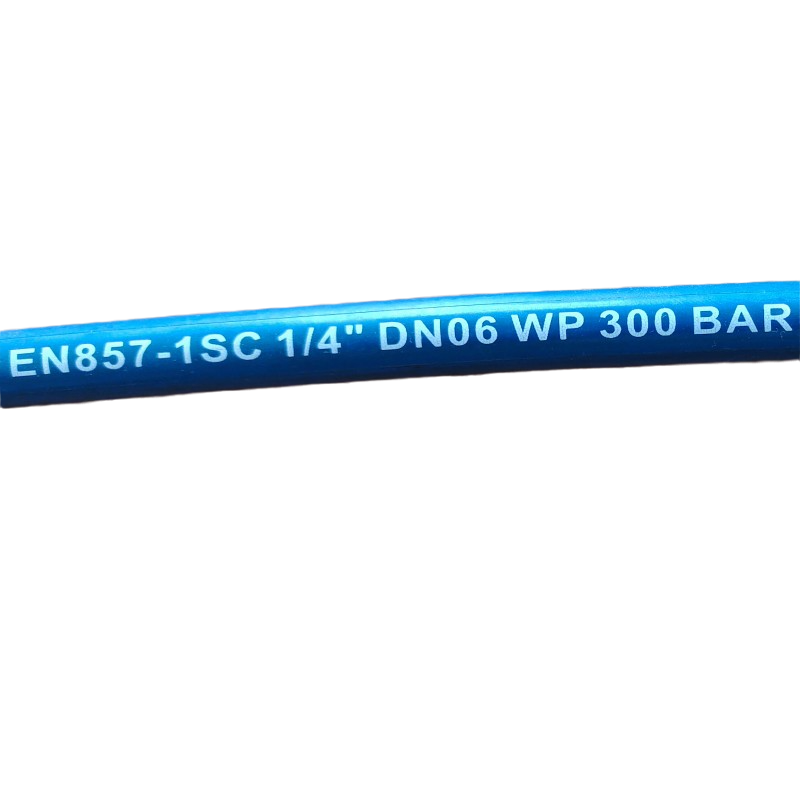
Thermoplastic hose, manufactured in China, represents a significant segment of the fluid transfer industry, serving diverse applications ranging from automotive coolant lines to industrial chemical conveyance. Unlike rubber hoses relying on vulcanization, thermoplastic hoses are constructed from thermoplastic polymers exhibiting inherent flexibility and resilience. These materials are melted and extruded, then cooled to form a seamless hose structure. Their increasing adoption stems from advantages including lighter weight, improved chemical resistance (dependent on polymer selection), tighter dimensional tolerances, and enhanced long-term performance characteristics compared to traditional rubber compounds. This guide provides an in-depth technical analysis of China-manufactured thermoplastic hose, encompassing material science, manufacturing processes, performance parameters, failure modes, and relevant industry standards. The primary pain points within the industry revolve around ensuring consistent material quality, verifying compliance with international regulations regarding chemical leaching and material composition (REACH, RoHS), and maintaining dimensional stability under varying temperature and pressure conditions. Cost optimization, while crucial, must not compromise performance or reliability, especially in critical applications like automotive and pharmaceutical manufacturing.
Material Science & Manufacturing
The foundation of thermoplastic hose performance lies in the selection of appropriate thermoplastic polymers. Commonly employed materials include Polypropylene (PP), Polyamide (Nylon – PA6, PA66, PA11, PA12), Polyethylene (PE – LDPE, HDPE), Polyvinyl Chloride (PVC), and Polyurethane (PU). PP offers good chemical resistance and low cost but has limited temperature range and relatively low burst pressure. Nylons demonstrate superior tensile strength, abrasion resistance, and a wider operating temperature range, making them suitable for demanding applications. PVC provides good flexibility and resistance to many chemicals but can become brittle at low temperatures and may contain plasticizers raising environmental concerns. PU offers excellent flexibility and abrasion resistance but is susceptible to hydrolysis.
Manufacturing typically involves extrusion, often multilayer extrusion to combine the benefits of different polymers. A core layer providing primary pressure resistance may be constructed from a reinforced polymer (e.g., polyamide with glass fiber reinforcement), while inner and outer layers offer chemical compatibility and abrasion resistance. Key parameters during extrusion include melt temperature, screw speed, die geometry, and cooling rate. Maintaining consistent melt temperature is critical for ensuring uniform polymer distribution and preventing degradation. Screw speed influences shear rate and, consequently, the degree of polymer orientation. Die geometry dictates hose dimensions and wall thickness, requiring precise machining and control. Cooling rate impacts crystallinity and dimensional stability; rapid cooling can lead to internal stresses and warping. Post-extrusion processes may include dimensional checks, pressure testing (hydrostatic testing to verify burst pressure), and coiling. The reinforcement layer, if present, may involve braiding with high-tensile fibers (polyester, aramid) or spiraling with steel wire, requiring careful control of tension and layer alignment.
Performance & Engineering
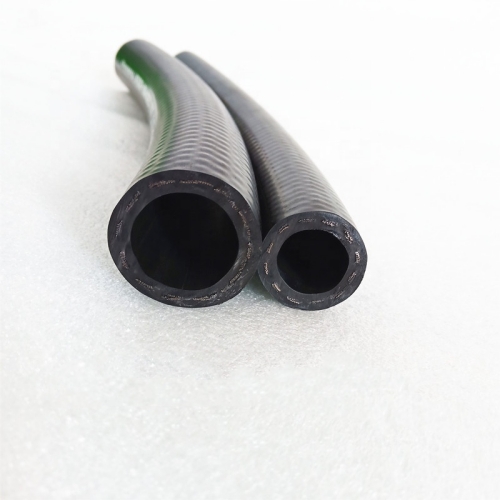
The performance of thermoplastic hose is dictated by several key engineering considerations. Burst pressure, determined by the hose’s material strength and wall thickness, is a primary design parameter. This is often evaluated using hydrostatic testing following standards like ISO 3968. Tensile strength, measured according to ISO 3384, reflects the hose's resistance to stretching and tearing. Elongation at break, also measured per ISO 3384, indicates the material's ductility. Flexibility, critical for installation and routing, is often assessed by measuring the bend radius required to induce kinking or collapse. Chemical resistance is determined through immersion testing in various fluids, evaluating changes in weight, volume, hardness, and tensile strength (ASTM D471). Temperature resistance, crucial for automotive and industrial applications, is evaluated by exposing hoses to elevated temperatures for extended periods and monitoring changes in mechanical properties.
Force analysis during operation involves considering internal pressure, external loads (bending, compression), and potential impact forces. Finite Element Analysis (FEA) is frequently employed to simulate stress distributions and identify potential failure points. Environmental resistance encompasses UV degradation (ASTM G154), ozone cracking, and resistance to weathering. Compliance requirements vary by application. Automotive hoses must meet standards like SAE J20R3 (Class A, B, C, D) specifying pressure, temperature, and fluid compatibility. Food-grade hoses require compliance with FDA 21 CFR 177 and EU 1935/2004. Medical applications demand biocompatibility testing according to ISO 10993. Proper selection of materials and reinforcement techniques is essential to meet these stringent requirements.
Technical Specifications
| Parameter | Nylon 6 (PA6) | Polypropylene (PP) | Polyurethane (PU) | PVC |
|---|---|---|---|---|
| Operating Temperature (°C) | -40 to 120 | -20 to 100 | -30 to 80 | -20 to 60 |
| Burst Pressure (MPa) | 15-30 (depending on reinforcement) | 8-15 | 10-25 | 5-12 |
| Tensile Strength (MPa) | 60-80 | 30-40 | 40-60 | 20-30 |
| Elongation at Break (%) | 200-300 | 150-250 | 300-500 | 100-200 |
| Chemical Resistance | Good to oils, fuels, solvents | Good to acids, bases | Good to oils, greases | Moderate to many chemicals |
| Abrasion Resistance | Excellent | Moderate | Excellent | Moderate |
Failure Mode & Maintenance
Thermoplastic hoses are susceptible to several failure modes. Fatigue cracking, caused by repeated flexing and pressure cycles, is common, particularly near fittings or areas of stress concentration. Delamination, separation of layers in multilayer hoses, can occur due to poor adhesion or incompatible materials. Hydrolysis, degradation of polymers by water absorption, affects PU hoses significantly, leading to loss of strength and flexibility. Oxidation, caused by exposure to oxygen and high temperatures, can result in embrittlement and cracking, especially in PP and PE hoses. Chemical attack, swelling, or degradation of the polymer due to exposure to incompatible fluids can lead to leaks and failure. Environmental stress cracking, induced by the combined effect of stress and aggressive chemicals, is another significant concern.
Preventative maintenance involves regular visual inspections for cracks, kinks, swelling, and discoloration. Pressure testing should be conducted periodically to verify hose integrity. Avoid exposing hoses to extreme temperatures or incompatible chemicals. Proper installation, avoiding sharp bends and excessive strain, is crucial. For PU hoses, minimize exposure to moisture. Store hoses in a cool, dry place away from direct sunlight. If damage is detected, replace the hose immediately. Fittings should be inspected for corrosion or leaks and replaced as necessary. Documenting hose usage, maintenance, and replacement schedules is essential for optimizing performance and preventing catastrophic failures.
Industry FAQ
Q: What are the key differences between nylon and polypropylene thermoplastic hoses in terms of long-term durability?
A: While polypropylene offers cost advantages, nylon hoses generally exhibit superior long-term durability. Nylon boasts a higher tensile strength and better resistance to abrasion, fatigue, and permeation. PP is susceptible to creep (slow deformation under constant load) and can become brittle over time with UV exposure. Nylon’s higher glass transition temperature also makes it more resistant to deformation at elevated temperatures. For demanding applications requiring extended service life, nylon is the preferred choice.
Q: How do different reinforcement materials (e.g., textile braid vs. spiral wire) affect the burst pressure and flexibility of a thermoplastic hose?
A: Textile braiding (polyester, aramid) provides uniform pressure resistance and enhances flexibility, enabling tighter bend radii. Spiral wire reinforcement offers significantly higher burst pressure capabilities but generally reduces flexibility. The choice depends on the application requirements: higher pressure needs necessitate spiral wire, while applications prioritizing flexibility favor textile braiding.
Q: What testing procedures should be employed to verify the chemical compatibility of a thermoplastic hose with a specific fluid?
A: The recommended procedure involves immersion testing, following ASTM D471. Hose samples are immersed in the fluid for a specified duration (e.g., 72 hours, 168 hours) at a controlled temperature. Changes in weight, volume, hardness (Durometer), and tensile strength are then measured. A significant decrease in any of these properties indicates incompatibility. Consider also performing permeability testing to assess fluid transmission through the hose wall.
Q: What are the typical failure modes observed in thermoplastic hoses used for automotive coolant applications, and how can they be mitigated?
A: Common failure modes include hydrolysis (especially in polyester-based hoses), oxidation, and fatigue cracking due to thermal cycling and engine vibrations. Mitigation strategies include selecting hoses specifically formulated for coolant compatibility (e.g., polyamide-based), using coolant additives to inhibit corrosion, ensuring proper hose routing to minimize stress, and regular inspection for signs of degradation.
Q: What are the key considerations for selecting a thermoplastic hose compliant with FDA regulations for food-grade applications?
A: The hose material must comply with FDA 21 CFR 177, ensuring it doesn’t leach harmful substances into the food product. Look for hoses specifically certified for food contact applications. The manufacturing process must also adhere to Good Manufacturing Practices (GMP). Consider factors like temperature resistance and chemical compatibility with the food being transferred. Documentation verifying FDA compliance should be readily available from the supplier.
Conclusion
China-manufactured thermoplastic hose represents a versatile and increasingly sophisticated solution for fluid transfer applications. The selection of appropriate materials, meticulous control of manufacturing parameters, and rigorous testing are essential for ensuring optimal performance and reliability. Understanding the interplay between material properties, operating conditions, and potential failure modes is crucial for making informed engineering decisions.
Continued innovation in thermoplastic polymer technology and extrusion techniques will further enhance the capabilities of these hoses, expanding their applicability to an even wider range of industries. Future trends will likely focus on developing more sustainable materials, improving chemical resistance, and enhancing long-term durability while maintaining cost-effectiveness. A commitment to quality control and adherence to international standards will be paramount for continued success in the global marketplace.