
Apr . 01, 2024 17:55 Back to list
china teflon hose Performance Analysis
Introduction
China Teflon hose, specifically Polytetrafluoroethylene (PTFE) lined flexible hose, represents a critical component in numerous industrial fluid transfer applications. Positioned within the chemical processing, pharmaceutical, automotive, and aerospace supply chains, it functions as a conduit for aggressive chemicals, high-temperature fluids, and sensitive materials where contamination must be rigorously avoided. Its core performance characteristics stem from PTFE’s exceptional chemical inertness, broad temperature resistance (-100°C to +260°C), and low coefficient of friction. Unlike rubber or metallic hoses, Teflon hose provides a non-reactive barrier, mitigating corrosion and ensuring fluid purity. The increasing demand for high-reliability fluid handling systems, coupled with stringent regulatory compliance standards, has driven the growth of the China Teflon hose manufacturing sector. Understanding the material science, manufacturing processes, and performance limitations of these hoses is paramount for engineers and procurement professionals alike.
Material Science & Manufacturing
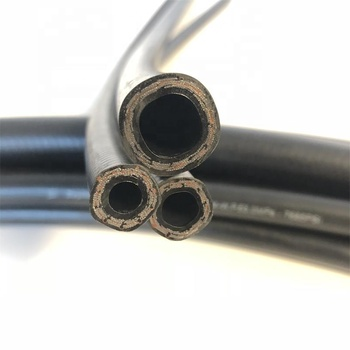
The fundamental material in China Teflon hose is Polytetrafluoroethylene (PTFE), a synthetic fluoropolymer of tetrafluoroethylene. PTFE exhibits remarkable chemical resistance due to the strong carbon-fluorine bonds, rendering it virtually impervious to most chemicals, including acids, bases, and solvents. Raw material selection prioritizes high-purity PTFE resin with controlled molecular weight distribution to ensure optimal processing characteristics and final product properties. The hose construction typically involves several layers. The innermost layer is a seamless PTFE tube, extruded through a die under carefully controlled temperature and pressure. Subsequent layers often consist of braided reinforcement – commonly stainless steel 304 or 316 – to enhance burst pressure and flexibility. Cover layers may incorporate additional PTFE, or other fluoropolymers like FEP (Fluorinated Ethylene Propylene) or PFA (Perfluoroalkoxy) for improved abrasion resistance or permeation characteristics. Manufacturing processes include extrusion, braiding, sintering, and often, post-sintering treatments like annealing. Critical parameters during extrusion include die temperature, screw speed, and resin feed rate, which directly impact tube dimensions, wall thickness uniformity, and PTFE crystallinity. Braiding tension must be meticulously controlled to avoid distortion of the PTFE tube. Sintering, a heat treatment process, fuses the PTFE particles, achieving a dense, non-porous structure. Quality control at each stage involves dimensional inspections, pressure testing, and chemical resistance verification.
Performance & Engineering
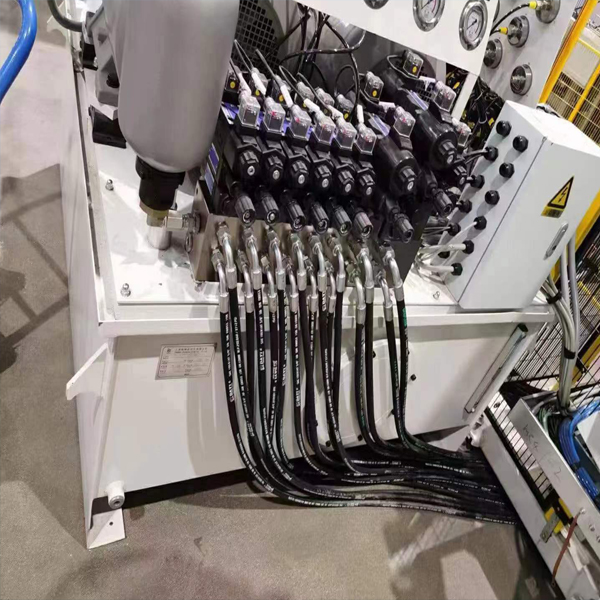
The performance of China Teflon hose is governed by a complex interplay of material properties and structural design. Burst pressure, a key performance metric, is determined by the PTFE wall thickness and the strength of the braided reinforcement. Finite Element Analysis (FEA) is frequently employed to optimize hose geometry and reinforcement configurations for specific pressure requirements. Flexibility, measured by bend radius, is critical for installation in confined spaces. This is directly impacted by the braid structure and PTFE’s inherent flexibility. Permeation resistance, the ability to prevent fluid leakage through the hose wall, is crucial for handling hazardous or high-purity fluids. PTFE’s low permeability is a primary advantage, but permeation rates can be influenced by temperature, pressure, and the chemical nature of the fluid. Environmental resistance encompasses factors like UV exposure, ozone degradation, and weathering. While PTFE is inherently resistant to UV radiation, prolonged exposure can lead to surface chalking and potential embrittlement. Compliance with industry standards (e.g., FDA, USP Class VI for pharmaceutical applications) is paramount, necessitating rigorous material traceability and testing to demonstrate adherence to regulatory requirements. Force analysis during fluid flow considers pressure drop, shear stress, and potential for hose expansion or contraction. Proper hose sizing and support are essential to prevent premature failure due to excessive stress.
Technical Specifications
| Parameter | Unit | Typical Value (China Teflon Hose) | Test Standard |
|---|---|---|---|
| Inner Diameter | mm | 6 – 100 | GB/T 18242.1 |
| Working Pressure | MPa | 1.0 – 40 | GB/T 18242.2 |
| Burst Pressure | MPa | 3.0 – 120 | GB/T 18242.2 |
| Temperature Range | °C | -100 to +260 | ASTM D349 |
| Tensile Strength (Reinforcement) | MPa | >1500 (Stainless Steel 304) | ASTM A371 |
| Elongation (Reinforcement) | % | >30 (Stainless Steel 304) | ASTM E8 |
Failure Mode & Maintenance
China Teflon hose, despite its robust properties, is susceptible to several failure modes. Permeation, while generally low, can increase with temperature and exposure to specific solvents, leading to leakage. Fatigue cracking, induced by repeated flexing or pressure cycling, is a common failure point, particularly in areas of high stress concentration (e.g., near fittings). Abrasion, caused by abrasive fluids or external contact, can erode the PTFE lining, compromising chemical resistance. Creep, the gradual deformation of the PTFE tube under sustained pressure, can lead to dimensional changes and eventual failure. Delamination, the separation of PTFE layers from the braided reinforcement, occurs due to inadequate bonding or thermal expansion mismatches. Oxidation, at extremely high temperatures (above 260°C), can degrade the PTFE material, reducing its mechanical properties. Maintenance involves regular visual inspection for cracks, abrasions, and leaks. Hose assemblies should be properly supported to minimize bending stress. Flush the hose after use with compatible solvents to remove residual fluids. Avoid sharp bends or excessive tension during installation. Replace hoses that exhibit signs of degradation or damage. Regular pressure testing is recommended for critical applications. Avoid contact with molten alkali metals, which can react violently with PTFE.
Industry FAQ
Q: What is the impact of different PTFE resin grades on hose performance?
A: Different PTFE resin grades possess varying molecular weights and crystalline structures, influencing their mechanical properties and chemical resistance. Higher molecular weight resins generally exhibit superior tensile strength and creep resistance, but may be more challenging to process. Modified PTFE resins, such as filled PTFE (e.g., with glass fibers), can improve abrasion resistance and dimensional stability, but may compromise chemical purity.
Q: How does the braiding material affect the hose's lifespan and application suitability?
A: Stainless steel 304 is a common braiding material offering good corrosion resistance and strength. Stainless steel 316 provides enhanced corrosion resistance, particularly in chloride-rich environments. The braid count (wires per inch) directly affects hose flexibility and burst pressure. Higher braid counts increase pressure capacity but reduce flexibility. Careful selection of braiding material is crucial based on the fluid being conveyed and the operating conditions.
Q: What are the common causes of PTFE hose failure in chemical processing applications?
A: In chemical processing, the primary causes of failure are chemical attack by aggressive fluids (although PTFE is generally inert, specific combinations can cause swelling or degradation), permeation leading to leakage, and fatigue cracking due to repeated pressure cycling. Maintaining proper hose compatibility with the fluid and implementing regular inspection programs are essential.
Q: How does temperature affect the performance and lifespan of a Teflon hose?
A: Elevated temperatures can reduce the burst pressure and increase the permeation rate of Teflon hoses. Prolonged exposure to temperatures near the upper limit (260°C) can lead to gradual degradation of the PTFE material. Conversely, low temperatures can make the hose more brittle and susceptible to cracking. Maintaining temperatures within the recommended range is critical.
Q: What certifications should I look for when sourcing Teflon hose from China for critical applications?
A: For critical applications, look for certifications demonstrating compliance with relevant industry standards. These include FDA compliance for food and pharmaceutical applications (21 CFR 177.1550), USP Class VI for biocompatibility, and ISO 9001 for quality management systems. Material traceability documentation and batch testing reports are also essential.
Conclusion
China Teflon hose offers a versatile and reliable solution for demanding fluid transfer applications across diverse industries. Its exceptional chemical inertness, broad temperature range, and low permeability make it ideally suited for handling corrosive, high-temperature, and sensitive fluids. However, achieving optimal performance and longevity requires careful consideration of material selection, manufacturing quality, and proper maintenance procedures. Understanding the potential failure modes and adhering to relevant industry standards are critical for ensuring safe and efficient operation.
The continued advancements in PTFE resin technology and hose construction techniques promise to further enhance the capabilities and broaden the application scope of China Teflon hose. Future developments may focus on improved permeation resistance, enhanced abrasion resistance, and the development of more sustainable manufacturing processes. The integration of smart sensors within hose assemblies for real-time monitoring of pressure, temperature, and leakage will also likely become increasingly prevalent.

