
Apr . 01, 2024 17:55 Back to list
china steel wire spiral hydraulic hose Performance Analysis
Introduction
China steel wire spiral hydraulic hose represents a critical component in fluid power systems across diverse industrial applications. These hoses are engineered to transmit hydraulic fluid under high pressure, facilitating the operation of heavy machinery in sectors such as construction, agriculture, manufacturing, and mining. Distinct from other hose constructions like braided hoses, the spiral wound reinforcement offers superior flexibility, higher pressure ratings, and improved resistance to kinking. The positioning of China as a major manufacturing hub for these hoses necessitates a comprehensive understanding of their material composition, manufacturing intricacies, performance characteristics, and potential failure mechanisms. This guide provides a detailed technical overview of china steel wire spiral hydraulic hoses, encompassing material science, manufacturing processes, engineering considerations, failure analysis, and relevant industry standards. Core performance hinges upon burst pressure, working pressure, impulse pressure capacity, and resistance to environmental factors such as temperature and fluid compatibility.
Material Science & Manufacturing
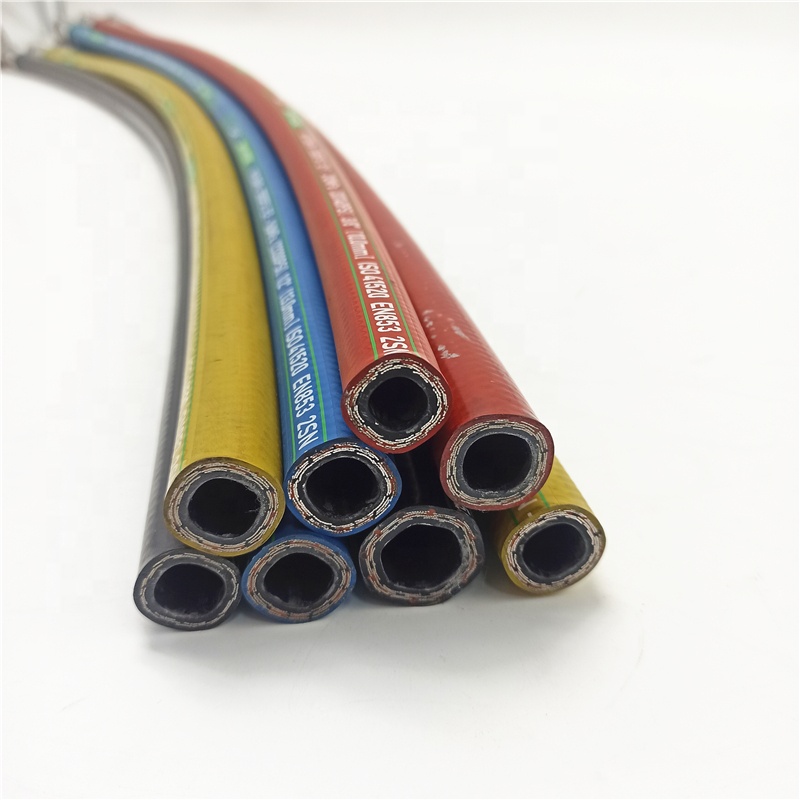
The construction of a china steel wire spiral hydraulic hose relies on a combination of materials carefully selected for their performance characteristics. The inner tube is typically composed of synthetic rubber compounds such as nitrile rubber (NBR), chloroprene rubber (CR, Neoprene), or ethylene propylene diene monomer (EPDM) rubber. NBR provides excellent resistance to petroleum-based hydraulic fluids, CR offers good ozone and weathering resistance, and EPDM is favored for its compatibility with phosphate ester fluids. The reinforcement layer is the defining feature of this hose type, consisting of multiple layers of high-tensile steel wire spirally wound around the inner tube. The steel wire is typically coated with zinc or brass to prevent corrosion. An outer cover, usually made of abrasion and weather-resistant rubber (e.g., CR or synthetic blends), protects the steel wire from environmental damage. Manufacturing begins with extrusion of the inner tube, followed by the spiral winding of the steel wire reinforcement. This process requires precise tension control to ensure uniform reinforcement distribution and prevent hose distortion. Subsequently, the outer cover is extruded over the reinforced structure. Critical parameters during manufacturing include rubber compound mixing ratios, extrusion temperatures, winding pitch of the steel wire, and vulcanization (curing) time and temperature. Improper vulcanization can lead to under-cured rubber with poor mechanical properties or over-cured rubber which is brittle. Quality control measures include dimensional checks, pressure testing (burst and impulse), and visual inspection for defects. The steel wire’s tensile strength, surface finish, and corrosion resistance directly impact the hose’s overall performance and durability.
Performance & Engineering
The performance of a china steel wire spiral hydraulic hose is governed by principles of fluid mechanics and material strength. Hose pressure ratings – working pressure, impulse pressure, and burst pressure – are determined through rigorous testing protocols, often exceeding industry standards. Working pressure represents the maximum continuous operating pressure. Impulse pressure, a crucial metric, quantifies the hose's ability to withstand pressure surges or spikes. Burst pressure is the pressure at which the hose fails catastrophically. Force analysis considers the hoop stress in the hose wall due to internal pressure, which is directly proportional to the pressure and the hose diameter, and inversely proportional to the wall thickness. The spiral steel wire reinforcement provides the tensile strength necessary to resist this hoop stress. Environmental resistance is paramount. Exposure to extreme temperatures (both high and low) can affect the rubber compounds' elasticity and strength. Hydrolytic stability – resistance to degradation in the presence of water – is also critical, particularly in applications where the hydraulic fluid absorbs moisture. Chemical compatibility with the hydraulic fluid is non-negotiable; incompatible fluids can cause swelling, softening, or cracking of the rubber components. Furthermore, the hose must exhibit resistance to ozone cracking, UV degradation, and abrasion. Compliance with international standards, such as SAE J517 (Hydraulic Hose) and EN 853 (Steel Wire Spiral Hydraulic Hoses), is essential to ensure product safety and reliability. Hose assembly, including the crimping of end fittings, must be performed according to established procedures to prevent premature failure.
Technical Specifications
| Parameter | Unit | Typical Value (China Standard) | Testing Standard |
|---|---|---|---|
| Working Pressure | MPa | 20-35 | GB/T 3682.1 |
| Burst Pressure | MPa | 60-105 | GB/T 3682.2 |
| Impulse Pressure (Cycles to Failure) | Cycles | >100,000 | SAE J30R10 |
| Temperature Range | °C | -40 to +100 | GB/T 3682.3 |
| Inner Tube Material | - | NBR, CR, EPDM | ASTM D2000 |
| Reinforcement Material | - | High-Tensile Steel Wire | ASTM A228 |
Failure Mode & Maintenance
China steel wire spiral hydraulic hoses are susceptible to several failure modes. Fatigue cracking, initiated by repeated flexing and pressure cycling, is a common cause of failure, particularly in applications involving frequent movement. Corrosion of the steel wire reinforcement, often due to ingress of moisture and contaminants, can significantly reduce the hose's strength and lead to rupture. Abrasion of the outer cover, caused by rubbing against other components, can expose the steel wire to corrosion and damage the inner tube. Kinking, particularly in tight bends, can cause localized stress concentrations and eventual failure. Chemical attack by incompatible hydraulic fluids can degrade the rubber components, leading to swelling, softening, and cracking. Delamination – separation of the layers (inner tube, reinforcement, and outer cover) – can occur due to poor bonding during manufacturing or exposure to harsh environmental conditions. Oxidation of the rubber compounds, accelerated by heat and UV exposure, can cause hardening and cracking. Maintenance practices should include regular visual inspection for signs of wear, damage, or leaks. Hoses should be replaced immediately if any defects are detected. Proper hose routing and support are essential to prevent kinking and abrasion. The hydraulic fluid should be regularly analyzed to ensure compatibility with the hose materials and to detect contamination. Avoid exceeding the hose's maximum working pressure. Storage should be in a cool, dry, and dark environment to minimize degradation.
Industry FAQ
Q: What is the primary difference between a 2SN and a 4SP hydraulic hose, and when would I choose one over the other?
A: 2SN hoses utilize two layers of steel wire braid, offering good flexibility and moderate pressure ratings. 4SP hoses employ four spiral layers of high-tensile steel wire, providing significantly higher pressure capacity and improved kink resistance. Choose 2SN for lower pressure applications requiring frequent bending, and 4SP for high-pressure systems needing durability and resistance to kinking. The 4SP construction is preferred in demanding applications like construction equipment where impulse pressures are high.
Q: How does the zinc coating on the steel wire affect the hose’s lifespan?
A: Zinc coating serves as a sacrificial anode, protecting the underlying steel wire from corrosion. While effective, the zinc coating will eventually corrode over time, especially in harsh environments. A thicker zinc coating provides longer-lasting corrosion protection. Brass plating offers superior corrosion resistance but is more expensive.
Q: What are the consequences of using a hydraulic hose with an incompatible fluid?
A: Incompatible fluids can cause significant damage. Petroleum-based fluids can swell and soften some rubber compounds, leading to leaks and failure. Phosphate ester fluids require specific hose materials (e.g., EPDM) to prevent degradation. Using an incompatible fluid compromises the hose's structural integrity and dramatically reduces its service life.
Q: What is the recommended minimum bend radius for a china steel wire spiral hydraulic hose?
A: The minimum bend radius is critical to prevent kinking and damage. It is typically specified by the hose manufacturer and is related to the hose diameter. Generally, the minimum bend radius should be at least 4 times the hose inner diameter. Exceeding this radius can lead to premature failure.
Q: How important are end fitting crimps, and what issues can arise from improper crimping?
A: End fitting crimps are paramount for a secure and leak-proof connection. Improper crimping – whether under-crimped or over-crimped – can lead to fitting blow-off, hose slippage, or damage to the hose end. Proper crimping requires using the correct die set and calibration based on the hose size and fitting type.
Conclusion
China steel wire spiral hydraulic hoses represent a robust and reliable solution for high-pressure fluid transfer in demanding industrial environments. Their superior flexibility, pressure ratings, and resistance to kinking, conferred by the spiral wound steel wire reinforcement, make them a preferred choice over braided hose alternatives in many applications. However, proper selection, installation, and maintenance are crucial to ensure optimal performance and longevity. Understanding the material science, manufacturing processes, and potential failure modes – encompassing corrosion, fatigue, and chemical incompatibility – is essential for effective risk mitigation.
Continued advancements in rubber compound technology and steel wire coatings will likely lead to further improvements in hose durability, chemical resistance, and operating temperature range. Focus on standardized testing procedures and rigorous quality control measures is vital to maintain consistency and reliability in the production of these critical components. Furthermore, the adoption of predictive maintenance strategies, incorporating condition monitoring techniques, can optimize hose replacement schedules and minimize downtime.