
Apr . 01, 2024 17:55 Back to list
china smooth cover high pressure hydraulic hose Performance Analysis
Introduction
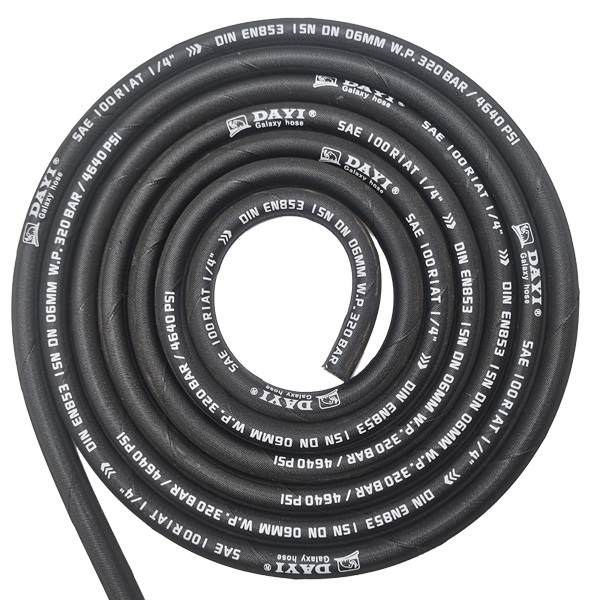
China smooth cover high pressure hydraulic hose represents a critical component in fluid power systems across diverse industrial applications. These hoses are engineered to transmit hydraulic fluid under substantial pressure, facilitating the operation of heavy machinery, construction equipment, agricultural implements, and manufacturing processes. Their construction typically involves a synthetic rubber inner tube, multiple layers of high-tensile steel wire reinforcement, and a smooth, abrasion-resistant outer cover. This configuration ensures both flexibility and resistance to extreme pressures and environmental factors. The ‘smooth cover’ designation indicates a surface finish optimized to minimize friction and protect against external damage, extending service life. Within the industrial chain, these hoses function as the dynamic link between static hydraulic power units and mobile or remotely located actuators. Core performance characteristics include working pressure, burst pressure, temperature range, and resistance to hydraulic fluids and environmental degradation. Failures in this component can lead to catastrophic system downtime and potential safety hazards, making understanding their material science, manufacturing processes, and performance limitations paramount.
Material Science & Manufacturing
The production of china smooth cover high pressure hydraulic hose necessitates a careful selection of materials and a precisely controlled manufacturing process. The inner tube is commonly composed of a nitrile rubber (NBR) compound, chosen for its excellent resistance to petroleum-based hydraulic fluids. Alternative materials, such as chloroprene rubber (CR) for improved heat and oil resistance, or fluorocarbon rubber (FKM) for compatibility with specialized fluids, are utilized depending on the application requirements. The reinforcement layers are critical; they typically consist of multiple braids or spirals of high-tensile steel wire. The steel wire is usually drawn from carbon steel and undergoes surface treatments like galvanization or phosphating to enhance corrosion resistance. The cover material is typically a blend of synthetic rubbers, including styrene-butadiene rubber (SBR) for abrasion resistance and weather resistance, and often incorporates carbon black for UV protection and increased tensile strength.
Manufacturing commences with the extrusion of the inner tube to the specified dimensions. The steel wire reinforcement is then applied through a braiding or spiraling process, with layer count directly influencing the hose’s pressure rating. Precise tension control during reinforcement application is crucial to prevent distortion and ensure uniform pressure distribution. Following reinforcement, the outer cover is extruded over the assembly. Curing, or vulcanization, is a critical step, involving heating the hose under pressure to initiate cross-linking within the rubber compounds. This process imparts elasticity, strength, and resistance to degradation. Quality control measures throughout the process include dimensional checks, pressure testing (hydrostatic and impulse testing), and visual inspection for defects. Key parameters include rubber compound mixing ratios, extrusion temperatures, braiding tension, curing time and temperature, and cooling rates. Improper control of these parameters can lead to weaknesses in the hose structure, compromising its performance and safety.

Performance & Engineering
The performance of china smooth cover high pressure hydraulic hose is governed by fundamental engineering principles, particularly those relating to fluid mechanics and material stress. Hose selection requires a thorough understanding of the system's operating pressure, flow rate, fluid type, and environmental conditions. The working pressure is the maximum pressure the hose can safely sustain during continuous operation, while the burst pressure represents the pressure at which the hose will rupture. A safety factor, typically 4:1, is applied to the working pressure to account for pressure spikes and dynamic loads. Force analysis involves calculating the hoop stress (circumferential stress) within the hose wall, which is directly proportional to the internal pressure and hose diameter, and inversely proportional to the wall thickness.
Environmental resistance is another crucial consideration. Exposure to extreme temperatures, UV radiation, ozone, and corrosive chemicals can degrade the rubber compounds, reducing the hose’s flexibility and strength. Abrasion resistance is particularly important in applications where the hose is subjected to friction against other surfaces. Compliance requirements vary depending on the region and application. For example, hoses used in mobile hydraulic machinery must comply with standards such as SAE J517 (USA) and EN 856 (Europe). These standards specify performance requirements for pressure rating, temperature range, impulse testing, and fluid compatibility. Functional implementation dictates specific design features. For instance, hoses used in high-vibration environments may require special couplings and anti-kink sleeves to prevent fatigue failure. Proper hose routing and support are also essential to minimize bending stress and prevent damage.
Technical Specifications
| Parameter | Unit | Specification Range (Typical) | Test Standard |
|---|---|---|---|
| Working Pressure | MPa | 16 - 70 | SAE J517 / EN 856 |
| Burst Pressure | MPa | 64 - 280 | SAE J517 / EN 856 |
| Temperature Range | °C | -40 to +100 | SAE J517 / EN 856 |
| Inner Tube Material | - | NBR, CR, FKM | ASTM D2000 |
| Reinforcement Layers | Number | 2 - 8 | Visual Inspection |
| Cover Material | - | SBR, CR | ASTM D2000 |
Failure Mode & Maintenance
China smooth cover high pressure hydraulic hose is susceptible to several failure modes, including fatigue cracking, abrasion, kinking, and chemical degradation. Fatigue cracking typically occurs in the reinforcement layers due to cyclical pressure fluctuations and bending stress. This is exacerbated by improper hose routing or excessive bending radii. Abrasion of the outer cover can expose the reinforcement layers to corrosion, weakening the hose structure. Kinking, or sharp bending, can restrict fluid flow and cause localized stress concentrations, leading to failure. Chemical degradation occurs when the hose is exposed to incompatible fluids or harsh chemicals, causing the rubber compounds to swell, soften, and lose their mechanical properties. Oxidation can also lead to hardening and cracking of the rubber over extended periods.
Preventive maintenance is crucial to extending hose life and preventing catastrophic failures. Regular visual inspections should be conducted to check for signs of abrasion, cracking, kinking, or swelling. Hose routing should be optimized to minimize bending stress and avoid contact with sharp objects. Fluid compatibility should be verified to ensure that the hose material is resistant to the hydraulic fluid being used. Hoses should be replaced at recommended intervals, even if they show no visible signs of damage. Proper storage conditions are also important; hoses should be stored in a cool, dry place away from direct sunlight and ozone sources. When replacing a hose, it's essential to use couplings that are compatible with the hose material and rated for the system's operating pressure. Proper crimping of the couplings is also critical to ensure a secure and leak-free connection. Failed hoses should be thoroughly analyzed to determine the root cause of failure and prevent recurrence.
Industry FAQ
Q: What is the significance of the steel wire spiral vs. braid reinforcement in high-pressure hoses?
A: Steel wire spiral reinforcement generally offers higher pressure ratings and greater flexibility compared to braided reinforcement. Spiral construction allows for more steel wire to be packed into a given hose diameter, increasing its ability to withstand high pressures. Braided reinforcement is often preferred for applications requiring tighter bend radii and improved kink resistance, but typically at a lower pressure capacity.
Q: How does temperature affect the performance of a hydraulic hose?
A: Extreme temperatures can significantly degrade hose performance. High temperatures can cause the rubber compounds to soften and lose their strength, reducing the hose’s pressure rating and increasing the risk of failure. Low temperatures can make the rubber brittle and susceptible to cracking. The specified temperature range for a hose should always be adhered to.
Q: What are the common causes of hydraulic hose leaks?
A: Common causes include loose or improperly crimped couplings, damaged hose ends, pinholes in the hose wall due to abrasion or corrosion, and internal degradation of the rubber compounds. Regular inspection and proper maintenance are crucial for identifying and addressing these issues.
Q: How important is proper hose routing and support?
A: Proper hose routing and support are critical for preventing premature failure. Avoid sharp bends, kinks, and contact with abrasive surfaces or hot components. Use hose clamps or supports to secure the hose and minimize vibration and movement. Improper routing can lead to fatigue cracking and reduced hose life.
Q: What is the role of hydraulic fluid compatibility in hose selection?
A: Hydraulic fluid compatibility is paramount. Using an incompatible fluid can cause the rubber compounds to swell, soften, or degrade, leading to hose failure. The hose inner tube material must be resistant to the specific hydraulic fluid being used. Consult fluid compatibility charts and manufacturer recommendations to ensure proper selection.
Conclusion
China smooth cover high pressure hydraulic hose plays a vital role in a wide array of industrial applications, demanding a comprehensive understanding of its material science, manufacturing processes, and performance characteristics. Proper selection, installation, and maintenance are crucial for ensuring reliable operation, maximizing service life, and preventing costly downtime and potential safety hazards. The interplay between material properties, reinforcement construction, and environmental factors dictates the hose's ability to withstand high pressures, temperatures, and chemical exposure.
Looking ahead, advancements in rubber compound technology and reinforcement materials are likely to lead to the development of even more durable and reliable hydraulic hoses. Furthermore, the increasing adoption of predictive maintenance techniques, such as hose condition monitoring and data analytics, will enable proactive identification of potential failures and optimized maintenance schedules. A commitment to adherence with international standards and rigorous quality control will remain paramount in maintaining the integrity and safety of these critical components within the broader industrial landscape.