
Apr . 01, 2024 17:55 Back to list
china six wire spiral hydraulic hose Performance Analysis

Introduction
China six wire spiral hydraulic hose constitutes a critical component in fluid power systems, utilized extensively across diverse industrial applications including construction machinery, agricultural equipment, mining operations, and manufacturing processes. This hose type is characterized by its robust construction, featuring an inner tube, multiple layers of high-tensile wire spiraling, and a durable outer cover. Its primary function is the reliable and safe transmission of hydraulic fluid under high pressure and varying environmental conditions. Compared to two or four-wire spiral hoses, the six-wire configuration offers significantly enhanced pressure handling capabilities and resistance to kinking, making it suitable for demanding applications where system integrity is paramount. Key performance indicators include working pressure, burst pressure, temperature range, and fluid compatibility, all of which are subject to stringent industry standards and quality control measures. The consistent demand for these hoses is driven by the continued expansion of heavy industries and the increasing complexity of hydraulic systems.
Material Science & Manufacturing
The manufacturing of china six wire spiral hydraulic hose relies on a carefully controlled process leveraging specific material properties. The inner tube is typically constructed from a synthetic rubber compound, most commonly nitrile rubber (NBR) due to its excellent oil resistance and compatibility with a wide range of hydraulic fluids. Alternative materials like chlorinated polyethylene (CM) are used for specialized applications requiring higher temperature resistance or compatibility with aggressive fluids. The reinforcing layers consist of high-tensile steel wire, typically carbon steel, spirally wound around the inner tube. The wire gauge and spiral pitch are critical parameters dictating the hose’s pressure rating and flexibility. A protective outer cover, usually made from a synthetic rubber like polyurethane (PU) or a blend of rubber polymers, provides abrasion, ozone, and weather resistance.
The manufacturing process begins with extrusion of the inner tube to the desired diameter and wall thickness. The steel wire is then simultaneously spiraled around the extruded tube using a specialized winding machine. Precise tension control during winding is essential to ensure uniform reinforcement and prevent wire breakage. Subsequently, the outer cover is extruded over the reinforced structure. Vulcanization, a chemical process involving heat and pressure, is then employed to cross-link the rubber compounds, enhancing their strength, elasticity, and resistance to degradation. Critical parameters monitored during manufacturing include temperature, pressure, cure time, and wire tension. Post-production quality control includes pressure testing to verify burst pressure, dimensional checks to ensure conformity to specifications, and visual inspection for defects. The chemical compatibility of the inner tube material is rigorously tested against common hydraulic fluids (ISO 11137) to prevent swelling, cracking, or degradation.
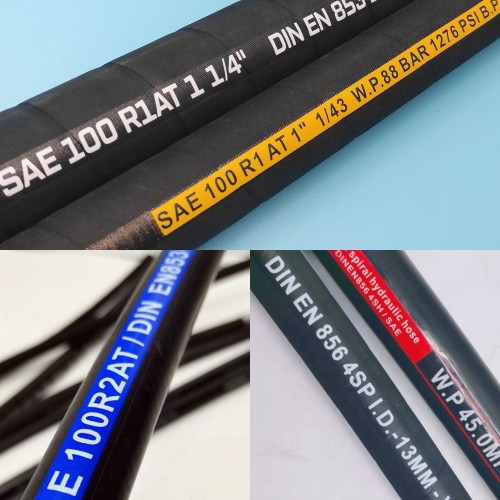
Performance & Engineering
The performance of a six-wire spiral hydraulic hose is fundamentally governed by principles of fluid mechanics and material stress analysis. The hose must withstand internal pressure generated by the hydraulic fluid, hoop stress induced by the pressure, and axial stress resulting from bending and flexing. The steel wire reinforcement is the primary load-bearing element, resisting hoop stress and preventing hose expansion or rupture. The number of wire layers directly correlates to the hose’s pressure rating; six wires provide a substantial increase in strength compared to fewer layers. Fatigue life is a critical consideration, as hydraulic hoses are subjected to cyclical pressure fluctuations and bending stresses during operation.
Environmental resistance is another crucial performance factor. The outer cover must protect the hose from abrasion, ozone cracking, UV degradation, and chemical attack. Temperature variations can significantly affect material properties, with extreme temperatures potentially reducing flexibility and increasing the risk of failure. Hydraulic hose assemblies often incorporate couplings (fittings) that are crimped onto the hose ends. The integrity of the crimp connection is paramount, as it must withstand the full operating pressure without leakage or separation. Engineering calculations involve determining the appropriate hose size and reinforcement based on system pressure, flow rate, fluid temperature, and environmental conditions. Compliance with industry standards such as SAE J517 (hydraulic hose specifications) and ISO 6899 (hydraulic hose assemblies) is mandatory for ensuring safety and reliability.
Technical Specifications
| Parameter | Unit | SAE 100R12 Equivalent | Typical China Six Wire Specification |
|---|---|---|---|
| Working Pressure | MPa | 20.7 | 21 - 28 |
| Burst Pressure | MPa | 82.7 | 84 - 112 |
| Temperature Range | °C | -40 to +100 | -40 to +120 |
| Inner Tube Material | - | Synthetic Rubber (NBR) | NBR, CR, or EPDM |
| Reinforcement | Layers | 6 Spiral Wire | 6 Spiral High-Tensile Steel Wire |
| Outer Cover Material | - | Synthetic Rubber (Abrasion Resistant) | Polyurethane or Synthetic Rubber Blend |
Failure Mode & Maintenance
Failure modes in china six wire spiral hydraulic hoses are diverse and often interconnected. The most common failure mode is hose rupture, typically initiated by exceeding the working pressure, wire fatigue, or damage to the inner tube. Wire fatigue occurs due to cyclical bending and flexing, leading to wire breakage and eventual hose failure. Internal abrasion caused by fluid contamination (particles) can erode the inner tube, reducing its thickness and compromising its integrity. External abrasion can damage the outer cover, exposing the reinforcement wires to corrosion. Kinking, particularly in tight bends, can induce localized stress concentrations and lead to cracking. Chemical degradation can occur if the inner tube material is incompatible with the hydraulic fluid, causing swelling, softening, or cracking.
Preventive maintenance is crucial for extending hose life and preventing catastrophic failures. Regular visual inspections should be conducted to identify signs of wear, abrasion, cracking, or leakage. Hose assemblies should be properly routed and supported to minimize bending stress and prevent kinking. The hydraulic fluid should be kept clean and filtered to prevent internal abrasion. Hoses should be replaced at recommended intervals, even if no visible damage is present. When replacing hoses, it is essential to use compatible fittings and ensure proper crimping. In case of a hose rupture, the system should be immediately shut down and the damaged hose replaced. Post-failure analysis, including microscopic examination of the fractured hose, can help identify the root cause of the failure and prevent recurrence.
Industry FAQ
Q: What is the significance of the 'dash size' designation in hydraulic hose specifications?
A: The dash size (e.g., -10, -12, -16) represents the inside diameter of the hose in sixteenths of an inch. A dash-12 hose has an inside diameter of 12/16 or ¾ inch. It’s a crucial parameter for ensuring proper flow rate and minimizing pressure drop in the hydraulic system. Selecting the correct dash size is based on the required flow volume and the fluid velocity.
Q: How does temperature affect the performance of a six-wire spiral hose?
A: Extreme temperatures can significantly impact the hose's performance. High temperatures can soften the rubber compounds, reducing the hose’s pressure rating and increasing its susceptibility to failure. Low temperatures can decrease the flexibility of the hose, making it more prone to kinking and cracking. The specified temperature range for a hose must be considered when selecting a hose for a particular application.
Q: What is the role of the outer cover in protecting the hose?
A: The outer cover provides a critical protective barrier against external factors such as abrasion, ozone, UV radiation, and chemical exposure. It shields the reinforcement wires from corrosion and prevents damage to the inner tube. The material of the outer cover is selected based on the anticipated environmental conditions. Polyurethane covers offer superior abrasion resistance, while synthetic rubber blends provide good overall protection.
Q: What are the key considerations when selecting fittings for a hydraulic hose?
A: Fittings must be compatible with the hose material, pressure rating, and fluid type. The fitting type (e.g., crimped, field-attachable) should be appropriate for the application. Proper crimping is essential for ensuring a leak-free and reliable connection. Using incorrect fittings or improper crimping techniques can lead to premature hose failure.
Q: How can I identify potential hose failures before they occur?
A: Regular visual inspections are the most effective way to identify potential failures. Look for signs of cracking, abrasion, blistering, swelling, or leakage. Pay attention to areas where the hose is subjected to bending or rubbing. Also, monitor for any unusual noises or vibrations in the hydraulic system, which could indicate a compromised hose.
Conclusion
China six wire spiral hydraulic hose represents a critical enabling technology for numerous industrial applications demanding high-pressure fluid transfer and robust performance. Its multi-layered construction, utilizing specialized materials and precise manufacturing processes, ensures reliability and safety under challenging operating conditions. Understanding the material science, engineering principles, and potential failure modes is paramount for proper selection, installation, and maintenance.
Continued advancements in materials and manufacturing techniques will likely focus on enhancing hose durability, reducing weight, and improving resistance to aggressive fluids and extreme temperatures. Adherence to stringent industry standards and implementation of comprehensive maintenance programs will remain essential for maximizing hose lifespan and minimizing downtime. The increasing demand for more efficient and reliable hydraulic systems will continue to drive innovation in hydraulic hose technology.