
Apr . 01, 2024 17:55 Back to list
china sae100r9 Technical Analysis

Introduction
SAE 100R9 is a Society of Automotive Engineers (SAE) standard specification for non-reinforced hydraulic hose, typically constructed of synthetic rubber. This guide provides a comprehensive technical analysis of Chinese-manufactured SAE 100R9 hose, focusing on its material composition, manufacturing processes, performance characteristics, failure modes, and relevant industry standards. Within the fluid power industry, SAE 100R9 hoses are frequently used for low-pressure hydraulic applications, air lines, and coolant transfer. A core pain point in the industry is ensuring consistent quality and adherence to specifications in non-domestic manufacturing, along with understanding the implications of varying rubber compounds on chemical compatibility and operational lifespan. This guide aims to address these concerns with detailed technical data and analysis.
Material Science & Manufacturing
SAE 100R9 hoses are typically constructed from a synthetic rubber compound, most commonly nitrile rubber (NBR) due to its excellent resistance to petroleum-based hydraulic fluids. However, other elastomers such as styrene-butadiene rubber (SBR) or ethylene propylene diene monomer (EPDM) may be utilized depending on the intended fluid compatibility. NBR’s key physical properties include a tensile strength ranging from 14-28 MPa, elongation at break between 300-500%, and a hardness typically between 60-70 Shore A. The manufacturing process begins with compounding the rubber with reinforcing fillers (such as carbon black), plasticizers, antioxidants, and curing agents. This compound is then extruded through a die to form the hose tube. A critical parameter in the extrusion process is maintaining consistent temperature and pressure to ensure uniform thickness and dimensional accuracy. Post-extrusion, the hose undergoes vulcanization (curing) to crosslink the rubber molecules, improving its elasticity, strength, and resistance to degradation. Precise control of the curing time and temperature (typically 140-180°C for a duration of 15-30 minutes) is essential for achieving optimal physical properties. Surface finish is also important; a smooth inner surface minimizes flow restriction and potential for abrasion of internal components. Quality control includes dimensional checks, pressure testing, and rubber compound analysis (using techniques like Fourier-transform infrared spectroscopy - FTIR) to verify compliance with SAE 100R9 standards.
Performance & Engineering
The performance of SAE 100R9 hose is primarily determined by its burst pressure, working pressure, and temperature range. SAE 100R9 hoses are designed for low-pressure applications, with working pressures typically ranging from 1.0 to 2.1 MPa. Burst pressure is significantly higher, typically four times the working pressure, to provide a safety factor. Engineering considerations involve calculating the hoop stress within the hose wall under internal pressure. The formula for hoop stress (σ) is σ = (P r) / t, where P is the internal pressure, r is the inner radius of the hose, and t is the wall thickness. Maintaining adequate wall thickness is crucial for preventing failure under pressure. Furthermore, environmental resistance is a key performance factor. Exposure to ozone, UV radiation, and extreme temperatures can lead to rubber degradation. Additives like antioxidants and UV stabilizers are incorporated into the rubber compound to mitigate these effects. Chemical compatibility is also paramount; incompatible fluids can cause swelling, softening, or cracking of the rubber. SAE 100R9 hoses must also meet specific requirements for fluid resistance as outlined in the standard. Fatigue life is another critical parameter, particularly in applications involving continuous flexing or vibration. Repeated stress cycles can lead to crack initiation and propagation, ultimately resulting in failure. Proper hose routing and support are essential to minimize stress concentration and extend service life.
Technical Specifications
| Parameter | Unit | SAE 100R9 Specification | Typical Chinese Manufacturer Range |
|---|---|---|---|
| Working Pressure | MPa | 1.0 - 2.1 | 1.0 - 2.3 |
| Burst Pressure | MPa | 4.0 - 8.4 | 4.2 - 9.0 |
| Temperature Range | °C | -40 to +100 | -40 to +105 |
| Inner Tube Material | - | Nitrile Rubber (NBR) | NBR, SBR, EPDM |
| Hardness | Shore A | 60-70 | 58-72 |
| Tensile Strength | MPa | ≥ 14 | 12-28 |
Failure Mode & Maintenance
Common failure modes for SAE 100R9 hoses include burst failure due to exceeding the working pressure, pinhole leaks caused by abrasion or chemical attack, and cracking due to fatigue or environmental degradation. Burst failure is often initiated by a weakened area in the hose wall, such as a damaged section or a thinning due to prolonged exposure to high temperatures. Pinhole leaks can occur if the hose is exposed to abrasive materials or incompatible fluids. Fatigue cracking typically originates at areas of high stress concentration, such as hose fittings or sharp bends. Oxidation and ozone cracking can cause surface cracks that propagate over time, eventually leading to complete failure. Maintenance procedures should include regular visual inspections for signs of damage, such as cracks, bulges, or leaks. Hoses should be replaced if any damage is detected. Proper hose routing and support are also crucial to minimize stress and extend service life. Avoid sharp bends and ensure that hoses are adequately protected from abrasion and chemical exposure. When disconnecting hoses, ensure that the system is depressurized and that the hose ends are clean. Store hoses in a cool, dry place away from direct sunlight and ozone sources. Periodically check hose connections for tightness and ensure that fittings are properly seated.
Industry FAQ
Q: What are the key differences between SAE 100R9 and SAE 100R10 hoses?
A: SAE 100R10 hoses are reinforced with one or two braids of high-strength steel wire, providing significantly higher pressure ratings and increased durability compared to the non-reinforced SAE 100R9. R10 hoses are suitable for higher pressure applications and more demanding environments, while R9 hoses are designed for lower pressure and less severe service conditions. The reinforced construction of R10 hoses also provides improved resistance to kinking and abrasion.
Q: How does the choice of rubber compound affect the chemical compatibility of SAE 100R9 hose?
A: The rubber compound is the primary determinant of chemical compatibility. NBR offers good resistance to petroleum-based oils and fuels, but limited resistance to acids, ketones, and esters. EPDM provides excellent resistance to water, steam, and weathering, but is not compatible with petroleum oils. SBR offers a balance of properties but generally has lower chemical resistance than NBR or EPDM. Selecting the appropriate rubber compound is crucial to prevent hose degradation and failure.
Q: What is the impact of improper hose installation on its performance and lifespan?
A: Improper installation can significantly reduce hose performance and lifespan. Common issues include over-tightening fittings (which can damage the hose), incorrect hose routing (leading to kinking and abrasion), and inadequate support (causing stress concentration). Following proper installation procedures, including using the correct fittings and torque specifications, is critical for ensuring reliable operation.
Q: What testing is typically performed to verify that a Chinese-manufactured SAE 100R9 hose meets the required specifications?
A: Standard tests include pressure testing (to verify burst and working pressure), dimensional checks (to ensure compliance with diameter and wall thickness specifications), tensile strength testing (to measure rubber compound strength), and fluid resistance testing (to assess compatibility with various fluids). Further testing can involve accelerated aging tests to assess long-term durability.
Q: What are the key considerations when selecting a supplier for SAE 100R9 hose from China?
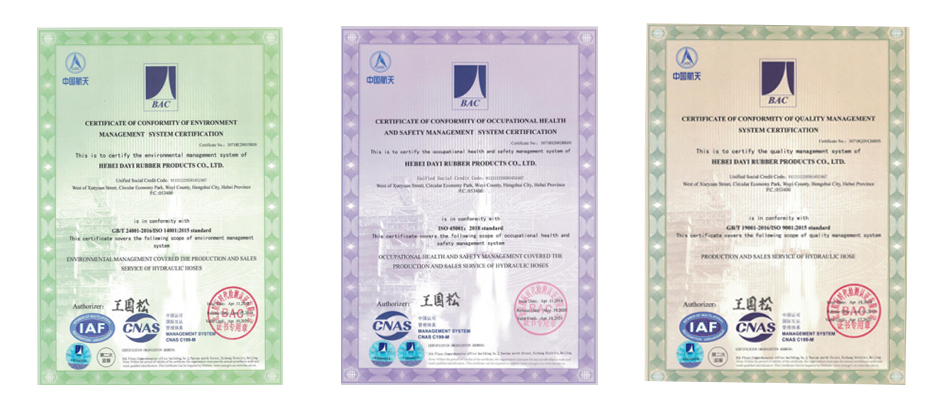
A: Key considerations include verifying the supplier's quality control systems (ISO 9001 certification is a good indicator), assessing their manufacturing capabilities, requesting material test reports (MTRs) and compliance certifications, and conducting on-site audits if possible. Establishing clear communication channels and outlining specific quality requirements are also essential.
Conclusion
SAE 100R9 hydraulic hose represents a cost-effective solution for low-pressure fluid transfer applications. Understanding the nuances of its material science, manufacturing processes, and performance characteristics is crucial for ensuring its reliable operation and maximizing its lifespan. Chinese manufacturers are increasingly capable of producing SAE 100R9 hose that meets or exceeds industry standards, but rigorous quality control and adherence to specifications are paramount.
Future developments in elastomer technology and manufacturing techniques may lead to improved performance and durability of SAE 100R9 hoses, potentially expanding their range of applications. Careful consideration of fluid compatibility, operating conditions, and proper installation practices will remain essential for optimizing hose performance and minimizing the risk of failure. Continued vigilance in quality assurance processes will ensure that these hoses consistently meet the demands of various industrial applications.

