
Apr . 01, 2024 17:55 Back to list
china sae100r5 Performance Analysis
Introduction
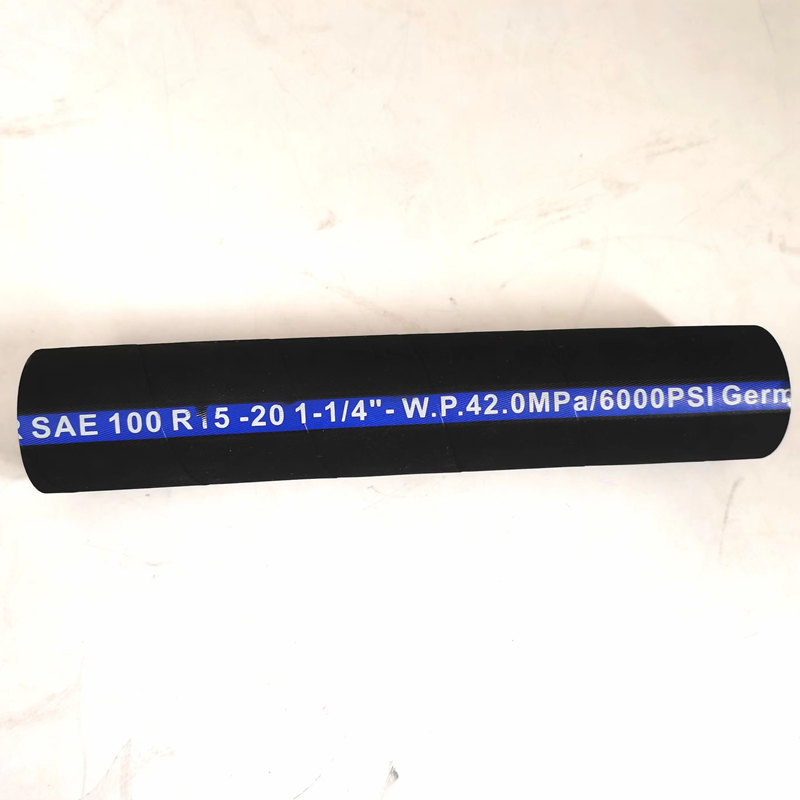
China SAE 100R5 hose represents a critical component in hydraulic fluid conveyance systems, adhering to specifications derived from the Society of Automotive Engineers (SAE) 100R5 standard, but manufactured within China. This standard dictates performance characteristics for non-steel reinforced hydraulic hoses intended for medium-pressure applications. Positioned within the hydraulic system's fluid power chain, its primary function is to transmit pressurized hydraulic oil or fluid between pumps, valves, actuators, and other components. Core performance criteria include burst pressure, working pressure, impulse pressure resistance, and fluid compatibility. A key pain point in the industry centers on ensuring consistent quality and performance equivalence between domestically produced SAE 100R5 hoses and those from established Western manufacturers, particularly regarding long-term durability and resistance to degradation under demanding operational conditions. Variations in rubber compound formulations and manufacturing tolerances can significantly impact hose lifespan and reliability.
Material Science & Manufacturing
The construction of China SAE 100R5 hose typically involves multiple layers of materials. The inner tube, designed for fluid compatibility, is commonly composed of synthetic rubbers such as Nitrile (NBR), often blended with other elastomers for specific fluid resistance properties. NBR provides excellent resistance to petroleum-based oils, fuels, and hydraulic fluids. The reinforcement layer, crucial for pressure containment, utilizes a single or multiple braids of high-tensile strength synthetic fibers, typically polyester or nylon. These fibers provide the necessary burst and working pressure ratings. The outer cover, providing abrasion and environmental protection, is typically a Chloroprene (CR) rubber compound, known for its resistance to ozone, weathering, and oil. Manufacturing processes begin with extrusion of the inner tube and outer cover. Precise control of extrusion temperature, screw speed, and die design is essential to ensure consistent wall thickness and surface finish. The reinforcement braid is then applied, followed by vulcanization – a curing process involving heat and pressure – to chemically crosslink the rubber compounds, imparting elasticity, strength, and durability. Critical parameters during vulcanization include temperature uniformity, pressure distribution, and curing time. Quality control relies heavily on destructive and non-destructive testing, including burst pressure testing, impulse testing, and dimensional checks.
Performance & Engineering
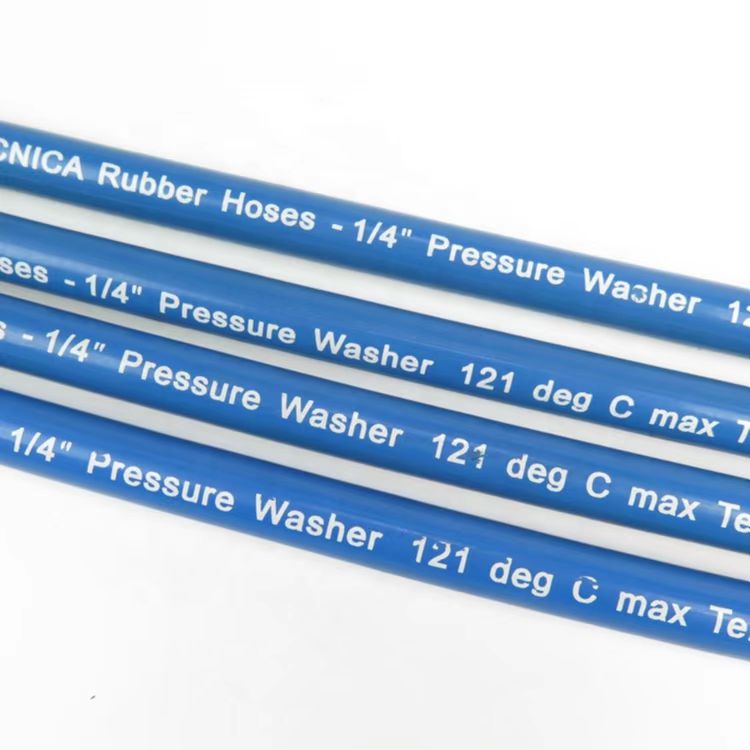
The performance of China SAE 100R5 hose is fundamentally governed by principles of fluid mechanics and material stress-strain relationships. The hose’s ability to withstand pressure is dictated by the tensile strength of the reinforcement braid and the elasticity of the rubber compounds. Burst pressure is a critical parameter, typically exceeding the working pressure by a safety factor of 4:1, as defined by SAE standards. Impulse pressure resistance, the ability to withstand pressure fluctuations without failure, is assessed through repetitive cyclic pressure testing. The hose’s design must account for dynamic stresses induced by fluid pulsation and vibration. Environmental resistance is a significant concern, particularly in applications exposed to extreme temperatures, UV radiation, and corrosive substances. The CR outer cover is engineered to mitigate these effects, but long-term exposure can lead to degradation and reduced performance. Compliance requirements necessitate adherence to SAE J517 (hydraulic hose specifications) and SAE J1926 (hose coupling specifications). Engineering considerations involve selecting appropriate rubber compounds and reinforcement materials to meet specific application demands, including fluid type, operating temperature range, and pressure requirements.
Technical Specifications
| Parameter | Unit | SAE 100R5 Standard | Typical China SAE 100R5 |
|---|---|---|---|
| Working Pressure | MPa | Up to 10.5 | 8 - 10.5 |
| Burst Pressure | MPa | ≥42 | 36 – 42 |
| Impulse Pressure (R12) | Cycles to Failure | ≥100,000 | 80,000 – 100,000 |
| Temperature Range | °C | -40 to +100 | -40 to +90 |
| Inner Tube Material | - | NBR | NBR |
| Reinforcement | - | Single or Multiple Braid (Polyester/Nylon) | Single or Multiple Braid (Polyester/Nylon) |
| Outer Cover Material | - | CR | CR |
Failure Mode & Maintenance
Failure modes in China SAE 100R5 hoses can be attributed to several factors. Fatigue cracking, resulting from repetitive bending and pressure cycling, is a common failure mechanism. This often initiates at the hose ends near the coupling connections. Delamination, the separation of the rubber layers, can occur due to inadequate adhesion during vulcanization or exposure to corrosive fluids. Oxidation and degradation of the rubber compounds, accelerated by high temperatures and UV exposure, lead to embrittlement and cracking. Abrasion damage, caused by external contact with surfaces, can compromise the outer cover and expose the reinforcement braid. Improper installation, such as excessive bending radius or incorrect coupling selection, can induce stress concentrations and premature failure. Maintenance recommendations include regular visual inspection for signs of cracking, abrasion, or swelling. Pressure testing should be performed periodically to identify leaks or weakening of the hose. Hoses should be replaced if any damage is detected or if they have exceeded their service life. Proper storage in a cool, dry, and dark environment is essential to prevent degradation. Furthermore, utilizing correctly specified couplings and avoiding sharp bends during installation are critical preventative measures.
Industry FAQ
Q: What is the primary difference between SAE 100R5 and SAE 100R6 hydraulic hoses?
A: SAE 100R6 hoses utilize a spiral reinforcement construction, offering significantly higher pressure ratings and improved flexibility compared to the braided construction of SAE 100R5. R6 hoses are suited for high-pressure applications where flexibility is paramount, while R5 hoses are more cost-effective for medium-pressure systems.
Q: How does the rubber compound selection impact the fluid compatibility of the hose?
A: The rubber compound’s chemical structure determines its resistance to specific fluids. NBR is generally suitable for petroleum-based fluids, but certain synthetic fluids require specialized compounds like EPDM (ethylene propylene diene monomer) for compatibility. Incorrect compound selection leads to swelling, softening, and ultimately, hose failure.
Q: What are the implications of exceeding the minimum bend radius specification for an SAE 100R5 hose?
A: Exceeding the minimum bend radius induces stress concentrations within the hose wall, particularly at the inner radius. This can lead to premature fatigue cracking and failure, even if the pressure is within the rated limits. Maintaining the specified bend radius ensures even stress distribution.
Q: How does temperature affect the performance and lifespan of a China SAE 100R5 hose?
A: Elevated temperatures accelerate the degradation of rubber compounds, reducing their elasticity and tensile strength. High temperatures also increase fluid viscosity, potentially exceeding the hose’s pressure capacity. Conversely, low temperatures can cause the rubber to become brittle and susceptible to cracking.
Q: What testing procedures are used to verify the quality of a China SAE 100R5 hose?
A: Common testing procedures include burst pressure testing, impulse pressure testing (cyclic pressure testing), tensile strength testing of the reinforcement braid, and dimensional checks. Fluid compatibility tests and accelerated aging tests are also employed to assess long-term performance.
Conclusion
China SAE 100R5 hoses represent a viable option for medium-pressure hydraulic fluid conveyance, offering a balance of performance and cost-effectiveness. However, consistent quality control and adherence to SAE standards are crucial to ensure reliable operation. Understanding the material science, manufacturing processes, and potential failure modes is paramount for proper selection, installation, and maintenance.
Future advancements in rubber compound technology and manufacturing techniques promise to further enhance the performance and durability of China SAE 100R5 hoses, bridging the gap with Western-manufactured equivalents. Continuous monitoring of industry standards and rigorous testing protocols will be essential to maintain product integrity and ensure customer satisfaction.

