
Apr . 01, 2024 17:55 Back to list
china sae100r1at Hydraulic Hose Performance Analysis
Introduction
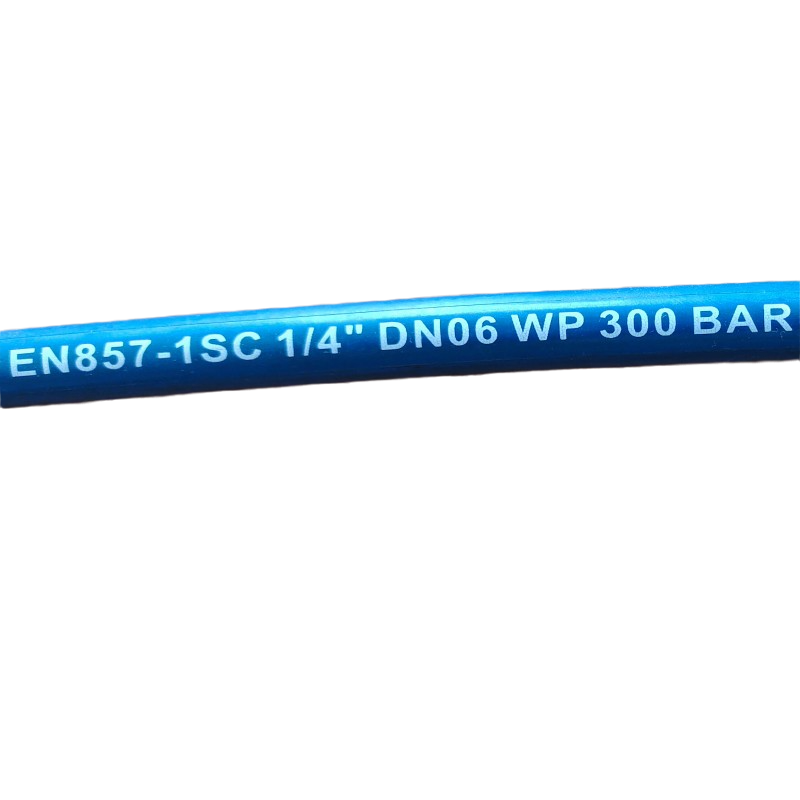
China SAE 100R1AT hose is a reinforced hydraulic hose conforming to the SAE 100R1AT specification, widely utilized in hydraulic systems across diverse industrial sectors including construction, agriculture, mining, and manufacturing. Its technical position within the fluid power industry chain is as a critical component responsible for the safe and efficient transmission of hydraulic fluid under high pressure. The 'AT' designation signifies its construction with an aramid fiber reinforcement layer, providing enhanced strength and durability compared to earlier standards. Core performance characteristics include high-pressure capability (typically up to 4,350 psi working pressure), resistance to hydraulic fluids, and flexibility allowing for complex routing within machinery. A significant industry pain point addressed by SAE 100R1AT hoses is the demand for reliable and long-lasting hydraulic lines, reducing downtime and maintenance costs associated with hose failure. The increasing sophistication of hydraulic systems requires hoses capable of withstanding increasingly demanding operating conditions, including elevated temperatures and exposure to aggressive fluids, areas where this standard provides a crucial baseline.
Material Science & Manufacturing
The construction of a China SAE 100R1AT hose fundamentally relies on several key materials. The inner tube is typically composed of a synthetic rubber compound, most commonly nitrile rubber (NBR) due to its excellent resistance to petroleum-based hydraulic fluids, as well as ethylene propylene diene monomer (EPDM) for phosphate ester fluids. NBR’s chemical structure imparts resistance to abrasion, oil, and fuels, while EPDM exhibits superior resistance to heat, ozone, and weathering. The reinforcement layer is critical and consists of multiple braids of high-tenacity aramid fibers – materials such as Kevlar or Twaron. These fibers provide exceptional tensile strength and burst resistance. The cover, or outer layer, is commonly formulated from chloroprene rubber (CR), also known as neoprene, due to its excellent resistance to abrasion, ozone, weathering, and oil. Manufacturing begins with extrusion of the inner tube and outer cover. The aramid fibers are then precisely wound around the inner tube in multiple layers, determined by the desired working pressure rating. Critical parameters during braiding include consistent tension and layer angle. Following braiding, the hose is vulcanized, a process involving heating the assembly under pressure, which crosslinks the rubber polymers, resulting in a durable and chemically resistant hose. Post-vulcanization, the hose undergoes rigorous testing to ensure compliance with SAE 100R1AT standards, including burst pressure, impulse testing, and dimensional accuracy.

Performance & Engineering
The performance of a SAE 100R1AT hose is dictated by a complex interplay of forces and environmental factors. Force analysis centers around tensile strength, burst pressure, and impulse pressure resistance. The aramid fiber reinforcement bears the primary load in resisting internal pressure, while the rubber compound provides sealing and flexibility. Burst pressure testing (typically exceeding 4 times the working pressure) verifies the hose's ability to withstand extreme pressure surges. Impulse pressure testing simulates the pulsating pressure generated by hydraulic pumps, assessing the hose's resistance to fatigue failure. Environmental resistance is critical, especially considering operational environments. Exposure to extreme temperatures (-40°C to +100°C) can affect rubber elasticity and potentially lead to cracking. Ozone and UV degradation can compromise the outer cover's integrity. Compatibility with hydraulic fluids is also paramount; prolonged exposure to incompatible fluids can cause swelling, softening, or cracking of the rubber compounds. Compliance with SAE J517 standard is vital, dictating the acceptable level of permeation of fluids through the hose wall, contributing to environmental safety. Functional implementation requires proper hose assembly with appropriate fittings. Incorrect fitting crimping can significantly reduce the hose's working pressure rating and increase the risk of failure. Bend radius limitations must be observed to prevent kinking and internal damage.
Technical Specifications
| Parameter | Unit | SAE 100R1AT Specification | Typical China SAE 100R1AT (Range) |
|---|---|---|---|
| Working Pressure | PSI | Up to 4,350 | 2,000 – 4,500 |
| Burst Pressure | PSI | Minimum 3x Working Pressure | 6,000 – 13,500 |
| Temperature Range | °C | -40 to +100 | -40 to +120 (depending on compound) |
| Inner Tube Material | - | NBR or EPDM | NBR, EPDM |
| Reinforcement | - | Aramid Fiber (multiple braids) | Aramid Fiber (2-6 braids) |
| Cover Material | - | Chloroprene (CR) | Chloroprene (CR) |
Failure Mode & Maintenance
Failure modes in China SAE 100R1AT hoses are often a result of accumulated damage or exceeding operational limits. Fatigue cracking, arising from repeated flexing and impulse pressure, is a common failure mechanism, particularly at connection points. Delamination, or separation of the reinforcement layer from the rubber matrix, can occur due to improper vulcanization or exposure to aggressive fluids. Degradation of the rubber compounds, caused by ozone, UV radiation, and extreme temperatures, can lead to hardening, cracking, and loss of flexibility. Oxidation of the rubber, especially at elevated temperatures, contributes to material breakdown. External damage, such as abrasion or cuts, compromises the hose’s integrity. Internal abrasion can occur due to particulate contamination in the hydraulic fluid. Maintenance involves regular visual inspection for cracks, abrasions, and leaks. Hose assemblies should be inspected for proper crimp integrity and evidence of twisting. Fluid cleanliness is critical; regular filter changes minimize internal abrasion. Proper storage is also crucial, avoiding direct sunlight and extreme temperatures. When replacing a hose, it’s essential to use fittings specifically designed for SAE 100R1AT hoses and to follow manufacturer’s recommendations for crimping procedures. Consider implementing a hose management program that tracks hose age and usage to proactively identify and replace potentially failing hoses.
Industry FAQ
Q: What is the key difference between SAE 100R1AT and SAE 100R2AT hydraulic hoses?
A: SAE 100R2AT hoses utilize a spiral reinforcement, offering higher flexibility and improved kink resistance compared to the braided construction of 100R1AT. However, 100R1AT generally offers a higher burst pressure for a given size and is often more cost-effective for straight-run applications.
Q: How does the aramid fiber reinforcement affect the hose's performance?
A: Aramid fiber provides significantly higher tensile strength and burst resistance than traditional steel wire reinforcement. This allows for higher working pressures and greater safety margins. Aramid is also lighter than steel, reducing overall system weight.
Q: What impact does fluid compatibility have on hose lifespan?
A: Using an incompatible hydraulic fluid can cause the rubber compounds to swell, soften, or crack, leading to premature hose failure. It is critical to select a hose with an inner tube material compatible with the intended hydraulic fluid.
Q: What is the recommended minimum bend radius for SAE 100R1AT hoses?
A: The minimum bend radius is typically specified by the hose manufacturer and is dependent on the hose size and construction. Exceeding this radius can cause kinking and internal damage, reducing hose lifespan.
Q: How important is proper crimping when assembling a hose?
A: Proper crimping is paramount. Incorrect crimping can create stress concentrations, reduce the hose’s working pressure rating, and significantly increase the risk of failure. Use fittings and crimping equipment specifically designed for SAE 100R1AT hoses.
Conclusion
The China SAE 100R1AT hydraulic hose represents a crucial element in modern fluid power systems, providing a reliable and robust solution for transmitting hydraulic fluid under high pressure. Its carefully engineered construction, utilizing synthetic rubbers and high-tenacity aramid fiber reinforcement, delivers a balance of strength, flexibility, and durability. Understanding the material science, manufacturing processes, and potential failure modes is vital for ensuring optimal performance and longevity.
Successful implementation and maintenance require adherence to industry standards, proper hose assembly techniques, and a proactive approach to inspection and fluid cleanliness. As hydraulic systems continue to evolve and demand even greater performance, the continued refinement and application of standards like SAE 100R1AT will remain essential for safe and efficient operation.