
Apr . 01, 2024 17:55 Back to list
China SAE100R17 Hydraulic Hose Performance Analysis
Introduction
China SAE100R17 refers to hydraulic hose constructed to the specifications outlined by the Society of Automotive Engineers (SAE) 100R17 standard, manufactured within China. This standard defines the dimensional requirements, performance characteristics, and testing procedures for non-reinforced hydraulic hoses intended for use with petroleum-based hydraulic fluids. Within the industrial fluid power transmission system, SAE100R17 hoses occupy a critical position, connecting hydraulic pumps, valves, cylinders, and other components. Their primary function is to reliably convey hydraulic fluid under pressure, enabling the transfer of power and control within machinery. Key performance attributes include pressure capacity (typically up to 2500 psi), temperature range (-40°C to +100°C), and resistance to hydraulic fluid degradation. A primary industry pain point surrounds the consistency of material quality and adherence to SAE standards in Chinese manufacturing, leading to concerns regarding premature failure and system downtime. This guide details the material science, manufacturing processes, performance characteristics, failure modes, and relevant standards associated with China SAE100R17 hydraulic hoses, offering a comprehensive technical overview.
Material Science & Manufacturing
China SAE100R17 hoses are fundamentally comprised of three key material constituents: the inner tube, the reinforcement layer, and the outer cover. The inner tube is typically constructed from nitrile rubber (NBR), also known as Buna-N, chosen for its excellent resistance to petroleum-based hydraulic fluids, abrasion, and permeability. The chemical formula for NBR is (C4H6)n. The selection of specific NBR formulations is dictated by the intended fluid compatibility; for example, phosphate ester fluids require specialized NBR blends. The reinforcement layer, in SAE100R17, consists of a single braid of high-tensile strength steel wire. The steel wire used is typically drawn from AISI 1006 or equivalent carbon steel, possessing a yield strength of at least 415 MPa. The braiding process involves precisely interlacing the steel wire to impart the hose with pressure-withstanding capability. The outer cover is commonly formulated from chloroprene rubber (CR), also known as Neoprene. CR provides exceptional resistance to ozone, weathering, abrasion, and oil. Its chemical structure contains chlorine atoms that enhance its protective qualities.
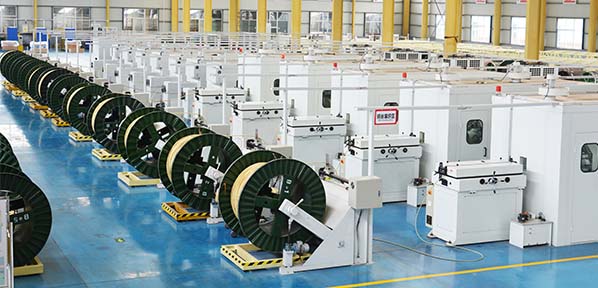
Manufacturing begins with the extrusion of the inner tube through a die. Precise control of temperature and extrusion speed is critical to ensure consistent wall thickness and a smooth bore. The steel wire braid is then applied over the extruded tube, utilizing a helical braiding machine. Following braiding, the outer cover is extruded over the reinforcement layer. During the extrusion process, the temperature must be carefully monitored to prevent scorching of the rubber compounds. Post-extrusion, the hose undergoes a curing process, typically involving vulcanization in an autoclave at elevated temperatures (around 150°C) and pressure. Vulcanization crosslinks the polymer chains within the rubber, enhancing its strength, elasticity, and resistance to degradation. Quality control measures involve dimensional inspection, burst pressure testing, impulse pressure testing, and fluid compatibility testing according to SAE J517 standards. Consistent diameter, wall thickness, and adequate steel wire coverage are crucial parameters.

Performance & Engineering
The performance of a China SAE100R17 hose is directly related to its ability to withstand internal pressure, external damage, and environmental conditions. Force analysis involves calculating the hoop stress within the hose wall under pressure. The formula for hoop stress (σ) is σ = (P r) / t, where P is the internal pressure, r is the inner radius of the hose, and t is the wall thickness. Increasing wall thickness or decreasing inner radius improves pressure capacity. Impulse pressure resistance, a critical factor in hydraulic systems with pulsating flow, is evaluated by subjecting the hose to repeated pressure cycles. Fatigue life is a key metric. The hose must withstand these cycles without leakage or rupture. Environmental resistance is another significant consideration. Exposure to extreme temperatures can affect the flexibility and chemical resistance of the rubber compounds. Prolonged exposure to ozone can cause cracking and degradation of the outer cover.
Compliance requirements are dictated by SAE J517, which specifies the test methods and acceptance criteria for hydraulic hoses. Furthermore, depending on the application and geographical region, compliance with regulations such as RoHS (Restriction of Hazardous Substances) and REACH (Registration, Evaluation, Authorisation and Restriction of Chemicals) may be necessary. Functional implementation necessitates careful selection of hose fittings. Fittings must be compatible with the hose and capable of withstanding the same pressure and temperature ratings. Crimping is the most common method of attaching fittings to hoses, requiring specialized tooling and precise crimp dimensions to ensure a secure and leak-proof connection. Incorrect crimping can lead to premature failure. Consideration must be given to bend radius during installation; exceeding the minimum bend radius can induce stress concentration and reduce hose life.
Technical Specifications
| Parameter | Unit | Specification (Typical) | Test Standard |
|---|---|---|---|
| Working Pressure | MPa | 20.7 | SAE J517 |
| Burst Pressure | MPa | 82.7 | SAE J517 |
| Temperature Range | °C | -40 to +100 | SAE J517 |
| Inner Tube Material | - | Nitrile Rubber (NBR) | ASTM D2000 |
| Reinforcement | - | Single Steel Wire Braid | SAE J517 |
| Outer Cover Material | - | Chloroprene Rubber (CR) | ASTM D2000 |
Failure Mode & Maintenance
Common failure modes for China SAE100R17 hoses include burst failure due to exceeding pressure limits, fatigue cracking from repeated impulse pressures, abrasion damage from external contact, and degradation of the rubber compounds due to exposure to heat, ozone, or incompatible fluids. Burst failures typically originate at points of weakness in the hose wall, such as inclusions or defects in the reinforcement braid. Fatigue cracking initiates from stress concentrations, often near fittings or bends. Abrasion damage results in thinning of the outer cover, exposing the reinforcement braid to corrosion. Degradation of the rubber compounds leads to loss of flexibility, cracking, and eventual leakage.
Preventive maintenance is crucial to maximize hose lifespan and prevent catastrophic failures. Regular visual inspections should be conducted to identify signs of damage, such as cuts, abrasions, bulges, or cracks. Hoses should be replaced immediately if any damage is detected. Fluid compatibility must be verified to ensure that the hydraulic fluid is compatible with the hose materials. Proper routing and support of the hose are essential to prevent abrasion and excessive bending. Avoid sharp bends and ensure that the hose is protected from contact with hot surfaces or abrasive materials. Crimped fittings should be inspected periodically for signs of corrosion or loosening. Hose assemblies should be pressure tested regularly to verify their integrity. Record keeping of hose installation dates and service history can facilitate proactive replacement schedules. Consider utilizing protective sleeves or guards in environments prone to abrasion or impact.
Industry FAQ
Q: What are the key differences between SAE 100R17 and SAE 100R1AT hoses?
A: SAE 100R1AT hoses feature a spiral-wound reinforcement construction, offering higher pressure ratings and improved impulse performance compared to the single-braided SAE 100R17. R1AT hoses are generally more expensive and are used in applications demanding higher reliability and longer service life. 100R17 has a single braid, making it less flexible and lower in pressure capacity.
Q: How does the steel wire quality impact the performance of SAE100R17 hoses?
A: The tensile strength and ductility of the steel wire directly affect the hose's burst pressure and fatigue life. Lower-quality steel wire with insufficient tensile strength is prone to breakage under stress, leading to premature failure. Proper heat treatment and surface treatment of the steel wire are also crucial for corrosion resistance.
Q: What is the effect of exceeding the minimum bend radius on hose lifespan?
A: Exceeding the minimum bend radius induces significant stress concentration in the hose wall, particularly on the inner radius. This can lead to cracking, fatigue failure, and reduced service life. Maintaining the recommended bend radius is essential for preventing premature failure.
Q: What are the common causes of leakage at hose fittings?
A: Leakage at hose fittings can be caused by incorrect crimping, damaged or corroded fittings, incompatible fittings, or improper sealant application. Ensuring proper crimp dimensions, using compatible fittings, and regularly inspecting for corrosion are crucial for preventing leakage.
Q: How does temperature affect the performance of nitrile rubber (NBR) inner tubes?
A: Exposure to high temperatures can cause NBR to swell and lose its elasticity, reducing its resistance to hydraulic fluid and increasing the risk of leakage. Low temperatures can cause NBR to become brittle and prone to cracking. Selecting a rubber compound with an appropriate temperature range is crucial for the application.
Conclusion
China SAE100R17 hydraulic hoses represent a vital component in numerous industrial applications, facilitating the reliable transmission of hydraulic power. Their performance is intrinsically linked to the material selection, manufacturing precision, and adherence to stringent quality control measures. Understanding the interplay between material properties, such as the tensile strength of steel reinforcement and the fluid resistance of NBR inner tubes, and the engineering principles governing pressure capacity and fatigue life, is paramount for selecting and maintaining these hoses effectively. Maintaining a focus on preventative maintenance and recognizing common failure modes allows for maximizing operational lifespan and mitigating the risk of costly downtime.
Looking forward, advancements in rubber compound technology and manufacturing processes promise to further enhance the performance and reliability of China SAE100R17 hoses. Continued adherence to international standards and rigorous quality control will be critical for maintaining competitiveness in the global market. Furthermore, the development of more sustainable and environmentally friendly rubber formulations is a growing trend, driven by increasing environmental regulations and customer demand. The optimization of hose designs to reduce weight and improve flexibility also represents an ongoing area of research and development.