
Apr . 01, 2024 17:55 Back to list
china sae100r16 Performance Analysis
Introduction
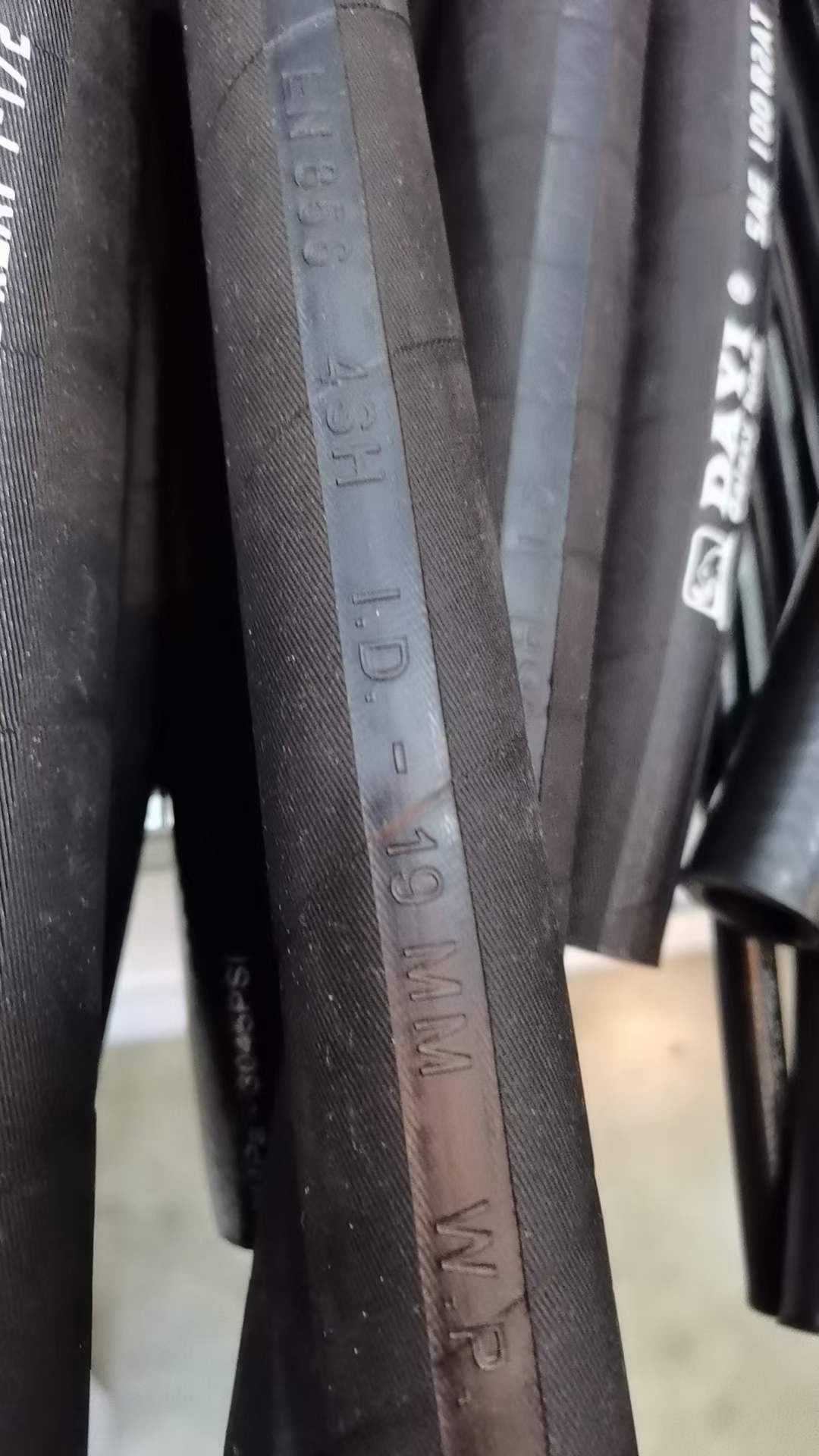
SAE 100R16 is a Society of Automotive Engineers (SAE) standard specification for non-reinforced rubber hose intended for use with hydraulic fluids. This guide focuses on Chinese-manufactured hoses adhering to this standard, often referred to as “China SAE 100R16”. These hoses are critical components in hydraulic systems across diverse industries, including construction equipment, agricultural machinery, industrial manufacturing, and material handling. They are designed to convey hydraulic power, typically operating at pressures up to 100 bar (1450 psi) depending on hose size and manufacturer specifications. Unlike reinforced hoses (like SAE 100R1AT or R2AT), SAE 100R16 hoses lack internal reinforcement layers like steel wire braiding. This makes them suitable for lower-pressure applications where flexibility and cost-effectiveness are paramount. A key pain point in the industry is consistent quality control in manufacturing, ensuring adherence to the precise dimensional and performance requirements outlined by SAE. Variations in rubber compound formulation and curing processes can lead to premature failure, impacting system reliability and safety. This guide provides an in-depth technical overview of China SAE 100R16 hoses, covering material science, manufacturing processes, performance characteristics, failure modes, and relevant industry standards.
Material Science & Manufacturing
China SAE 100R16 hoses are primarily constructed from a synthetic rubber compound, typically a blend of Nitrile Butadiene Rubber (NBR), also known as Buna-N. NBR is chosen for its excellent resistance to petroleum-based hydraulic fluids, abrasion resistance, and acceptable temperature operating range (typically -40°C to +100°C, though this varies based on compound formulation). The specific NBR formulation will also include additives such as plasticizers (to enhance flexibility), carbon black (for reinforcement and UV protection), antioxidants (to inhibit degradation), and curing agents (typically sulfur-based). The manufacturing process begins with the mixing of these raw materials in a Banbury mixer, ensuring homogeneous dispersion. This mixture is then extruded through a die to form the hose tube. Critical parameters during extrusion include die temperature, screw speed, and back pressure. Maintaining consistent material temperature is vital to prevent scorching or incomplete curing. Following extrusion, the hose undergoes a vulcanization (curing) process, typically in an autoclave or continuous steam curing line. Curing time and temperature are rigorously controlled – typically around 150°C for 30-60 minutes – to achieve optimal crosslinking of the rubber polymer chains, resulting in the desired mechanical properties. After curing, the hose is cooled, inspected for dimensional accuracy (inner diameter, outer diameter, wall thickness), and trimmed. Quality control at this stage focuses on visual defects like surface cracks, porosity, or unevenness. Finally, the hose ends are prepared for fittings, often involving skiving to create a secure bond with the fitting barb. Inconsistent curing, improper mixing ratios, and the use of lower-quality additives are common causes of quality issues in China SAE 100R16 hose manufacturing.
Performance & Engineering
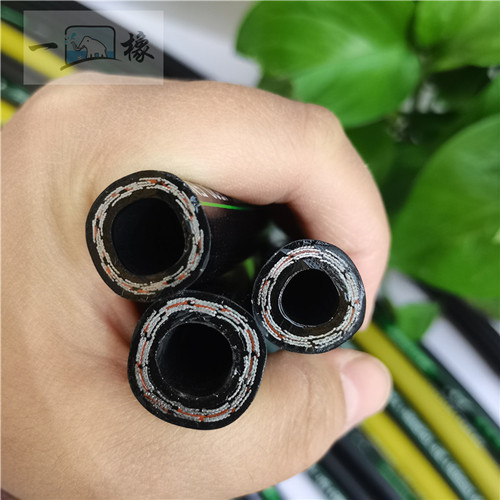
The performance of SAE 100R16 hoses is heavily influenced by the operating pressure and temperature. While rated up to 100 bar, a significant safety factor is crucial. Force analysis under pressure reveals hoop stress within the hose wall, increasing with diameter and pressure. The lack of reinforcement means the NBR compound bears the entirety of this stress. Therefore, accurate dimensional control during manufacturing is paramount. Engineering considerations also include the hose’s bend radius. Excessive bending stresses the rubber compound, potentially leading to cracking and failure. The minimum bend radius is typically specified by the manufacturer and should not be exceeded during installation. Environmental resistance is another key factor. While NBR offers good resistance to petroleum oils, prolonged exposure to ozone, UV radiation, and extreme temperatures can cause degradation. Ozone cracking manifests as surface fissures, reducing the hose's pressure-holding capacity. Compliance requirements dictate rigorous testing protocols, including burst pressure testing, pressure impulse testing, and temperature cycling. Burst pressure testing verifies the hose's ultimate strength, while impulse testing evaluates its ability to withstand pressure fluctuations. Temperature cycling assesses its performance under varying thermal conditions. A critical engineering challenge is preventing hydraulic fluid leakage. The hose-to-fitting interface must be properly sealed to avoid environmental contamination and maintain system efficiency. This requires careful selection of fitting materials and proper crimping procedures. Furthermore, fluid compatibility must be verified. While NBR is generally compatible with most petroleum-based fluids, some synthetic fluids can cause swelling or degradation.
Technical Specifications
| Parameter | Unit | SAE 100R16 (Typical) | Tolerance |
|---|---|---|---|
| Working Pressure | Bar | 100 | ±10% |
| Burst Pressure | Bar | 300 | ±15% |
| Temperature Range | °C | -40 to +100 | ±5°C |
| Inner Diameter | mm | 6.3 - 25.4 | ±0.2 |
| Outer Diameter | mm | 12.7 - 38.1 | ±0.3 |
| Wall Thickness | mm | 2.5 - 6.3 | ±0.2 |
Failure Mode & Maintenance
SAE 100R16 hoses are susceptible to several failure modes. Fatigue cracking, particularly at the hose ends near the fittings, is a common issue caused by repeated flexing and pressure cycling. The absence of reinforcement makes the hose more vulnerable to this type of failure. Another common failure mode is ozone cracking, which manifests as small surface cracks, especially in hoses exposed to outdoor environments. This is a result of ozone reacting with the unsaturated bonds in the NBR compound. Hydrolytic degradation can occur if the hose is exposed to moisture and elevated temperatures. This causes the polymer chains to break down, reducing the hose's strength and elasticity. Abrasion, particularly in applications where the hose is exposed to rubbing or contact with abrasive surfaces, can also lead to premature failure. Finally, improper installation, such as exceeding the minimum bend radius or incorrect crimping of fittings, can create stress concentrations and lead to failure. Maintenance recommendations include regular visual inspection for cracks, swelling, or discoloration. Hoses should be replaced immediately if any signs of damage are detected. Avoid exceeding the recommended working pressure or temperature limits. Store hoses in a cool, dry, and dark place, away from ozone sources. Periodically check fitting connections to ensure they are tight and secure. When handling hoses, avoid sharp bends or kinks. Properly support hoses to prevent sagging and strain. Implementing a preventative maintenance program, including scheduled inspections and replacements, is crucial for maximizing the lifespan and reliability of China SAE 100R16 hoses.
Industry FAQ
Q: What is the primary difference between SAE 100R16 and SAE 100R1AT hoses?
A: The fundamental difference is reinforcement. SAE 100R16 is non-reinforced, relying solely on the NBR rubber for its pressure-holding capacity. SAE 100R1AT incorporates a single steel wire braid reinforcement, significantly increasing its pressure rating and burst strength. This makes R1AT suitable for higher-pressure applications and provides greater resistance to fatigue cracking.
Q: How does temperature affect the performance of a China SAE 100R16 hose?
A: Extreme temperatures can significantly degrade performance. High temperatures accelerate the degradation of the NBR compound, reducing its elasticity and strength. Low temperatures can cause the rubber to become brittle and less flexible, increasing the risk of cracking. Maintaining operation within the specified temperature range (-40°C to +100°C) is critical.
Q: What is the acceptable bend radius for a typical SAE 100R16 hose?
A: The minimum bend radius varies depending on the hose diameter. A general rule of thumb is a bend radius of at least 4 times the inner diameter. Exceeding this limit places excessive stress on the rubber compound, increasing the risk of fatigue failure.
Q: How can I identify ozone cracking in an SAE 100R16 hose?
A: Ozone cracking appears as small, hairline cracks on the outer surface of the hose, often running perpendicular to the hose's length. It's more prevalent in hoses exposed to outdoor environments with higher ozone concentrations. The cracks may initially be superficial but can quickly propagate through the hose wall, leading to failure.
Q: What type of hydraulic fluid is compatible with China SAE 100R16 hoses?
A: SAE 100R16 hoses are generally compatible with petroleum-based hydraulic fluids. However, compatibility should always be verified with the fluid manufacturer. Some synthetic fluids (e.g., phosphate esters) can cause swelling or degradation of the NBR compound, leading to premature failure.
Conclusion
China SAE 100R16 hoses represent a cost-effective solution for low to medium-pressure hydraulic applications. However, their non-reinforced construction demands careful attention to operational parameters and maintenance practices. Consistent quality control during manufacturing, particularly regarding rubber compound formulation and curing processes, is crucial to ensuring reliable performance. Understanding the potential failure modes – including fatigue cracking, ozone degradation, and hydrolytic breakdown – is essential for proactive maintenance and maximizing service life.
The successful implementation of China SAE 100R16 hoses relies on a holistic approach, encompassing proper material selection, careful installation, and diligent maintenance. Future developments may focus on enhancing the NBR compound formulation with improved resistance to ozone and UV degradation, further extending the lifespan and broadening the application range of these essential hydraulic components. Adherence to relevant international standards and rigorous testing protocols remains paramount for ensuring safety and reliability.

