
Apr . 01, 2024 17:55 Back to list
china sae100r14 Performance Analysis
Introduction
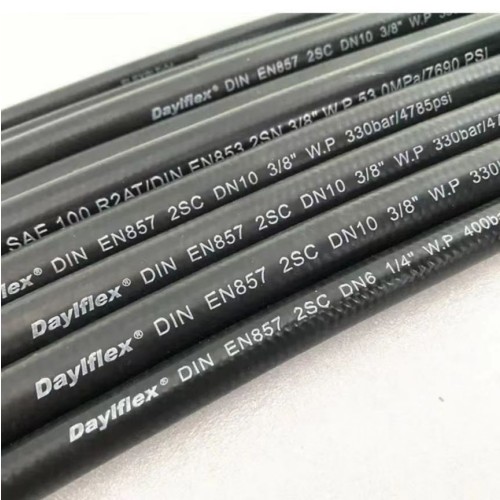
SAE 100R14 hose, manufactured to Chinese standards mirroring the Society of Automotive Engineers (SAE) specification, represents a critical component in hydraulic systems across a diverse range of industrial applications. This hose is specifically designed for medium-pressure applications, typically operating with working pressures up to 1000 psi (69 bar) and temperature ranges between -40°C and +100°C. Its primary function is the reliable conveyance of hydraulic fluid, facilitating power transmission in machinery used in construction, agriculture, material handling, and various manufacturing processes. Unlike higher-pressure rated hoses, SAE 100R14 balances cost-effectiveness with necessary performance characteristics for moderately demanding systems. A key industry pain point is ensuring consistent quality control in Chinese manufacturing to meet the stringent performance and safety requirements defined by SAE standards. Variation in rubber compound formulations and reinforcement materials can significantly impact hose lifespan and operational reliability, leading to potential system failures and costly downtime. This guide provides an in-depth examination of SAE 100R14 hose, covering its material science, manufacturing processes, performance characteristics, potential failure modes, and relevant industry standards.
Material Science & Manufacturing
The construction of SAE 100R14 hose relies on a multi-layered composition optimized for flexibility, pressure resistance, and fluid compatibility. The inner tube is typically composed of synthetic rubber, commonly nitrile (NBR) due to its excellent resistance to petroleum-based hydraulic fluids. NBR’s acrylonitrile content directly influences its oil resistance; higher content provides greater resistance but can reduce low-temperature flexibility. Alternative inner tube materials like chloroprene rubber (CR) are used where enhanced weathering and ozone resistance are required, albeit with slightly lower oil resistance. The reinforcement layer is crucial for pressure containment. This usually consists of a single or multiple braids of high-tensile steel wire. Wire gauge and braiding angle are precisely controlled to achieve the desired burst pressure and flexibility. A finer wire gauge and a steeper braiding angle result in higher pressure capacity but reduce hose flexibility. Finally, the outer cover is commonly made from chloroprene rubber (CR) offering abrasion, weather, and ozone protection. Manufacturing typically involves extrusion of the inner tube and outer cover, followed by the application of the reinforcement braid through a winding process. Critical parameters include temperature control during extrusion to ensure consistent rubber curing, accurate braid tension to prevent distortion, and proper adhesion between layers. Post-production testing includes burst pressure testing, impulse testing, and dimensional checks to verify conformance to SAE specifications. Improper vulcanization leads to reduced mechanical properties and premature failure. Variation in steel wire quality affects burst pressure and fatigue life.
Performance & Engineering
The performance of SAE 100R14 hose is dictated by several key engineering considerations. Burst pressure, defined as the pressure at which the hose fails catastrophically, is a critical safety parameter. SAE J517 specifies a minimum burst-to-working pressure ratio of 4:1. Fatigue life, or the number of pressure cycles the hose can withstand before failure, is equally important, particularly in applications involving frequent start/stop cycles or pulsating pressure. This is assessed through impulse testing, simulating real-world operating conditions. Hose flexibility is crucial for ease of installation and maneuverability. Bend radius, the minimum radius to which the hose can be bent without kinking or damaging the reinforcement, is specified by SAE standards. The hose’s resistance to fluid permeation is another important factor, particularly concerning environmental regulations and fluid loss prevention. Permeation rate is influenced by the rubber compound composition and temperature. Environmental resistance, including ozone, UV, and chemical exposure, affects long-term durability. A common failure mode is the degradation of the outer cover due to UV exposure, leading to cracking and reduced abrasion resistance. Force analysis during hose routing is vital to prevent excessive stress concentrations at fittings and bends. Improperly routed hoses can experience localized stress exceeding the hose’s capacity, leading to premature failure. The selection of appropriate fittings is paramount; mismatches in size or material can cause leakage or fitting blow-off.
Technical Specifications
| Parameter | Unit | Specification (Typical) | Test Standard |
|---|---|---|---|
| Working Pressure | psi (bar) | 1000 (69) | SAE J517 |
| Burst Pressure | psi (bar) | 4000 (276) | SAE J517 |
| Temperature Range | °C (°F) | -40 to +100 (-40 to +212) | SAE J517 |
| Inner Tube Material | - | Nitrile Rubber (NBR) | ASTM D2000 |
| Reinforcement | - | Single Steel Wire Braid | SAE J1926 |
| Outer Cover Material | - | Chloroprene Rubber (CR) | ASTM D2000 |
Failure Mode & Maintenance
SAE 100R14 hose is susceptible to several failure modes. Fatigue cracking, initiated by repeated pressure cycles, typically originates at the reinforcement layer and propagates through the rubber matrix. This is exacerbated by high pressures, frequent pulsing, and operating temperatures exceeding specified limits. Pinholes in the inner tube can result from chemical attack by incompatible fluids or abrasion from internal particles. The outer cover is prone to cracking due to UV exposure, ozone degradation, and abrasion. Kinking, caused by bending the hose below its minimum bend radius, can damage the reinforcement and lead to localized thinning of the hose wall. Fitting failure, including leakage and blow-off, often results from improper installation, corrosion, or material incompatibility. Maintenance procedures should include regular visual inspection for cracks, abrasions, and leaks. Hose routing should be optimized to avoid sharp bends and excessive stress. Fittings should be checked for tightness and corrosion. Fluid compatibility must be verified to prevent chemical attack. Hoses operating in harsh environments should be replaced proactively based on service life recommendations. Proper storage, away from direct sunlight and extreme temperatures, is crucial to prolong hose lifespan. When replacing a hose, ensure the new hose meets or exceeds the original specifications and that all fittings are compatible.
Industry FAQ
Q: What is the impact of using a hose with a lower temperature rating than the application requires?
A: Using a hose with an insufficient temperature rating can lead to premature degradation of the rubber compound, resulting in loss of flexibility, cracking, and eventual failure. The rubber loses its elasticity and strength at elevated temperatures, reducing its ability to withstand pressure and causing leaks.
Q: How does the steel wire braid affect the hose's performance in dynamic applications?
A: The steel wire braid provides the hose with its pressure resistance and fatigue life. In dynamic applications with frequent flexing, the wire braid is subjected to repeated bending stress. The quality of the steel wire, the braiding angle, and the lubrication between the wires are all critical factors influencing fatigue life. Poor quality wire or insufficient lubrication will accelerate fatigue failure.
Q: What are the consequences of using incompatible fittings with SAE 100R14 hose?
A: Incompatible fittings can lead to leakage, fitting blow-off, and potential injury. Mismatched thread types or incorrect crimp sizes can create weak points in the connection. Using fittings made from incompatible materials can also cause corrosion and premature failure.
Q: How does the chemical compatibility of the inner tube affect the long-term performance of the hose?
A: Using a hose with an inner tube material incompatible with the hydraulic fluid can cause swelling, softening, and degradation of the rubber. This leads to loss of pressure containment and potential contamination of the hydraulic system. Always verify fluid compatibility before selecting a hose.
Q: What preventative measures can be taken to extend the service life of SAE 100R14 hose?
A: Regular visual inspections, proper hose routing, correct fitting selection and installation, and adherence to temperature and pressure limits are all essential. Protecting the hose from UV exposure, ozone, and abrasion will also significantly extend its service life. Implementing a scheduled replacement program based on service conditions is recommended.
Conclusion
SAE 100R14 hose serves as a dependable solution for medium-pressure hydraulic applications, contingent upon diligent adherence to specified performance parameters and meticulous attention to manufacturing quality. The interplay between material selection—NBR for the inner tube, steel wire reinforcement, and CR for the outer cover—directly dictates the hose’s resilience against pressure, temperature fluctuations, and environmental degradation. Careful consideration of these factors during both hose selection and operational implementation is vital for maximizing service life and preventing catastrophic failures.
Looking ahead, advancements in rubber compounding and reinforcement technologies hold the potential to enhance the performance and durability of SAE 100R14 hoses. Exploring alternative reinforcement materials, such as textile braids, and developing more chemically resistant rubber formulations are areas of ongoing research. Furthermore, implementing robust quality control measures throughout the Chinese manufacturing process is crucial to ensure consistent product reliability and address existing industry pain points related to inconsistent material quality.

