
Apr . 01, 2024 17:55 Back to list
china resin hose Performance Analysis
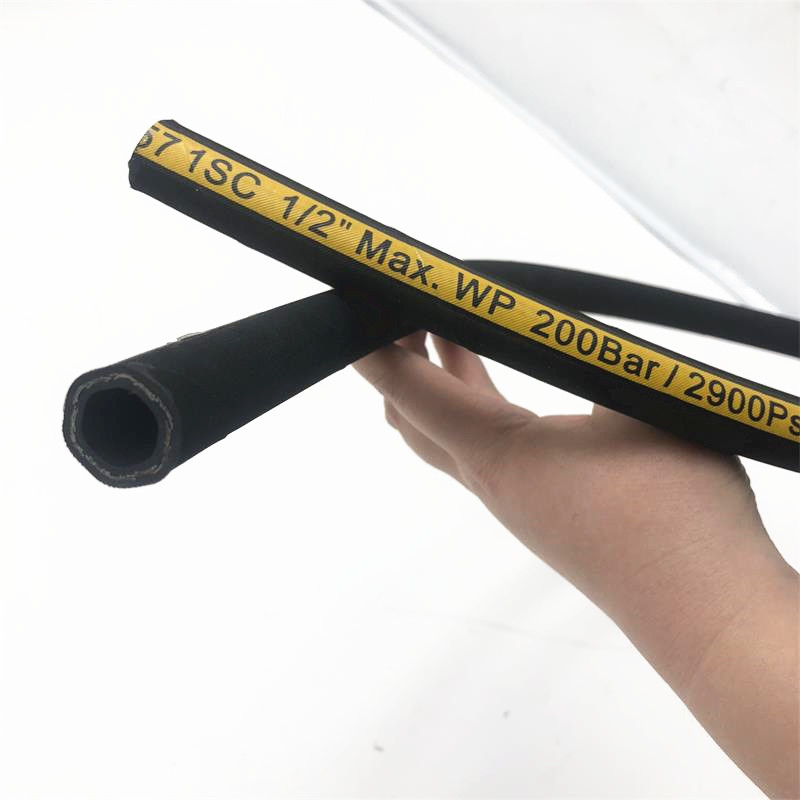
Introduction
China resin hose, typically constructed from a thermosetting polymer matrix reinforced with various fibers, represents a critical component in fluid transfer applications across numerous industries. Unlike thermoplastic hoses, resin hoses leverage the chemical and thermal stability inherent in thermoset materials. Their position within the industrial chain sits between raw material suppliers (resin, fiber, additives) and end-users requiring robust, chemically resistant conveyance systems. Core performance characteristics revolve around pressure containment, chemical compatibility, temperature resistance, and abrasion resistance. These hoses are employed in diverse sectors including agricultural spraying, industrial chemical delivery, high-pressure cleaning, and oil & gas transfer, filling a need for durable solutions where elastomer-based hoses fall short regarding specific chemical exposures or temperature requirements. The increasing demand stems from heightened safety regulations and the need for prolonged operational life in challenging environments.
Material Science & Manufacturing
The foundational material for china resin hose is typically a thermosetting resin, most commonly epoxy, polyester, or vinyl ester. Epoxy resins offer superior mechanical strength and chemical resistance, making them suitable for high-demand applications. Polyester resins provide a cost-effective alternative with good overall properties. Vinyl ester resins bridge the gap, offering enhanced corrosion resistance compared to polyester. Reinforcement fibers are crucial for imparting tensile strength and preventing deformation under pressure. Common fibers include glass fiber (E-glass, S-glass), carbon fiber, and aramid fiber. The choice of fiber significantly impacts the hose’s performance characteristics. Manufacturing processes begin with resin impregnation of the reinforcing fibers, often employing filament winding, braiding, or pultrusion techniques. Filament winding involves continuously winding fiber rovings saturated with resin onto a mandrel, building up layers to achieve the desired wall thickness and reinforcement angle. Braiding utilizes an interlaced fiber pattern for uniform pressure resistance. Pultrusion involves pulling fibers through a resin bath and then through a heated die to cure the resin and form a continuous profile. Critical parameters include resin viscosity, fiber-to-resin ratio, curing temperature and time, and mandrel tension (for filament winding). Post-curing is often employed to optimize mechanical properties and minimize residual stresses. Quality control includes non-destructive testing (NDT) like ultrasonic inspection to detect voids or delaminations.
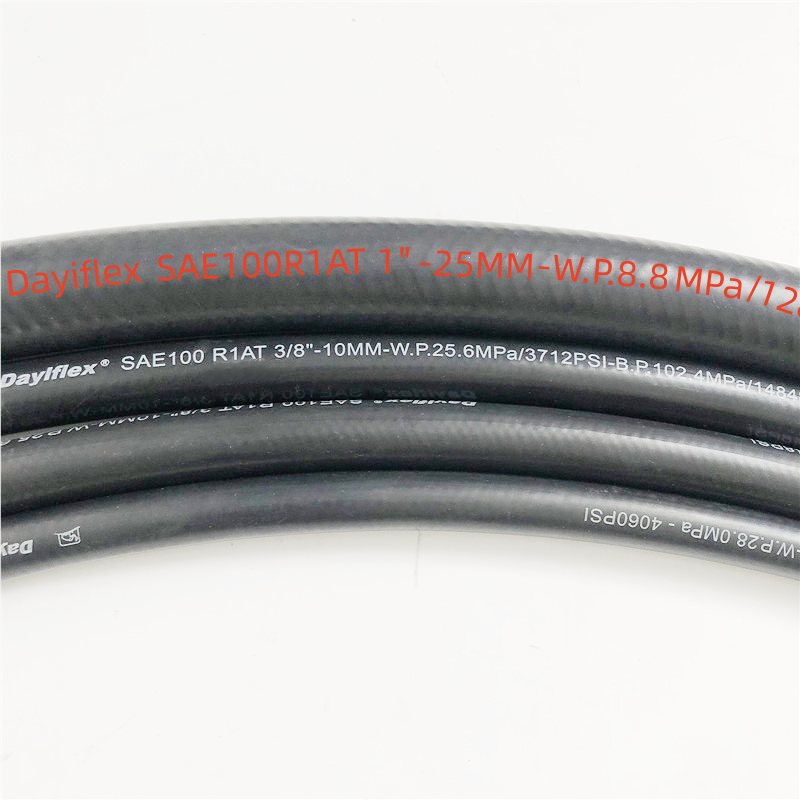
Performance & Engineering
Performance evaluation of china resin hose centers on its ability to withstand internal pressure, external loads, and environmental stressors. Force analysis involves calculating hoop stress within the hose wall based on internal pressure using the thin-walled cylinder formula (σ = Pr/t, where σ is hoop stress, P is internal pressure, r is the inner radius, and t is wall thickness). Burst pressure testing is a critical quality control measure, determining the pressure at which the hose fails. Environmental resistance is assessed through exposure to various chemicals, temperatures, and UV radiation. Chemical compatibility is evaluated by immersing hose samples in test fluids and monitoring for swelling, degradation, or property changes. Temperature resistance is determined by subjecting hoses to elevated and cryogenic temperatures and evaluating changes in tensile strength and elongation. Compliance requirements vary based on the application. For agricultural spraying, hoses must meet standards related to pesticide compatibility and drift reduction. For oil & gas applications, hoses must comply with API standards for offshore use. Failure analysis often reveals that premature failure stems from stress concentration around fittings, improper installation, or exceeding pressure/temperature limits. Finite element analysis (FEA) is frequently used in the design phase to optimize hose geometry and reinforcement schemes for improved performance and longevity.
Technical Specifications
| Parameter | Unit | Typical Value (Epoxy/Glass Fiber) | Typical Value (Polyester/Glass Fiber) |
|---|---|---|---|
| Burst Pressure | MPa | 35 | 25 |
| Working Pressure | MPa | 21 | 15 |
| Tensile Strength | MPa | 200 | 150 |
| Elongation at Break | % | 3 | 5 |
| Temperature Range | °C | -40 to +120 | -20 to +80 |
| Chemical Resistance (Acid) | Rating (1-5, 5=Excellent) | 4 | 3 |
Failure Mode & Maintenance
China resin hose, while durable, is susceptible to specific failure modes. Fatigue cracking, particularly around fittings, arises from repeated pressure cycles and stress concentrations. Delamination occurs when the resin matrix separates from the reinforcing fibers, reducing structural integrity. Chemical attack leads to degradation of the resin, resulting in reduced mechanical properties and potential leaks. Oxidation, especially at elevated temperatures, can embrittle the resin and cause cracking. Abrasion damage occurs from external contact with abrasive surfaces. Proper maintenance is crucial for maximizing hose lifespan. Regular visual inspection should identify any signs of cracking, blistering, or discoloration. Pressure testing should be conducted periodically to verify pressure containment. Fittings should be tightened to the manufacturer’s specifications. Avoid exposing the hose to incompatible chemicals or exceeding temperature limits. Storage should be in a cool, dry place, protected from UV radiation. In case of damage, the hose should be replaced immediately. Repairing resin hoses is generally not recommended due to the difficulty of achieving a reliable bond and restoring structural integrity. Preventing kinking and sharp bends during operation also minimizes stress concentration and extends service life. Proper handling and installation are the first lines of defense against premature failure.
Industry FAQ
Q: What is the impact of using different resin types on the hose’s chemical compatibility?
A: The resin type fundamentally dictates the chemical resistance profile. Epoxy resins exhibit broad chemical compatibility, particularly with solvents and hydrocarbons, but can be susceptible to degradation by strong bases. Polyester resins offer good resistance to water and dilute acids, but are less resistant to solvents. Vinyl ester resins provide enhanced resistance to corrosive chemicals like sulfuric acid and chlorine. Selecting the appropriate resin is paramount based on the specific chemical being conveyed.
Q: How does the reinforcement fiber affect the hose's resistance to elongation and burst pressure?
A: Reinforcement fibers primarily resist hoop stress and axial strain. Glass fiber provides good tensile strength at a relatively low cost, suitable for moderate-pressure applications. Carbon fiber offers significantly higher strength and stiffness, enabling higher burst pressures and reduced elongation, but at a higher cost. Aramid fibers provide excellent impact resistance and are often used in applications requiring high safety factors.
Q: What are the key differences between filament winding and braiding in resin hose manufacturing?
A: Filament winding provides a highly directional reinforcement pattern, maximizing strength in the hoop direction, ideal for high-pressure applications. Braiding yields a more isotropic reinforcement, offering uniform pressure resistance and flexibility. Filament winding typically results in a smoother inner surface, reducing friction loss. Braiding is generally more cost-effective for lower-pressure hoses.
Q: How critical is the curing process to the final mechanical properties of the hose?
A: The curing process is absolutely critical. Insufficient curing results in a resin matrix with lower crosslink density, leading to reduced strength, increased flexibility, and diminished chemical resistance. Over-curing can induce internal stresses and brittleness. Precise control of temperature, time, and catalyst concentration is essential for achieving optimal mechanical properties.
Q: What non-destructive testing methods are commonly employed to ensure hose quality?
A: Ultrasonic inspection is frequently used to detect internal voids, delaminations, and disbonds between the resin and reinforcement. Radiographic inspection (X-ray) can reveal subsurface defects but is less effective for detecting small voids. Dye penetrant inspection can identify surface cracks and flaws. Visual inspection remains a crucial initial quality control step.
Conclusion
China resin hose represents a robust and versatile solution for demanding fluid transfer applications. Its superior chemical resistance, temperature stability, and pressure handling capabilities, stemming from the synergistic combination of thermosetting resins and reinforcing fibers, position it as a viable alternative to traditional elastomer-based hoses. Understanding the nuances of material selection, manufacturing processes, and failure modes is paramount for ensuring optimal performance and longevity.
Future developments will likely focus on incorporating nanotechnology to enhance resin properties, developing bio-based resin alternatives for improved sustainability, and optimizing fiber architectures for even greater strength-to-weight ratios. Continued advancements in non-destructive testing techniques will further refine quality control processes and enhance the reliability of these critical industrial components.