
Apr . 01, 2024 17:55 Back to list
china red hydraulic hose Performance Analysis
Introduction
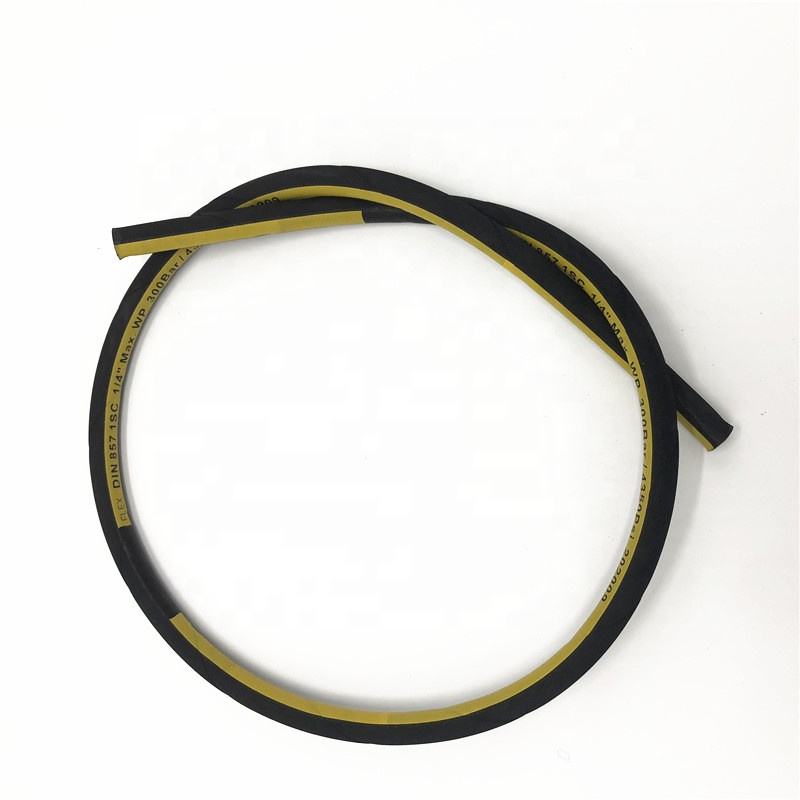
China red hydraulic hose, commonly recognized by its distinctive color, represents a critical component in fluid power systems across diverse industrial applications. These hoses are designed to convey hydraulic fluid under substantial pressure, facilitating the operation of heavy machinery, construction equipment, agricultural implements, and manufacturing processes. Positioned within the hydraulic system chain, the hose serves as the flexible conduit connecting the pump, valves, and actuators. Core performance metrics center around burst pressure, working pressure, temperature resistance, and fluid compatibility. The consistent delivery of reliable hydraulic power is dependent on the integrity and specification adherence of these hoses. The widespread adoption of china red hydraulic hose is driven by cost-effectiveness and readily available manufacturing capacity, though quality and adherence to international standards are paramount considerations for engineers and procurement specialists.
Material Science & Manufacturing
The foundational material for china red hydraulic hose is typically a synthetic rubber compound, predominantly based on nitrile rubber (NBR) due to its excellent resistance to petroleum-based hydraulic fluids. However, variations exist employing ethylene propylene diene monomer (EPDM) for enhanced heat and ozone resistance, and chloroprene rubber (CR) for flame retardancy and weather resistance. Reinforcement layers are crucial for withstanding internal pressure and preventing collapse. These typically consist of multiple plies of high-tensile steel wire, often spirally wound or braided, providing the structural integrity of the hose. The cover layer, typically formulated from a blend of NBR and additives, provides abrasion, weathering, and chemical resistance.
Manufacturing processes begin with the extrusion of the inner tube using a rubber compounding machine. Precise temperature and pressure control during extrusion are vital to ensure consistent wall thickness and material uniformity. The reinforcement layers are then applied, either through a spiraling or braiding process. Braiding, generally preferred for higher pressure applications, involves interlacing individual wires to form a robust, flexible structure. Following reinforcement, an adhesive bonding agent is applied to ensure firm adhesion between the rubber and the steel wires. Finally, the cover layer is extruded, and the hose is cured using a vulcanization process. Vulcanization, typically employing heat and sulfur-based compounds, cross-links the rubber molecules, enhancing its elasticity, strength, and resistance to degradation. Quality control throughout involves dimensional checks, pressure testing, and material analysis to confirm compliance with specifications. Parameter control focuses on rubber compound formulation, wire tensile strength, braiding angle, and curing time/temperature profiles.

Performance & Engineering
The performance of china red hydraulic hose is governed by several engineering principles. Force analysis concentrates on hoop stress within the hose wall due to internal fluid pressure. Higher pressures necessitate greater reinforcement layer density and robust bonding. Burst pressure, a critical safety parameter, is typically specified as four times the working pressure. Environmental resistance is paramount, particularly in outdoor applications. UV exposure, temperature fluctuations, and chemical spills can all compromise hose integrity. EPDM covers provide superior UV and ozone resistance compared to standard NBR. Fluid compatibility is equally important; NBR is generally compatible with mineral oils, but specific fluids like phosphate esters require specialized hose formulations.
Compliance requirements dictate adherence to international safety standards such as ISO 6899 (Hydraulic hoses – Requirements for minimum performance characteristics) and SAE J517 (Performance Characteristics of Hydraulic Hose). These standards define testing procedures for pressure, temperature, impulse, and kink resistance. Furthermore, the hose’s flexibility impacts bend radius, which must be maintained to avoid kinking and subsequent failure. Fatigue analysis considers the cyclical loading and unloading the hose experiences during operation, influencing its lifespan. The selection of appropriate end fittings (crimped or swaged) is crucial for a secure and leak-proof connection. Improper fitting installation can create stress concentrations and accelerate failure.
Technical Specifications
| Parameter | Unit | Typical Value (NBR, Steel Wire Reinforced) | Standard Compliance |
|---|---|---|---|
| Working Pressure | MPa | 16 | ISO 6899, SAE J517 |
| Burst Pressure | MPa | 64 | ISO 6899, SAE J517 |
| Temperature Range | °C | -40 to +100 | ISO 6899 |
| Inner Tube Material | - | Nitrile Rubber (NBR) | ASTM D2000 |
| Reinforcement | - | Multiple Steel Wire Braids | SAE J517 |
| Cover Material | - | Nitrile Rubber (NBR) | ASTM D2000 |
Failure Mode & Maintenance
Common failure modes in china red hydraulic hoses include burst failure due to exceeding the working pressure, kink failure caused by excessive bending, abrasion and cracking of the cover layer due to external contact, and internal degradation of the rubber due to fluid contamination or chemical attack. Fatigue cracking, originating at stress concentrations (e.g., near fittings), can propagate over time, leading to eventual rupture. Delamination, the separation of rubber layers from the reinforcement, weakens the hose structure. Oxidation of the rubber, especially at elevated temperatures, reduces its elasticity and strength.
Preventative maintenance is critical for extending hose lifespan. Regular visual inspections should identify cracks, abrasions, or leaks. Hose routing should avoid sharp bends and direct contact with hot surfaces or abrasive materials. Proper fluid filtration is essential to remove contaminants that can accelerate internal degradation. End fittings should be inspected for corrosion or damage. When replacing hoses, it’s imperative to use compatible fittings and follow the manufacturer's crimping or swaging recommendations. Hose assemblies should be pressure tested after installation and periodically thereafter. Implement a hose management program with scheduled replacements based on operational conditions and historical failure rates. Avoid twisting the hose during installation as this can induce stress and premature failure.
Industry FAQ
Q: What is the impact of fluid velocity on the lifespan of a china red hydraulic hose?
A: Higher fluid velocities can cause increased erosion of the inner tube, particularly with fluids containing abrasive particles. This erosion thins the tube wall, reducing its burst pressure and accelerating failure. Maintaining appropriate fluid velocity within the hose’s specified limits is crucial. Consider using hoses with enhanced abrasion resistance for high-velocity applications.
Q: How does temperature affect the performance of nitrile rubber hoses?
A: Nitrile rubber’s properties are temperature-dependent. Elevated temperatures can reduce its tensile strength and elasticity, making it more susceptible to failure. Low temperatures can decrease its flexibility, increasing the risk of kinking. Operating within the specified temperature range (-40°C to +100°C for typical NBR hoses) is critical. Consider EPDM hoses for applications exceeding these temperature limits.
Q: What are the consequences of using incompatible hydraulic fluids?
A: Incompatible fluids can cause swelling, softening, or cracking of the rubber inner tube, leading to leaks and eventual failure. Some fluids can also attack the reinforcement layers, compromising the hose’s structural integrity. Always verify fluid compatibility with the hose material before use.
Q: What is the best practice for hose routing to minimize stress?
A: Hose routing should avoid sharp bends, kinks, and abrasion. Provide sufficient slack to accommodate movement and vibration. Secure the hose properly to prevent whipping or chafing. Use hose clamps or supports to distribute the load and minimize stress concentrations. Avoid twisting the hose during installation.
Q: How often should hydraulic hoses be replaced as preventative maintenance?
A: Replacement frequency depends on operational conditions and usage. A general guideline is to replace hoses every 5-7 years, or after 10,000 operating hours, whichever comes first. However, this should be adjusted based on visual inspection results, fluid contamination levels, and operating pressures. Implement a hose management program to track hose age and usage and schedule replacements accordingly.
Conclusion
China red hydraulic hose serves as a foundational element in countless hydraulic systems, its performance dictated by a complex interplay of material science, manufacturing precision, and operational conditions. Understanding the properties of the constituent materials – primarily nitrile rubber and high-tensile steel – and the nuances of the extrusion, braiding, and vulcanization processes is vital for ensuring reliability. Careful attention to operational parameters like pressure, temperature, fluid compatibility, and proper routing is crucial for maximizing hose lifespan and preventing catastrophic failures.
Moving forward, advancements in hose technology will likely focus on developing more durable and chemically resistant rubber compounds, incorporating smart sensing capabilities for real-time condition monitoring, and optimizing hose designs for specific applications. Proactive maintenance programs and adherence to international standards remain paramount for mitigating risks and maximizing the return on investment in hydraulic systems. Prioritizing quality, proper installation, and regular inspection will continue to be essential for safe and efficient operation.