
Apr . 01, 2024 17:55 Back to list
china red high pressure hydraulic hose Performance Analysis
Introduction
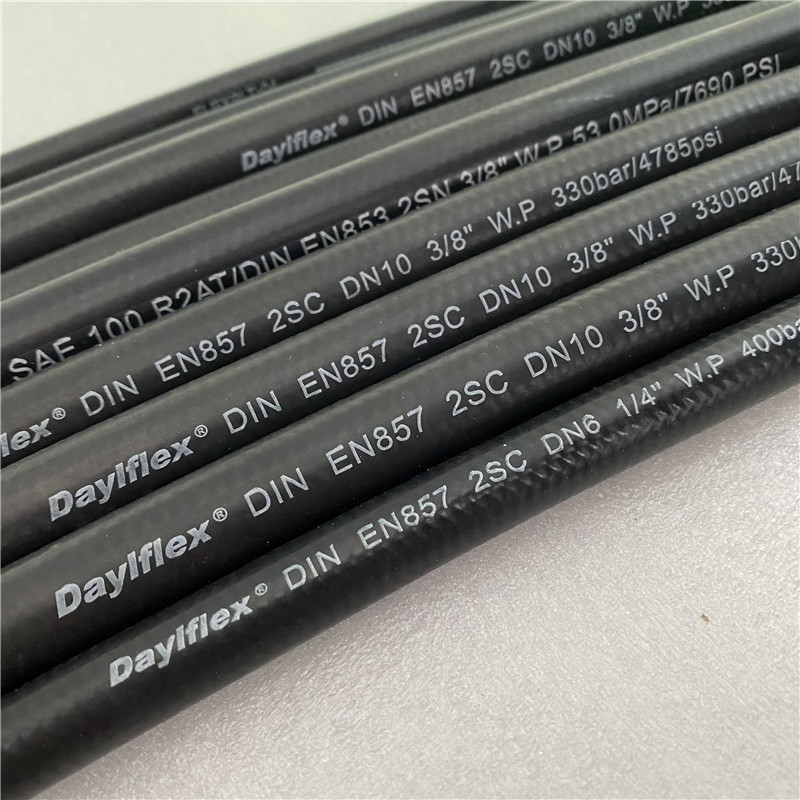
China red high-pressure hydraulic hose is a reinforced flexible assembly designed to transmit hydraulic fluid under substantial pressure, commonly employed in industrial machinery, construction equipment, agricultural systems, and automotive applications. Positioned within the fluid power transmission segment, these hoses represent a critical component in closed-loop hydraulic circuits. Typically constructed from a synthetic rubber inner tube, multiple layers of high-tensile strength reinforcement (braiding or spiraling), and a protective outer cover, their performance is dictated by pressure rating, temperature resistance, fluid compatibility, and dimensional stability. Core performance metrics revolve around burst pressure, working pressure, impulse pressure resistance, and service life, directly influencing system reliability and operational safety. The ‘china red’ designation refers to the prevalent color coding applied to these hoses for identification purposes, though color is not a performance indicator. This guide provides an in-depth technical analysis of these hoses, covering material science, manufacturing processes, performance characteristics, potential failure modes, and relevant industry standards.
Material Science & Manufacturing
The construction of china red high-pressure hydraulic hose relies on a combination of materials selected for their specific properties. The inner tube is typically composed of a synthetic rubber, most commonly nitrile butadiene rubber (NBR), known for its excellent resistance to petroleum-based hydraulic fluids. NBR’s chemical composition (varying acrylonitrile content) directly influences its temperature range and fluid compatibility. Alternatives include chloroprene rubber (CR) for enhanced ozone and weathering resistance, and ethylene propylene diene monomer (EPDM) for phosphate ester fluids. The reinforcement layer, the key determinant of pressure capacity, typically consists of one or more braids or spirals of high-strength steel wire. Steel wire selection focuses on tensile strength, yield strength, and fatigue resistance. Spiral reinforcement utilizes a single wire wound at a steep helix angle, providing high burst strength but potentially reduced flexibility. Braided reinforcement uses multiple wires woven together, offering a balance of strength and flexibility. The outer cover is usually a synthetic rubber blend – often a combination of CR and NBR – providing abrasion resistance, weather protection, and resistance to oil degradation.
Manufacturing processes involve several critical steps. The inner tube is extruded through a die to achieve the desired bore and wall thickness. Reinforcement layers are then applied, either by braiding machines for spiral or braided construction. Adhesion between the rubber layers and the steel reinforcement is paramount, achieved through pre-treatment of the steel wire and the use of adhesion promoters during the vulcanization process. Vulcanization, the crosslinking of rubber molecules, is performed in autoclaves under controlled temperature and pressure, influencing the hose’s final physical properties (hardness, tensile strength, elongation). Post-vulcanization, the hose undergoes dimensional inspection, pressure testing (hydrostatic and impulse testing), and final finishing (marking and cutting to length). Parameter control during extrusion (temperature, screw speed, die pressure) and vulcanization (temperature ramp-up, soak time, pressure) are critical to ensuring consistent hose quality and performance. Failure to maintain precise control can lead to porosity in the rubber, inadequate reinforcement adhesion, and reduced burst pressure.
Performance & Engineering
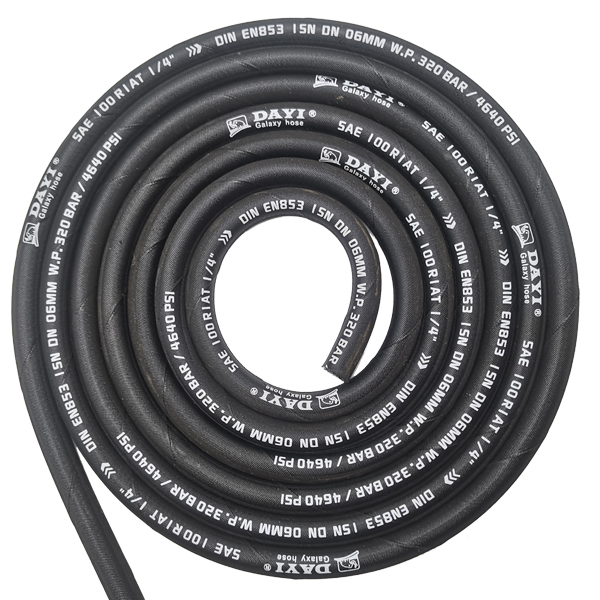
The performance of a china red high-pressure hydraulic hose is governed by a complex interplay of material properties and design parameters. Force analysis during operation considers static pressure load, dynamic pressure fluctuations (pressure pulses), and bending stresses resulting from hose routing. Burst pressure, the maximum pressure the hose can withstand before rupture, is a fundamental performance metric, directly related to the reinforcement layer’s strength and the inner tube’s integrity. Working pressure is a fraction of burst pressure (typically a 4:1 safety factor), representing the maximum continuous operating pressure. Impulse pressure resistance, crucial in systems with pulsating flow, assesses the hose's ability to withstand repeated pressure spikes without failure. This is heavily influenced by reinforcement construction (spiral vs. braid) and the hose's overall flexibility.
Environmental resistance is another key consideration. Temperature extremes can significantly impact rubber compounds, altering their flexibility, tensile strength, and fluid compatibility. Hydraulic fluid compatibility is essential, as incompatibility can lead to swelling, softening, or degradation of the inner tube, resulting in leakage and failure. Compliance requirements vary by region and application. For example, the Society of Automotive Engineers (SAE) J517 standard defines performance specifications for hydraulic hoses used in mobile equipment, covering pressure rating, temperature range, and fluid resistance. The hose's bend radius is a crucial engineering parameter, as exceeding the minimum bend radius can induce excessive stress on the reinforcement layers, leading to fatigue cracking. Furthermore, proper hose assembly, including the selection and crimping of end fittings, is critical to ensure a leak-free and reliable connection, capable of withstanding the applied pressure and dynamic loads. Incorrect crimping can lead to fitting slippage or hose extrusion.
Technical Specifications
| Parameter | Unit | SAE 100R2AT | SAE 100R6AT |
|---|---|---|---|
| Working Pressure | MPa | 20.7 | 21.0 |
| Burst Pressure | MPa | 82.7 | 84.0 |
| Temperature Range | °C | -40 to +100 | -40 to +100 |
| Inner Tube | Material | Synthetic Rubber (NBR) | Synthetic Rubber (NBR) |
| Reinforcement | Type | Two Steel Wire Braids | Six Steel Wire Spirals |
| Outer Cover | Material | Synthetic Rubber (CR/NBR Blend) | Synthetic Rubber (CR/NBR Blend) |
Failure Mode & Maintenance
China red high-pressure hydraulic hoses are susceptible to several failure modes. Fatigue cracking, resulting from repeated flexing and pressure cycling, is a common cause of failure, often initiating at the fitting interface or in areas of high stress concentration. Delamination, the separation of the reinforcement layers from the rubber matrix, can occur due to inadequate adhesion or exposure to aggressive fluids. Degradation of the rubber compounds, caused by oxidation, UV exposure, or chemical attack, leads to loss of flexibility and increased susceptibility to cracking. Abrasion, resulting from contact with abrasive surfaces, can wear away the outer cover, exposing the reinforcement layers to corrosion. Fitting failure, including corrosion, loosening, or improper crimping, can also lead to leakage and hose rupture.
Preventive maintenance is crucial to extending hose life and preventing catastrophic failures. Regular visual inspections should be conducted to identify signs of wear, cracking, abrasion, or fluid leakage. Hose routing should be designed to minimize bending stress and avoid contact with sharp objects or hot surfaces. Fluid contamination should be controlled through proper filtration, as particulate matter can accelerate wear and damage the inner tube. Hoses should be replaced according to the manufacturer’s recommendations or when signs of deterioration are observed. When replacing hoses, it's imperative to use compatible end fittings and ensure proper crimping. Periodic pressure testing can identify potential weaknesses before they lead to failure, although this is typically performed during scheduled maintenance of the hydraulic system rather than solely on the hose itself. Proper storage of unused hoses, away from direct sunlight, ozone sources, and extreme temperatures, will maintain their flexibility and prolong their service life.
Industry FAQ
Q: What is the significance of the 'AT' designation in SAE hose specifications (e.g., SAE 100R2AT)?
A: The ‘AT’ designation signifies that the hose meets the requirements for heat and oil resistance, as defined by the SAE J517 standard. Specifically, it indicates the hose can withstand elevated temperatures (typically 100°C) and exposure to common hydraulic fluids without significant degradation or loss of performance. Hoses without the ‘AT’ designation may have lower temperature and fluid resistance capabilities.
Q: How does spiral reinforcement compare to braided reinforcement in high-pressure hose applications?
A: Spiral reinforcement generally provides higher burst pressure capability due to the continuous winding of a single wire, effectively containing the internal pressure. However, braided reinforcement offers greater flexibility and resistance to kinking, making it suitable for applications requiring tight bends or frequent movement. Spiral hoses are often chosen for very high-pressure systems where flexibility is less critical.
Q: What is the impact of using an incompatible hydraulic fluid with a nitrile rubber (NBR) inner tube?
A: Using an incompatible fluid can cause the NBR inner tube to swell, soften, or degrade, leading to leakage, reduced pressure capacity, and premature hose failure. Certain fluids, such as those based on glycol ethers, are particularly damaging to NBR. It's crucial to consult the hose manufacturer's fluid compatibility chart to ensure the selected fluid is compatible with the hose materials.
Q: What are the best practices for storing unused hydraulic hoses to prevent deterioration?
A: Unused hoses should be stored in a cool, dry, and dark environment, away from direct sunlight, ozone sources (such as electric motors), and extreme temperatures. They should be coiled loosely to avoid stressing the reinforcement layers and stored in a manner that prevents compression or distortion. Regularly inspect stored hoses for signs of deterioration, even if they haven't been used.
Q: What are the common causes of fitting failure in hydraulic hose assemblies?
A: Common causes of fitting failure include corrosion (especially in harsh environments), improper crimping (leading to slippage or extrusion), damage during handling or installation, and the use of incompatible fittings. Using corrosion-resistant fittings and ensuring correct crimping procedures are essential for preventing fitting failures.
Conclusion
China red high-pressure hydraulic hose, while seemingly a simple component, is a sophisticated product engineered to meet demanding performance requirements. Its construction, reliant on careful material selection and precise manufacturing processes, directly dictates its ability to withstand high pressures, resist environmental factors, and provide reliable fluid power transmission. Understanding the intricacies of material science, reinforcement designs, and potential failure modes is critical for ensuring optimal performance and safety in hydraulic systems.
Moving forward, advancements in hose technology will likely focus on developing more durable rubber compounds, exploring alternative reinforcement materials (such as synthetic fibers), and incorporating smart sensing capabilities for real-time monitoring of hose condition. Continued adherence to industry standards (SAE, EN, ISO) and the implementation of robust maintenance practices will remain paramount for maximizing hose life and minimizing the risk of catastrophic failures. The continued refinement of these hoses ensures continued reliability in critical hydraulic applications.