
Apr . 01, 2024 17:55 Back to list
china profession manufacturer hydraulic hose Performance Analysis
Introduction
Hydraulic hose, manufactured in China, represents a critical component in fluid power systems across diverse industries including construction, agriculture, manufacturing, and automotive. This technical guide provides an in-depth exploration of these hoses, focusing on material science, manufacturing processes, performance characteristics, failure modes, and relevant industry standards. The primary function of a hydraulic hose is to transmit fluid power, enabling the operation of hydraulic machinery. China has become a significant global producer of hydraulic hose, offering competitive pricing and increasingly sophisticated manufacturing capabilities. Key performance characteristics include pressure rating, temperature range, flexibility, and resistance to abrasion, chemicals, and ozone. A crucial industry pain point is ensuring consistent quality and adherence to international safety regulations, alongside managing the trade-offs between hose flexibility and burst pressure.
Material Science & Manufacturing
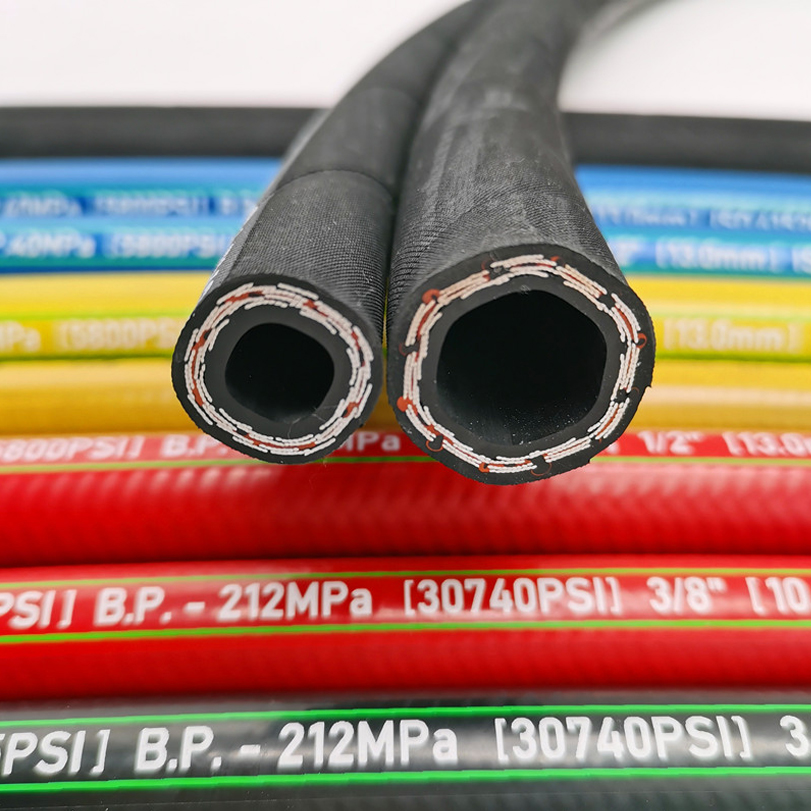
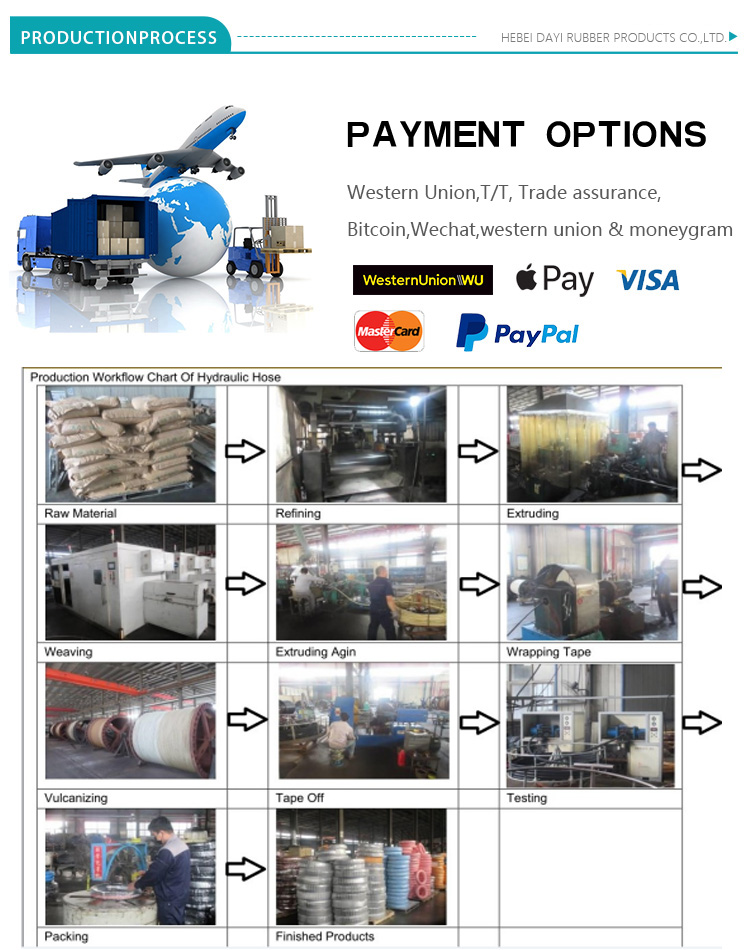
Hydraulic hose construction typically involves multiple layers, each serving a specific function. The inner tube, which comes into direct contact with the hydraulic fluid, is commonly composed of synthetic rubbers such as nitrile (NBR), ethylene propylene diene monomer (EPDM), or fluorocarbon (FKM/Viton). NBR offers good resistance to petroleum-based fluids, while EPDM excels in phosphate ester fluid compatibility and high-temperature applications. FKM provides superior resistance to aggressive chemicals and extreme temperatures, but at a higher cost. The reinforcement layer, providing strength and pressure resistance, is typically comprised of one or more layers of high-tensile steel wire, spirally or braided. Aramid fiber reinforcement is also used in specialized applications requiring high flexibility and reduced weight. The outer cover, protecting against abrasion, weathering, and oil contamination, is generally made of synthetic rubber like chloroprene (CR) or polyurethane (PU). Manufacturing processes vary depending on hose type. Braided hose involves helically winding steel wire around a mandrel, followed by extrusion of the inner tube and outer cover. Spiraled hose utilizes a continuous winding of high-tensile wire in a spiral pattern. Critical parameters during manufacturing include wire tension, rubber curing temperature and time, and dimensional accuracy. Maintaining consistent rubber compound formulations and strict quality control over wire sourcing are essential for reliable performance.
Performance & Engineering
Hydraulic hose performance is governed by several key engineering principles. Burst pressure, defined as the pressure at which the hose fails catastrophically, is a critical safety parameter. Working pressure is typically specified as a fraction (e.g., 1/4) of the burst pressure, providing a safety factor. Hose flexibility, quantified by the bend radius, is essential for ease of installation and operation in confined spaces. Excessive bending can induce stress concentration and premature failure. Fatigue resistance is paramount in dynamic applications involving repeated pressure cycles. Finite element analysis (FEA) is used to model stress distribution and optimize hose design for specific operating conditions. Environmental resistance is another crucial consideration. Exposure to ozone, UV radiation, and extreme temperatures can degrade the rubber compounds, reducing hose lifespan. Chemical compatibility with the hydraulic fluid is critical to prevent swelling, softening, or cracking of the inner tube. Compliance with industry standards, such as SAE J517 and EN 853, ensures consistent performance and safety. Understanding fluid velocity and its impact on erosion of the inner tube is also critical. Proper hose selection and routing minimizes pressure drop and ensures efficient fluid power transmission.
Technical Specifications
| Hose Type | Working Pressure (PSI) | Burst Pressure (PSI) | Temperature Range (°F) |
|---|---|---|---|
| Braided Hydraulic Hose - NBR | 2000 | 8000 | -40 to 212 |
| Spiraled Hydraulic Hose - Steel Wire | 3000 | 12000 | -40 to 250 |
| Hydraulic Hose - EPDM | 2500 | 10000 | -58 to 248 |
| Hydraulic Hose - FKM (Viton) | 3000 | 12000 | -20 to 450 |
| Ultra-High Pressure Hose | 5000 | 20000 | -40 to 212 |
| Thermoplastic Hydraulic Hose | 4000 | 16000 | -40 to 250 |
Failure Mode & Maintenance
Hydraulic hose failures can manifest in various forms. Bursting, resulting from exceeding the working pressure or gradual degradation of the reinforcement layer, is a catastrophic failure. Kinking, caused by excessive bending, restricts fluid flow and can lead to localized stress and rupture. Abrasion, stemming from external contact with abrasive surfaces, compromises the outer cover, exposing the reinforcement layer to corrosion. Ozone cracking, particularly prevalent in EPDM hoses, occurs due to ozone attack on the rubber surface. Oil diffusion, where oil permeates through the rubber matrix, can cause swelling and softening. Internal erosion, caused by high-velocity fluid flow or contaminated fluid, wears away the inner tube. Regular visual inspections are crucial for detecting early signs of damage. Hose should be replaced if cracks, abrasions, kinks, or swelling are observed. Proper hose routing, avoiding sharp bends and contact with hot surfaces, is essential. Maintaining fluid cleanliness through filtration prevents internal erosion. Using the correct hose for the application, considering pressure, temperature, and fluid compatibility, is paramount. Periodic pressure testing can verify hose integrity.
Industry FAQ
Q: What is the impact of pulse pressure on hydraulic hose life?
A: Pulse pressure, the fluctuation of pressure during each cycle, significantly reduces hose life. It induces fatigue in the reinforcement layer, leading to premature failure. Hoses designed for pulse pressure applications often incorporate special constructions, such as enhanced reinforcement or anti-pulse layers, to mitigate these effects.
Q: How does hydraulic fluid type affect hose selection?
A: Hydraulic fluid compatibility is critical. Using an incompatible fluid can cause the inner tube to swell, soften, or degrade, leading to leaks and failure. Nitrile rubber (NBR) is suitable for petroleum-based fluids, while EPDM is ideal for phosphate ester fluids. Fluorocarbon (FKM/Viton) offers broad chemical resistance.
Q: What are the consequences of using an undersized hydraulic hose?
A: An undersized hose increases fluid velocity, leading to higher pressure drop and increased heat generation. This can cause erosion of the inner tube and premature failure. It also reduces system efficiency and responsiveness.
Q: What is the proper procedure for connecting hydraulic hoses?
A: Proper connection is crucial for preventing leaks and ensuring safety. Hoses should be assembled with correctly sized fittings and torqued to the manufacturer's specifications. Avoid over-tightening, which can damage the hose ends. Always use appropriate sealing methods and verify the connection for leaks before operation.
Q: How should hydraulic hoses be stored to maximize their lifespan?
A: Hoses should be stored in a cool, dry, and dark environment, away from direct sunlight, ozone sources, and extreme temperatures. Avoid storing hoses bent or kinked, and protect them from physical damage. Proper storage minimizes degradation and extends the usable life of the hose.
Conclusion
Hydraulic hose performance is a complex interplay of material science, manufacturing precision, and engineering design. Selecting the appropriate hose for a specific application, considering pressure, temperature, fluid compatibility, and environmental conditions, is vital for ensuring system reliability and safety. China’s manufacturing capabilities provide a broad range of hydraulic hose options, but rigorous quality control and adherence to international standards are paramount.
Continued advancements in rubber technology and reinforcement materials will drive further improvements in hydraulic hose performance and durability. Proactive maintenance, including regular inspections and timely replacement of damaged hoses, is essential for preventing catastrophic failures and maximizing system uptime. Understanding the potential failure modes and implementing preventative measures remains the most effective strategy for minimizing risks associated with hydraulic hose operation.