
Apr . 01, 2024 17:55 Back to list
china one wire braided high pressure hydraulic hose Performance Analysis
Introduction
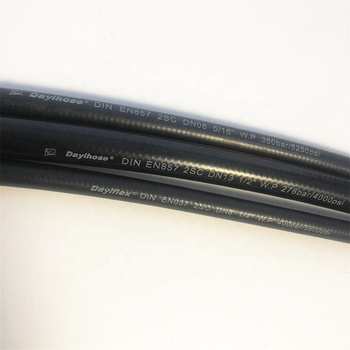
China one wire braided high pressure hydraulic hose represents a critical component in fluid power systems across diverse industries including construction, agriculture, manufacturing, and automotive. This hose type is engineered for the transmission of hydraulic fluid under high pressure, typically exceeding 3000 psi, facilitating power transfer in applications such as hydraulic machinery, heavy equipment, and industrial processes. Positioned within the hydraulic system as a flexible conduit, its performance directly impacts system efficiency, reliability, and safety. Core performance characteristics include pressure capacity, burst strength, impulse resistance, and resistance to fluid degradation and environmental factors. This guide provides an in-depth analysis of the material science, manufacturing processes, performance parameters, failure modes, and relevant standards governing this essential industrial product.
Material Science & Manufacturing
The construction of a one wire braided high pressure hydraulic hose relies on a synergistic combination of materials. The inner tube, typically composed of a synthetic rubber compound – often nitrile (NBR) for oil-based hydraulic fluids, or ethylene propylene diene monomer (EPDM) for phosphate ester fluids – provides the fluid-resistant barrier. NBR exhibits excellent resistance to petroleum-based oils, fuels, and water, while EPDM demonstrates superior resistance to heat, ozone, and weathering. The reinforcement layer consists of a single braid of high-tensile steel wire, providing the necessary strength to withstand high pressures. Steel wire is selected for its high yield strength and fatigue resistance. The outer cover, typically a synthetic rubber like chlorinated polyethylene (CPE) or polyurethane, provides abrasion resistance, weathering protection, and chemical resistance. CPE offers good resistance to ozone, weathering, and heat, while polyurethane provides superior abrasion and oil resistance.
Manufacturing involves a multi-stage process. First, the inner tube is extruded, ensuring consistent wall thickness and uniform material distribution. The steel wire braid is then applied helically over the inner tube using a specialized braiding machine. The angle and tension of the braid are critical parameters, impacting the hose's pressure rating and flexibility. Following braiding, the outer cover is extruded over the braided reinforcement. Precise control of temperature and pressure during extrusion is paramount to ensure proper bonding between the layers and prevent voids. Post-extrusion processes include vulcanization (curing) to crosslink the rubber compounds, enhancing their elasticity, strength, and resistance to degradation. Quality control measures, including hydrostatic pressure testing, impulse testing, and dimensional inspection, are implemented throughout the process to ensure adherence to specifications and safety standards. Precise control of the mixing ratios of rubber compounds, braid density, and curing parameters is essential for achieving consistent and reliable hose performance.
Performance & Engineering
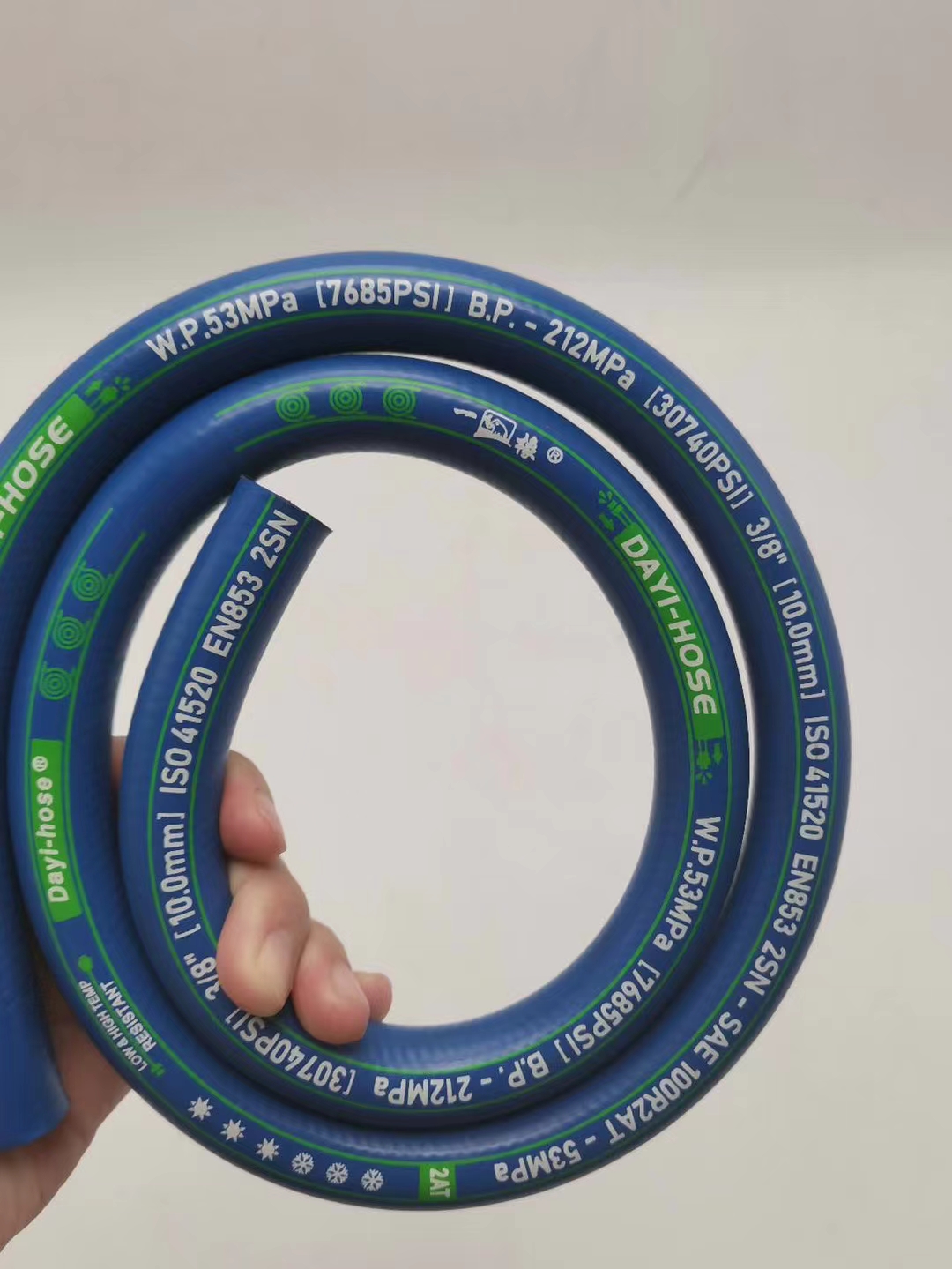
The performance of a one wire braided hydraulic hose is dictated by several key engineering principles. Tensile strength, derived from the steel wire braid, resists hoop stress generated by internal pressure. The braid angle directly affects the hose’s ability to resist axial stretching and contraction under pressure. A smaller braid angle provides higher burst strength but reduces flexibility, while a larger angle increases flexibility but lowers burst pressure. The hose's flexibility is determined by the ratio of its outer diameter to inner diameter, and the material properties of the rubber compounds. Environmental resistance is critical, with exposure to extreme temperatures, ozone, UV radiation, and hydraulic fluids potentially causing degradation. The choice of rubber compounds directly impacts resistance to these factors.
Impulse testing simulates the pulsating pressure waves common in hydraulic systems, assessing the hose’s ability to withstand repeated stress cycles without failure. Fatigue life is a crucial performance metric. Burst pressure testing determines the maximum pressure the hose can withstand before rupture, providing a safety margin. Compliance with industry standards, such as SAE J517 and EN 853, dictates minimum performance requirements for pressure ratings, temperature ranges, and fluid compatibility. Force analysis involves calculating the hoop stress within the hose wall under pressure, using the formula σ = (P r) / t, where σ is hoop stress, P is internal pressure, r is inner radius, and t is wall thickness. Proper hose sizing and selection are essential to ensure sufficient safety factor and prevent premature failure.
Technical Specifications
| Parameter | Unit | Specification (Typical) | Test Standard |
|---|---|---|---|
| Working Pressure | MPa | 20-35 | SAE J517 |
| Burst Pressure | MPa | 60-105 | SAE J517 |
| Temperature Range | °C | -40 to +100 | SAE J517 |
| Inner Tube Material | - | NBR or EPDM | ASTM D2000 |
| Reinforcement | - | Single Steel Wire Braid | ASTM A938 |
| Outer Cover Material | - | CPE or Polyurethane | ASTM D2000 |
Failure Mode & Maintenance
Failure modes in one wire braided hydraulic hoses typically fall into several categories. Fatigue cracking, resulting from repeated flexing and pressure cycles, occurs primarily in the steel wire braid and can lead to sudden hose rupture. Corrosion, particularly in environments with moisture or corrosive fluids, weakens the steel wire, reducing its tensile strength and promoting crack initiation. Abrasion, caused by external contact with abrasive surfaces, damages the outer cover, exposing the reinforcement layer to corrosion. Permeation, the diffusion of hydraulic fluid through the inner tube, can occur over time, leading to fluid loss and reduced system performance. Degradation of the rubber compounds due to exposure to heat, ozone, UV radiation, or incompatible fluids leads to loss of elasticity and strength. Oxidation of the rubber compounds contributes to hardening and cracking.
Preventative maintenance is critical for extending hose life. Regular visual inspections for abrasion, cracks, leaks, and kinks should be performed. Avoid sharp bends and twisting of the hose during installation and operation. Ensure proper hose routing to prevent contact with abrasive surfaces or hot components. Select hoses compatible with the hydraulic fluid being used. Regularly check hose connections for tightness and leaks. Replace hoses exhibiting signs of damage or degradation immediately. Proper storage in a cool, dry, and dark environment minimizes degradation during periods of non-use. Flushing the hydraulic system regularly to remove contaminants can also extend hose life by reducing abrasive wear.
Industry FAQ
Q: What is the significance of the braid angle in a one wire braided hose?
A: The braid angle fundamentally impacts the hose’s pressure rating and flexibility. A smaller angle provides greater burst strength, suitable for very high-pressure applications, but reduces flexibility. Conversely, a larger angle increases flexibility, making the hose easier to route in confined spaces, but compromises its maximum pressure capacity. Selecting the appropriate braid angle involves a trade-off between these two critical performance parameters.
Q: How does the choice of inner tube material affect hose performance?
A: The inner tube material dictates the hose's compatibility with different hydraulic fluids. Nitrile rubber (NBR) is commonly used for petroleum-based oils, offering excellent resistance. Ethylene Propylene Diene Monomer (EPDM) is preferred for phosphate ester fluids, providing superior resistance to degradation. Using an incompatible material can lead to swelling, cracking, and premature hose failure.
Q: What are the primary causes of hose failure in high-pressure systems?
A: Common failure causes include fatigue cracking in the steel wire braid due to repeated pressure cycles, corrosion weakening the reinforcement, abrasion damaging the outer cover, and degradation of rubber compounds from exposure to extreme temperatures, incompatible fluids, or UV radiation. Proper hose selection, installation, and maintenance are crucial for mitigating these risks.
Q: What is the role of the outer cover material in hose durability?
A: The outer cover provides crucial protection against abrasion, weathering, ozone, and chemical attack. Chlorinated polyethylene (CPE) offers good all-around resistance, while polyurethane provides superior abrasion resistance, making it suitable for harsh environments. A damaged outer cover exposes the reinforcement layer to corrosion and accelerates hose failure.
Q: What testing standards are commonly used to verify hose performance?
A: SAE J517 is a widely recognized standard for hydraulic hose performance, specifying requirements for pressure ratings, temperature ranges, and fluid compatibility. EN 853 is the European equivalent standard. ASTM standards are used for material property testing, such as tensile strength of the steel wire (ASTM A938) and rubber compound properties (ASTM D2000).
Conclusion
China one wire braided high pressure hydraulic hose is an engineered component whose performance is inextricably linked to careful material selection, precise manufacturing control, and adherence to stringent industry standards. Understanding the interplay between the inner tube material, steel wire reinforcement, and outer cover is crucial for selecting a hose that meets the specific demands of a given application. A comprehensive grasp of potential failure modes – including fatigue, corrosion, and degradation – is essential for implementing effective preventative maintenance strategies.
Future advancements in hydraulic hose technology will likely focus on developing lighter-weight materials, improving resistance to extreme environments, and incorporating sensor technology for real-time performance monitoring. Continued emphasis on rigorous testing and adherence to evolving standards will be paramount in ensuring the reliability and safety of these critical components. Properly specified and maintained, one wire braided hydraulic hoses will remain a vital part of fluid power systems for years to come.