
Apr . 01, 2024 17:55 Back to list
china one fiber braid hydraulic hose Performance Analysis

Introduction
China One Fiber Braid Hydraulic Hose represents a critical component in fluid power systems across diverse industrial applications. Positioned within the hydraulic system’s conveyance chain, these hoses are responsible for the safe and efficient transmission of pressurized hydraulic fluid. Core performance characteristics are defined by working pressure, burst pressure, temperature range, and fluid compatibility. Unlike thermoplastic hoses, fiber braid reinforced hydraulic hoses excel in applications requiring robustness against abrasion, high pressures, and elevated temperatures. The industrial challenge centers around ensuring consistent performance under cyclical loading, preventing premature failure due to hose degradation, and maintaining system reliability, particularly in demanding environments like construction, agriculture, and manufacturing. The increasing demand for higher operating pressures and more chemically resistant hydraulic fluids necessitate continuous advancement in hose construction and material selection.
Material Science & Manufacturing
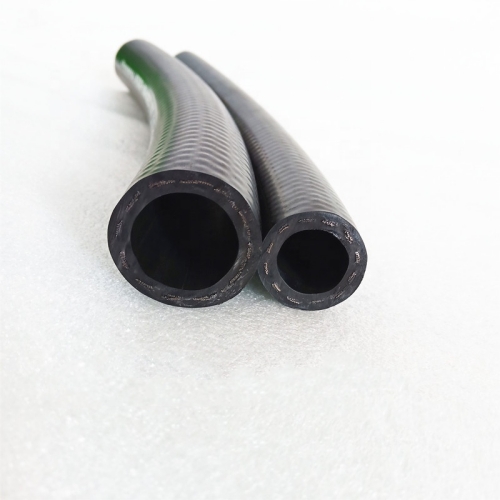
The construction of China One Fiber Braid Hydraulic Hose relies on a carefully selected combination of materials. The inner tube is typically composed of synthetic rubber, commonly Nitrile Rubber (NBR) due to its excellent oil resistance, or Ethylene Propylene Diene Monomer (EPDM) for applications requiring compatibility with phosphate ester fluids. The reinforcement layer consists of one or more braids of high-tensile steel wire, providing the primary pressure-withstanding capability. The outer cover is generally made of Chloroprene rubber (CR), known for its abrasion resistance, weathering resistance, and ozone resistance. Manufacturing begins with the extrusion of the inner tube, followed by the precise application of the steel wire braid using automated braiding machines. The braid angle is a crucial parameter, influencing the hose’s flexibility and pressure rating; tighter braid angles provide higher strength but reduce flexibility. Subsequent extrusion of the outer cover completes the hose body. Critical parameter control involves maintaining consistent rubber compound viscosity and temperature during extrusion, ensuring precise braid tension, and adhering to strict quality control measures for dimensional accuracy and bond strength between layers. Curing processes are carefully monitored to achieve optimal rubber vulcanization, impacting the hose’s long-term durability and performance. Post-production testing includes hydrostatic pressure testing and impulse testing to verify compliance with industry standards.
Performance & Engineering
The performance of China One Fiber Braid Hydraulic Hose is governed by several key engineering principles. Force analysis centers on the hoop stress within the hose wall generated by internal fluid pressure. The steel wire braid bears the majority of this stress, with the rubber layers contributing to containment and providing a degree of elasticity. Environmental resistance is a critical consideration; prolonged exposure to UV radiation, ozone, and extreme temperatures can degrade the rubber components, leading to cracking and reduced flexibility. Chemical compatibility is equally important – the inner tube must resist swelling, softening, or degradation upon contact with the hydraulic fluid. Compliance requirements, such as those dictated by SAE J517, define minimum performance standards for pressure rating, temperature range, and impulse testing. Functional implementation demands careful selection of hose size and length to minimize pressure drop and ensure adequate flow rate. Proper hose assembly, including the use of correctly sized fittings and crimping procedures, is essential to prevent leakage and ensure long-term reliability. Finite Element Analysis (FEA) is often employed during the design phase to optimize hose geometry and reinforcement configuration for specific application requirements. The dynamic behavior of the hose under pulsating pressures (impulse testing) is a critical performance metric, assessing the hose’s resistance to fatigue failure.
Technical Specifications
| Parameter | Unit | Specification (Typical) | Test Standard |
|---|---|---|---|
| Working Pressure | MPa | 20 | SAE J517 |
| Burst Pressure | MPa | 80 | SAE J517 |
| Temperature Range | °C | -40 to +100 | SAE J517 |
| Inner Tube Material | - | Nitrile Rubber (NBR) | ASTM D2000 |
| Reinforcement | - | Single Steel Wire Braid | SAE J517 |
| Outer Cover Material | - | Chloroprene Rubber (CR) | ASTM D2000 |
Failure Mode & Maintenance
China One Fiber Braid Hydraulic Hose is susceptible to several failure modes in practical applications. Fatigue cracking, arising from repeated pressure cycling, is a common cause of failure, often initiating at braid crossover points or areas of localized stress concentration. Delamination, the separation of layers, can occur due to poor bonding during manufacturing or exposure to aggressive fluids. Degradation of the rubber compounds, induced by heat, ozone, or UV radiation, leads to loss of elasticity and cracking. Oxidation of the steel wire braid can reduce its tensile strength and increase its susceptibility to corrosion. Improper hose assembly, such as over-tightening or using incorrect fittings, can lead to premature failure. Maintenance procedures include regular visual inspections for cracks, abrasions, and leaks. Hose should be replaced if any signs of damage are observed. Proper storage, protected from sunlight and extreme temperatures, is crucial to extend hose life. Flushing the hydraulic system periodically to remove contaminants prevents internal abrasion and reduces the risk of hose failure. Avoid sharp bends and kinking during installation and operation. Crimping procedures should be periodically audited to ensure consistency and adherence to manufacturer’s specifications. Preventative maintenance programs incorporating scheduled hose replacement are essential for maximizing system reliability.
Industry FAQ
Q: What is the impact of hydraulic fluid type on the service life of the hose?
A: The hydraulic fluid type significantly influences the hose’s service life. Incompatible fluids can cause swelling, softening, or degradation of the inner tube material, leading to premature failure. For example, using petroleum-based fluids with an EPDM inner tube can result in rapid deterioration. Selecting a hose with an inner tube material specifically compatible with the intended fluid is crucial. Regular fluid analysis is recommended to monitor fluid condition and identify potential compatibility issues.
Q: How does the steel wire braid contribute to pressure containment, and what are the consequences of braid corrosion?
A: The steel wire braid provides the primary pressure containment by resisting the hoop stress generated by the internal fluid pressure. The braid’s tensile strength and configuration are key determinants of the hose’s maximum working pressure. Braid corrosion, often initiated by exposure to moisture and chlorides, reduces the steel’s tensile strength, diminishing the hose’s ability to withstand pressure. Corrosion can lead to strand breakage and ultimately, catastrophic hose failure.
Q: What are the critical considerations when selecting a hose for high-temperature applications?
A: For high-temperature applications, it’s essential to select a hose with a rubber compound that maintains its mechanical properties at elevated temperatures. Chloroprene rubber (CR) generally exhibits better heat resistance than Nitrile rubber (NBR). The hose’s temperature rating must exceed the maximum operating temperature of the hydraulic system. Consideration should also be given to the potential for thermal degradation of the reinforcement braid.
Q: What is the role of impulse testing, and how does it relate to hose durability?
A: Impulse testing simulates the effects of pulsating pressures on the hose, replicating the dynamic loading conditions encountered in many hydraulic systems. This testing assesses the hose’s resistance to fatigue failure caused by repeated pressure spikes. A hose that passes rigorous impulse testing is more likely to withstand prolonged use in demanding applications. Impulse ratings are crucial for applications with frequent valve switching or pump pulsations.
Q: What is the correct procedure for crimping hose fittings, and why is it important?
A: Correct crimping of hose fittings is paramount to ensuring a leak-free and reliable connection. The crimp must create a sufficient interference fit between the fitting and the hose, providing a secure mechanical bond. Improper crimping – either over-crimping or under-crimping – can lead to leakage, fitting blow-off, or hose failure. Crimping procedures must adhere to the hose and fitting manufacturer’s recommendations, utilizing calibrated crimping equipment and appropriate die sets.
Conclusion
China One Fiber Braid Hydraulic Hose, through its careful material selection and controlled manufacturing processes, offers a robust and reliable solution for fluid power transmission. Understanding the interplay between material properties, engineering principles, and industry standards is critical for ensuring optimal performance and longevity. The hose’s ability to withstand high pressures, resist environmental degradation, and maintain compatibility with various hydraulic fluids makes it a versatile component across diverse industrial sectors.
Future advancements in hydraulic hose technology will likely focus on developing lighter-weight materials, improving chemical resistance, and incorporating smart sensing capabilities for real-time monitoring of hose condition. Adopting preventative maintenance programs, including regular inspections and scheduled hose replacement, remains the most effective strategy for maximizing system reliability and minimizing downtime. Proper hose assembly and adherence to industry best practices are foundational to achieving long-term performance and safety.