
Apr . 01, 2024 17:55 Back to list
china oem brand hydraulic hose Performance Analysis

Introduction
Hydraulic hose, specifically china OEM brand hydraulic hose, constitutes a critical component within fluid power systems across diverse industries, including construction, agriculture, manufacturing, and automotive. Its primary function is the safe and efficient transmission of hydraulic fluid to actuate machinery and equipment. These hoses are engineered to withstand substantial pressure, temperature fluctuations, and exposure to various chemicals, making reliability paramount. OEM (Original Equipment Manufacturer) branding signifies production for integration directly into larger systems by other manufacturers, often requiring adherence to stringent specifications and quality control protocols. The industry faces persistent challenges regarding hose longevity, compatibility with evolving fluid chemistries (bio-based hydraulic fluids), and the need for optimized performance across increasingly demanding operational environments. Core performance metrics revolve around burst pressure, working pressure, temperature range, and fluid compatibility, influencing system uptime and operational safety. This guide provides an in-depth analysis of china OEM brand hydraulic hose, encompassing material science, manufacturing processes, performance characteristics, failure modes, and relevant industry standards.
Material Science & Manufacturing
The construction of a china OEM brand hydraulic hose typically involves four principal layers: the inner tube, reinforcement layers, the outer cover, and potentially, an intermediate bond layer. The inner tube is commonly composed of synthetic rubbers such as nitrile (NBR), chloroprene (CR – Neoprene), or ethylene propylene diene monomer (EPDM), chosen for their compatibility with hydraulic fluids and resistance to degradation. NBR excels in petroleum-based fluid resistance, CR offers broad fluid compatibility and moderate oil resistance, and EPDM demonstrates superior resistance to heat, ozone, and weathering. Reinforcement layers provide the hose's strength and pressure resistance. These layers usually consist of multiple braids or spirals of high-tensile steel wire, or synthetic fiber such as aramid (Kevlar) or polyester. Steel reinforcement delivers superior pressure handling capabilities, while synthetic fibers offer flexibility and reduced weight. The outer cover, typically made from CR or polyurethane (PU), provides abrasion resistance, weather protection, and resistance to oil and chemicals. An intermediate bond layer, frequently a specialized adhesive, ensures strong adhesion between the inner tube and reinforcement layers, preventing separation under pressure. Manufacturing processes involve extrusion of the inner tube and outer cover, followed by helical winding or braiding of the reinforcement layers. Critical parameters during extrusion include temperature control, screw speed, and die geometry to ensure dimensional accuracy and material homogeneity. Braiding tension and angle are meticulously controlled to achieve the desired pressure rating. Quality control includes hydrostatic testing (burst pressure verification), impulse testing (cyclic pressure testing), and dimensional inspections to ensure compliance with specifications.
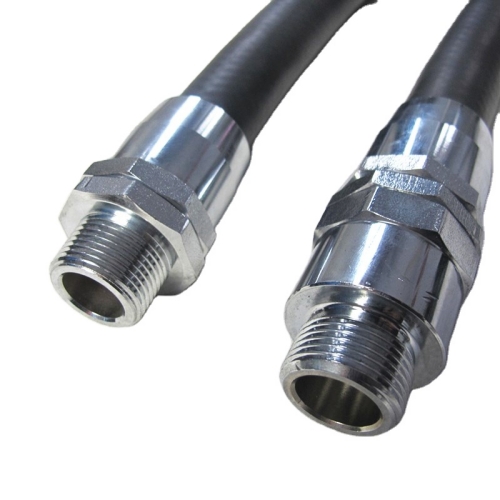
Performance & Engineering
The performance of a hydraulic hose is fundamentally governed by its ability to withstand internal pressure and external forces without failure. Force analysis considers both static and dynamic loads, including working pressure, pressure spikes (surge pressures), bending stresses, and torsional stresses. Finite element analysis (FEA) is often employed to model stress distribution within the hose under various loading conditions. Environmental resistance is a crucial factor, particularly concerning temperature extremes, UV exposure, and chemical exposure. Hoses operating at elevated temperatures require materials with high thermal stability and resistance to hardening or cracking. UV exposure can degrade the outer cover, reducing its protective capabilities. Compatibility with hydraulic fluids is paramount, as incompatibility can lead to swelling, softening, or degradation of the inner tube, resulting in leaks and failure. Compliance requirements, dictated by organizations such as SAE (Society of Automotive Engineers), EN (European Standards), and ISO (International Organization for Standardization), specify minimum performance criteria for hydraulic hoses, including burst pressure, working pressure, temperature range, and fluid compatibility. The selection of appropriate hose construction materials and reinforcement configurations is heavily influenced by the specific application and operating conditions. For example, high-pressure applications necessitate steel-reinforced hoses, while applications requiring flexibility and reduced weight may utilize synthetic fiber reinforcement. Proper hose routing and support are essential to minimize bending stresses and prevent premature failure. Fittings must be compatible with the hose material and installed correctly to ensure a leak-free connection.
Technical Specifications
| Parameter | Unit | Specification (Standard Duty) | Specification (High-Pressure Duty) |
|---|---|---|---|
| Working Pressure | MPa | 16 | 35 |
| Burst Pressure | MPa | 48 | 105 |
| Temperature Range | °C | -40 to +100 | -40 to +120 |
| Inner Tube Material | - | NBR | EPDM |
| Reinforcement | - | 2 Steel Wire Braid | 4 Steel Wire Spiral |
| Outer Cover Material | - | CR | PU |
| Bend Radius (Minimum) | mm | 4D (D = Hose ID) | 6D (D = Hose ID) |
Failure Mode & Maintenance
Hydraulic hose failure can manifest in several modes, often stemming from exceeding operational limits or inadequate maintenance. Fatigue cracking, induced by repeated flexing and pressure cycling, is a common failure mechanism, particularly in applications with significant vibration or movement. Delamination, the separation of layers within the hose construction, can occur due to inadequate bonding or exposure to incompatible fluids. Degradation of the inner tube, caused by chemical attack or thermal oxidation, leads to loss of flexibility and eventual leakage. Pinholes, small punctures in the inner tube, can result from abrasion or internal erosion. External damage, such as cuts, abrasions, and crushing, compromises the hose's integrity. Oxidation of the outer cover, caused by exposure to ozone or UV radiation, leads to cracking and loss of protective properties. Regular inspection is crucial for preventative maintenance. Visual checks should identify any signs of cracking, abrasion, swelling, or leakage. Hose routing should be reviewed to ensure proper support and minimize bending stresses. Fluid compatibility should be verified to prevent chemical attack. Pressure testing can detect internal weaknesses before catastrophic failure. Replacement of hoses should be performed according to the manufacturer's recommendations or when signs of degradation are observed. Proper storage of spare hoses, protected from sunlight, ozone, and extreme temperatures, is essential to maintain their service life. When replacing hoses, ensure compatibility with fittings and proper installation techniques are followed.
Industry FAQ
Q: What are the primary differences between spiral-reinforced and braided hydraulic hoses?
A: Spiral-reinforced hoses, typically using multiple layers of high-tensile steel wire spirally wound, offer higher pressure ratings and greater flexibility compared to braided hoses. Braided hoses, constructed with steel wire woven in a braided pattern, are generally less expensive but have lower pressure capabilities and are more prone to kinking under bending. Spiral hoses excel in applications demanding high flow rates and significant bending, while braided hoses are suitable for lower-pressure systems with less demanding routing requirements.
Q: How does temperature affect the lifespan of a hydraulic hose?
A: Extreme temperatures, both high and low, significantly impact hose lifespan. High temperatures accelerate the degradation of rubber compounds, leading to hardening, cracking, and reduced flexibility. Low temperatures can cause the rubber to become brittle and susceptible to cracking upon flexing. Selecting a hose material specifically rated for the operating temperature range is critical. Extended exposure to temperatures outside the recommended range will inevitably shorten the hose's service life.
Q: What is the role of the hose fitting in preventing failures?
A: The hose fitting is integral to the overall integrity of the hydraulic system. Improperly installed or incompatible fittings can create leak paths, induce stress concentrations, and ultimately lead to hose failure. Fittings must be correctly sized, crimped with the appropriate die, and manufactured from materials compatible with the hose and hydraulic fluid. Regular inspection of fittings for corrosion, damage, or loosening is essential.
Q: How important is fluid compatibility when selecting a hydraulic hose?
A: Fluid compatibility is paramount. Incompatible fluids can cause the inner tube material to swell, soften, or degrade, leading to leaks, contamination, and hose failure. The hose manufacturer's fluid compatibility charts should be consulted to ensure the hose material is suitable for the intended hydraulic fluid. The increasing use of bio-based hydraulic fluids necessitates careful consideration of compatibility.
Q: What preventative maintenance practices should be implemented for hydraulic hoses?
A: Preventative maintenance includes regular visual inspections for cracks, abrasions, leaks, and kinking. Proper hose routing and support minimize bending stress. Pressure testing verifies hose integrity. Fluid contamination control ensures compatibility. Maintaining a detailed record of hose replacement dates and operational parameters aids in identifying potential issues and optimizing maintenance schedules. Replacing hoses based on a scheduled interval, even if no visible damage is present, is a best practice.
Conclusion
China OEM brand hydraulic hoses are essential components in numerous industrial applications, requiring meticulous attention to material science, manufacturing precision, and performance engineering. Understanding the interplay between operating conditions, fluid compatibility, and hose construction is critical for ensuring reliable and safe operation. The selection of appropriate hose types, coupled with diligent preventative maintenance practices, directly impacts system uptime, minimizes downtime costs, and enhances overall operational efficiency.
Future advancements in hydraulic hose technology are focused on developing materials with enhanced durability, improved chemical resistance, and reduced environmental impact. Smart hoses, equipped with sensors to monitor pressure, temperature, and internal condition, offer the potential for predictive maintenance and proactive failure detection. The trend towards lighter-weight hoses, utilizing advanced synthetic fiber reinforcement, continues to drive innovation in this vital sector.