
Apr . 01, 2024 17:55 Back to list
china lpg hose Performance Analysis

Introduction
Liquefied Petroleum Gas (LPG) hose, manufactured in China, represents a critical component in the safe and efficient transfer of LPG for both residential and industrial applications. Positioned within the broader gas distribution infrastructure, these hoses function as the flexible link between storage vessels, regulators, and gas-consuming appliances. Their primary performance characteristics are dictated by pressure rating, chemical resistance to LPG, and resistance to temperature extremes. The core challenges within the industry surrounding LPG hose are centered on ensuring long-term material integrity, preventing leaks that pose safety risks, and maintaining consistent compliance with stringent international safety standards. Chinese manufacturing has become a significant supplier to the global LPG hose market, driven by cost-effectiveness and increasingly sophisticated manufacturing capabilities, but quality control and adherence to international standards remain paramount considerations for end-users.
Material Science & Manufacturing
Chinese LPG hoses are typically constructed from multiple layers, each contributing to the overall performance and safety of the product. The inner core is commonly composed of a specialized synthetic rubber compound, frequently a blend of nitrile rubber (NBR) due to its excellent resistance to LPG’s hydrocarbon composition. This core provides the primary barrier against gas permeation. The reinforcement layer typically consists of high-tensile textile braiding – polyester or nylon are common choices – providing the hose with the necessary burst pressure strength and dimensional stability. An outer cover, usually made of Chloroprene rubber (CR) or Ethylene Propylene Diene Monomer (EPDM) rubber, offers protection against abrasion, UV degradation, ozone cracking, and weathering.
Manufacturing processes generally involve extrusion of the inner core and outer cover, followed by the application of the reinforcing braid. Extrusion parameters—temperature, screw speed, and die design—are critical for achieving uniform wall thickness and consistent material properties. The braiding process requires precise control of yarn tension and angle to ensure optimal strength distribution. Following braid application, the layers are vulcanized – a process of cross-linking the rubber polymers using heat and sulfur or peroxide-based curing agents. Vulcanization temperature and duration directly influence the rubber's elasticity, tensile strength, and resistance to chemical attack. Quality control during manufacturing involves rigorous testing of material properties (tensile strength, elongation, hardness), dimensional accuracy, and leak testing under pressure. Poor parameter control in any of these stages can lead to reduced burst pressure, increased permeability, and premature failure.
Performance & Engineering
The performance of LPG hose is fundamentally governed by its ability to withstand internal pressure and external stresses while maintaining a leak-proof seal. Force analysis focuses on hoop stress within the hose wall due to internal pressure. This stress is directly proportional to the internal pressure and the hose’s radius, and inversely proportional to the wall thickness. Reinforcement braiding significantly reduces hoop stress, allowing for higher pressure ratings. Environmental resistance is another key engineering consideration. Prolonged exposure to UV radiation, ozone, and fluctuating temperatures can cause degradation of the rubber materials, leading to cracking and reduced elasticity. The outer cover material selection is therefore crucial for mitigating these effects.
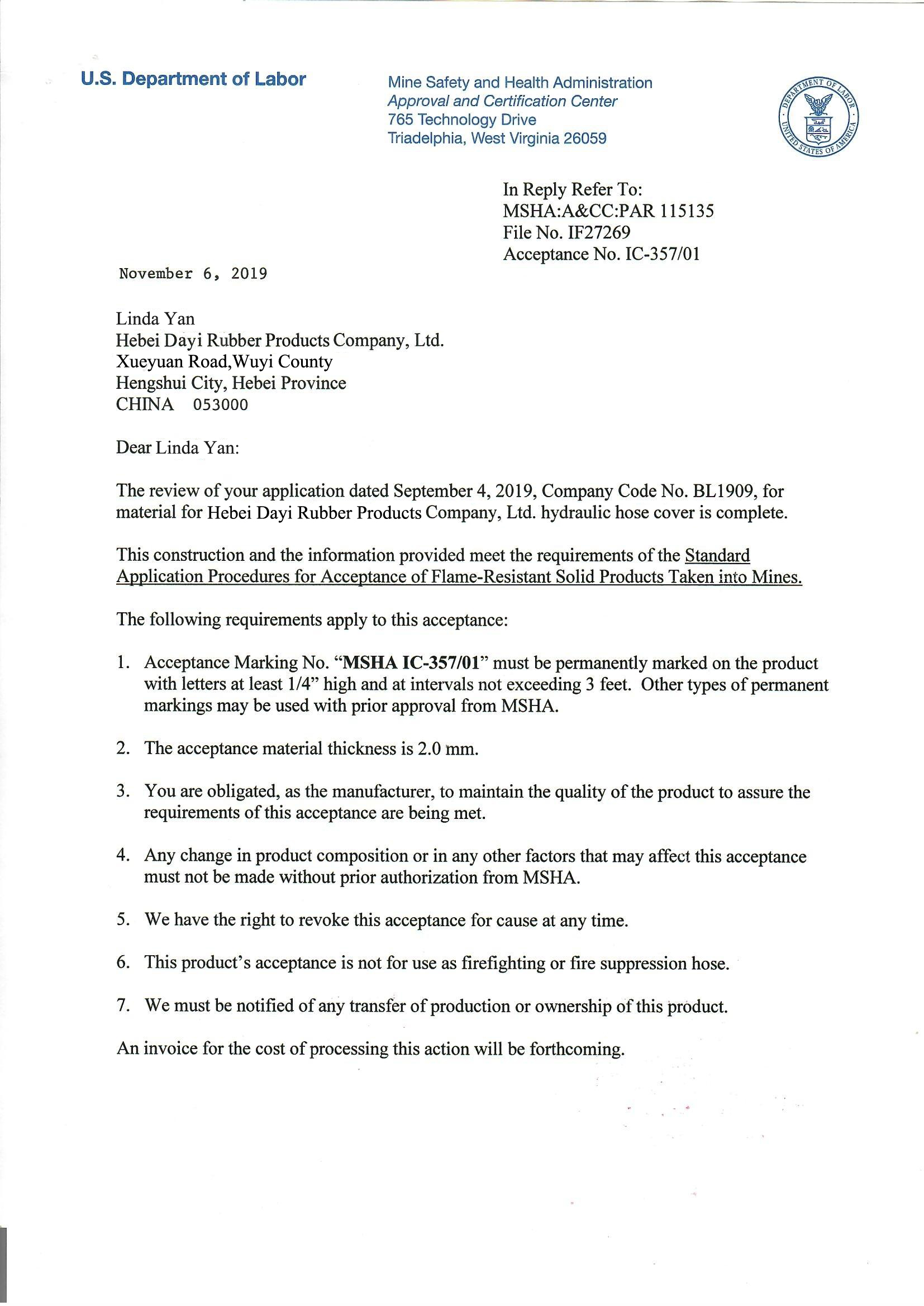
Compliance requirements are dictated by regional and international safety standards (detailed in the footer). These standards specify minimum burst pressure ratings, permeability limits, and aging tests to ensure long-term safety and reliability. Specifically, the hose must maintain its integrity after exposure to accelerated aging conditions (elevated temperature and humidity) simulating years of service. Functional implementation necessitates consideration of hose flexibility and bend radius. Excessive bending can induce stress concentrations, potentially leading to failure. Furthermore, compatibility with hose fittings—couplings and connectors—is essential to prevent leaks and ensure a secure connection. Incorrect fitting selection or improper installation can compromise the entire system’s safety.
Technical Specifications
| Parameter | Unit | Typical Value (China LPG Hose) | Test Standard |
|---|---|---|---|
| Working Pressure | MPa | 1.6 | GB/T 9754-2023 |
| Burst Pressure | MPa | 4.0 | GB/T 9754-2023 |
| Tensile Strength (Reinforcement) | MPa | 1500 | ISO 6892-1 |
| Elongation at Break (Inner Core) | % | 300 | ASTM D412 |
| Permeability (LPG) | cm³/m²/day | < 5 | EN 1763-1 |
| Operating Temperature Range | °C | -20 to +60 | GB/T 9754-2023 |
Failure Mode & Maintenance
Common failure modes in LPG hoses include fatigue cracking due to repeated bending and pressure cycling, permeation leading to gradual gas loss, and degradation of the rubber materials due to environmental exposure. Fatigue cracking typically initiates at stress concentration points, such as near fittings or areas of sharp bending. Permeation rates increase with temperature and pressure, and can be exacerbated by defects in the inner core. Environmental degradation manifests as surface cracking, loss of elasticity, and reduced tensile strength. Oxidation, caused by reaction with ozone and atmospheric oxygen, is a primary degradation mechanism.
Maintenance best practices involve regular visual inspections for cracks, abrasions, and leaks. Hoses should be replaced if any signs of damage are observed. Avoid exposing the hose to extreme temperatures, direct sunlight, or corrosive substances. Proper storage—coiled loosely and protected from UV radiation—is crucial for extending service life. Periodic leak testing using a soap solution is recommended, particularly after installation or any handling that could potentially damage the hose. Furthermore, ensure fittings are securely tightened and compatible with the hose material. Adherence to a preventative maintenance schedule, as outlined by the hose manufacturer or relevant safety regulations, is essential for maximizing safety and reliability.
Industry FAQ
Q: What is the significance of the burst pressure rating, and how does it relate to working pressure?
A: The burst pressure rating represents the maximum pressure the hose can withstand before catastrophic failure. It is typically four times the working pressure, which is the maximum pressure for continuous operation. A higher burst pressure provides a safety margin to account for pressure surges and fluctuations in the LPG system. Selecting a hose with an appropriate burst pressure rating for the specific application is critical for safety.
Q: How does temperature affect the performance and lifespan of an LPG hose?
A: Elevated temperatures accelerate the rate of rubber degradation and increase LPG permeation. Low temperatures can reduce the flexibility of the hose, making it more susceptible to cracking. Maintaining the hose within the specified operating temperature range is crucial for optimal performance and longevity. Prolonged exposure to extreme temperatures should be avoided.
Q: What are the key differences between NBR and EPDM rubber in LPG hose construction?
A: NBR offers excellent resistance to LPG’s hydrocarbon composition, making it ideal for the inner core where contact with the gas is direct. However, NBR has limited resistance to ozone and weathering. EPDM, conversely, exhibits superior resistance to ozone, UV radiation, and weathering, making it suitable for the outer cover where environmental exposure is significant. A combination of both materials provides the optimal balance of chemical resistance and environmental durability.
Q: What role does the reinforcement braid play in hose performance?
A: The reinforcement braid provides the hose with its structural integrity and ability to withstand internal pressure. It prevents the hose from ballooning or bursting under pressure. The type of braiding material (polyester, nylon) and the braid angle influence the hose’s tensile strength, flexibility, and resistance to kinking. A high-quality braid is essential for ensuring the hose’s long-term reliability.
Q: What are the typical inspection procedures recommended for LPG hoses in industrial settings?
A: Routine visual inspections should be conducted at least quarterly, focusing on areas prone to wear and tear, such as near fittings and bends. Leak tests using a soap solution should be performed regularly. Record-keeping of inspection results is recommended. More frequent inspections may be necessary in harsh environments or high-usage applications. Any hose exhibiting signs of damage or deterioration should be immediately replaced.
Conclusion
China LPG hose technology has matured significantly, offering a balance of cost-effectiveness and performance. However, consistent quality control and adherence to international safety standards are paramount. The selection of appropriate materials, precise control of manufacturing processes, and rigorous testing are all critical factors in ensuring the long-term reliability and safety of these components. Understanding the failure modes and implementing preventative maintenance strategies are essential for minimizing risks and maximizing the service life of LPG hoses.
Future developments will likely focus on incorporating advanced materials with enhanced resistance to permeation and environmental degradation, as well as implementing more sophisticated non-destructive testing methods for quality assurance. The increasing emphasis on sustainability may also drive the development of bio-based rubber compounds and recyclable hose materials. Continued innovation and adherence to stringent quality control procedures will be vital for maintaining the safety and integrity of LPG distribution systems worldwide.

