
Apr . 01, 2024 17:55 Back to list
china hydraulic rubber hose Performance Engineering

Introduction
Hydraulic rubber hose is a critical component in hydraulic systems, responsible for the safe and efficient transmission of fluid power. Within the global industrial landscape, China has emerged as a prominent manufacturer of these hoses, supplying a significant portion of the international market. These hoses are utilized across diverse sectors including construction, agriculture, mining, manufacturing, and material handling. The performance of a hydraulic rubber hose is fundamentally defined by its pressure rating, burst strength, temperature resistance, and resistance to fluid compatibility. The core challenges within the industry revolve around maintaining consistent quality, ensuring adherence to stringent international safety standards, and mitigating material degradation over time. This guide provides an in-depth technical analysis of China hydraulic rubber hose, covering material science, manufacturing processes, performance characteristics, failure modes, and relevant industry standards.
Material Science & Manufacturing
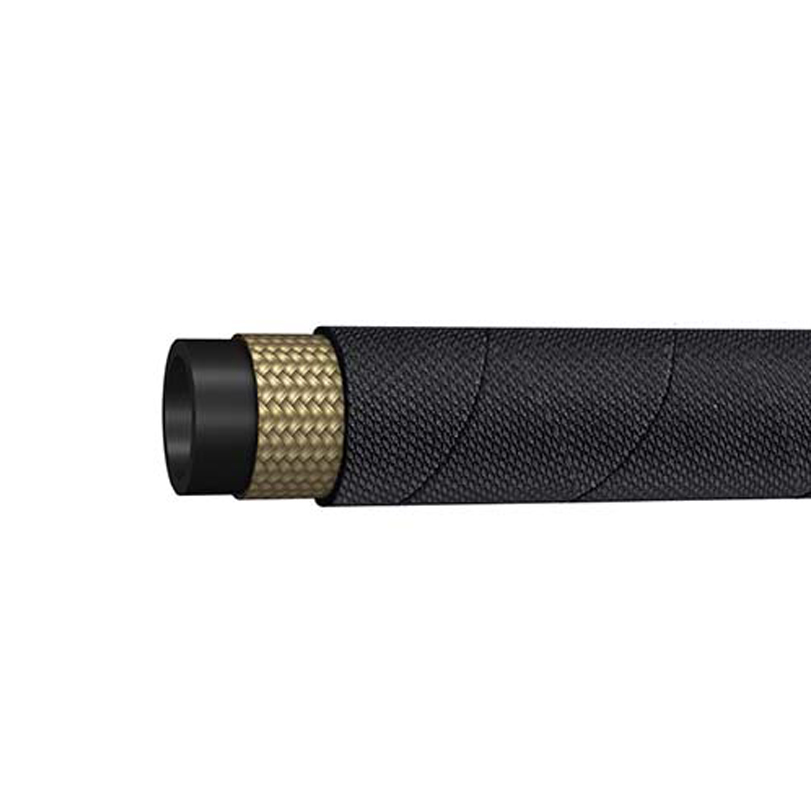
The construction of a hydraulic rubber hose involves a multi-layered system, each contributing to the overall performance and durability. The innermost layer, the tube, is typically composed of a synthetic rubber compound resistant to the hydraulic fluid being used. Common materials include Nitrile Rubber (NBR) for petroleum-based fluids, Ethylene Propylene Diene Monomer (EPDM) for phosphate ester fluids, and Chloroprene Rubber (CR) for a wider range of fluids. The reinforcement layer provides the hose’s strength and pressure resistance. This typically consists of multiple plies of high-tensile steel wire, spirally or braided, to withstand internal pressure. The number and configuration of these wire plies directly correlate to the hose’s working pressure. An intermediate cover layer, often utilizing synthetic rubbers like SBR (Styrene-Butadiene Rubber), provides bonding between the reinforcement and the outer cover. Finally, the outer cover, commonly made of CR or polyurethane, provides abrasion, weather, and chemical resistance. Manufacturing involves extrusion of the inner tube and outer cover, followed by precise winding or braiding of the reinforcement layers. Critical parameters include temperature control during extrusion to ensure uniform rubber vulcanization, accurate tension control during reinforcement winding to prevent distortion, and proper bonding agent application for layer adhesion. Vulcanization, a crucial heat-treating process, imparts the desired mechanical properties to the rubber compounds. The quality of the raw materials, particularly the steel wire's tensile strength and coating quality, significantly impacts the hose's lifespan and reliability. Consistency in batch-to-batch material properties is paramount and requires rigorous quality control measures throughout the manufacturing process.
Performance & Engineering
The performance of a hydraulic rubber hose is governed by several critical engineering considerations. Burst pressure, the maximum pressure the hose can withstand before failure, is a primary metric. Working pressure, typically a fraction (safety factor) of the burst pressure, defines the hose's safe operating limit. Hose bend radius is another crucial factor; exceeding the minimum bend radius induces stress concentrations, leading to premature failure. Furthermore, the hose must exhibit resistance to fatigue caused by repeated pressure cycles and mechanical flexing. Finite Element Analysis (FEA) is frequently employed during the design phase to simulate stress distribution and optimize hose geometry. Environmental resistance is paramount, encompassing exposure to extreme temperatures, UV radiation, ozone, and corrosive fluids. Materials selection directly influences these properties; for instance, EPDM offers superior ozone resistance compared to NBR. The hose's susceptibility to fluid permeation is also a key concern, particularly in applications where fluid leakage is unacceptable. Permeation rates depend on the fluid’s properties and the rubber compound’s barrier characteristics. Compliance with industry standards such as SAE J517 (Hydraulic Hose – Performance Characteristics) and EN 853 (Hydraulic Hose) is essential. The selection of appropriate end fittings, including crimp sleeves and nipples, is critical for maintaining the hose’s integrity and preventing leaks. Improper crimping can lead to fitting slippage or hose failure. The hose’s flexibility, measured by its bend radius, impacts system efficiency and ease of installation. Optimizing this balance between flexibility and rigidity is a significant engineering challenge.
Technical Specifications
| Parameter | Unit | SAE 100R2 AT | SAE 100R1 AT |
|---|---|---|---|
| Working Pressure | MPa | 31.5 | 21 |
| Burst Pressure | MPa | 105 | 63 |
| Temperature Range | °C | -40 to +100 | -40 to +71 |
| Inner Tube | Material | Synthetic Rubber (NBR) | Oil Resistant Synthetic Rubber |
| Reinforcement | Material | Two Steel Wire Braids | One Steel Wire Braid |
| Outer Cover | Material | Synthetic Rubber (CRM) | Black Synthetic Rubber |
Failure Mode & Maintenance
Hydraulic rubber hose failures typically manifest in several forms. Fatigue cracking, induced by repeated pressure cycles and flexing, is a common mode, initiating at stress concentration points such as near end fittings or at areas of localized damage. Bursting occurs when the hose’s pressure exceeds its rated capacity, leading to catastrophic failure. Permeation and diffusion of hydraulic fluid through the hose wall can cause swelling and degradation of the rubber compound, reducing its strength and flexibility. Abrasion and erosion, particularly in exposed environments, can compromise the outer cover, leading to reinforcement exposure and subsequent corrosion. Internal corrosion and degradation can occur due to incompatible fluids or contamination within the hydraulic system. Oxidation, driven by exposure to oxygen and heat, causes the rubber to become brittle and lose its elasticity. Maintenance practices are crucial to extending hose lifespan. Regular visual inspections should be conducted to identify signs of wear, cracking, or abrasion. Hoses should be replaced if damage is detected. Proper hose routing and support are essential to prevent excessive bending and kinking. Fluid cleanliness is paramount; implementing filtration systems minimizes contamination and reduces internal degradation. Ensure compatibility between the hose material and the hydraulic fluid. Avoid exceeding the hose’s working pressure and temperature limits. Proper storage, shielded from sunlight, ozone, and extreme temperatures, is vital when hoses are not in use. Following manufacturer’s recommended replacement schedules and conducting routine pressure testing can further enhance reliability and safety.
Industry FAQ
Q: What is the significance of the "dash size" designation for a hydraulic hose?
A: The dash size (e.g., -6, -8, -10) refers to the inner diameter of the hose in sixteenths of an inch. A dash-6 hose has a 6/16" or 3/8" inner diameter. This is a crucial specification for ensuring proper flow rate and minimizing pressure drop within the hydraulic system. Incorrect dash size can lead to inefficient operation or system failure.
Q: How does steel wire braid construction (1SP, 2SP, 4SP) impact the hose’s pressure rating?
A: "SP" denotes Single Ply. The number preceding SP indicates the number of spiral plies of steel wire used in the reinforcement. 1SP indicates one ply, 2SP indicates two plies, and 4SP indicates four plies. Increasing the number of plies significantly increases the hose’s burst pressure and working pressure, providing greater safety and capability for higher-pressure applications.
Q: What are the key differences between NBR and EPDM rubber compounds in hydraulic hose applications?
A: NBR (Nitrile Butadiene Rubber) offers excellent resistance to petroleum-based hydraulic fluids, making it suitable for most general-purpose hydraulic systems. However, it has limited resistance to ozone and weathering. EPDM (Ethylene Propylene Diene Monomer) provides superior resistance to ozone, weathering, and heat, and is ideal for applications involving phosphate ester fluids. EPDM is generally less resistant to petroleum-based fluids than NBR.
Q: What is the importance of proper crimping when attaching hose ends?
A: Proper crimping is absolutely critical. An under-crimped fitting can lead to leakage, while an over-crimped fitting can damage the hose reinforcement, reducing its strength and potentially causing premature failure. Crimping must be performed using a calibrated crimping machine and the correct die size for the hose and fitting combination.
Q: How does temperature affect the performance and lifespan of a hydraulic rubber hose?
A: Both high and low temperatures can negatively impact hose performance. High temperatures accelerate rubber degradation, reducing its flexibility and strength. Low temperatures can cause the rubber to become brittle and less resistant to impact. Exceeding the hose’s specified temperature range can significantly shorten its lifespan and increase the risk of failure.
Conclusion
China hydraulic rubber hose represents a vital component in numerous industrial applications, underpinned by a complex interplay of material science, manufacturing precision, and rigorous performance engineering. Understanding the specific properties of rubber compounds, reinforcement materials, and manufacturing processes is crucial for selecting the appropriate hose for a given application. Adherence to international standards, coupled with robust quality control measures, is essential to ensure reliable and safe operation.
Continued advancements in rubber technology and manufacturing techniques are expected to further enhance the performance and longevity of hydraulic rubber hoses. Focus areas include the development of more durable and chemically resistant rubber compounds, the implementation of advanced reinforcement materials (e.g., high-strength fibers), and the optimization of hose designs through FEA modeling. Proactive maintenance practices and careful consideration of operating conditions will remain critical for maximizing the service life of these critical hydraulic system components.