
Apr . 01, 2024 17:55 Back to list
china hydraulic hose pipe ferrules Performance Analysis

Introduction
Hydraulic hose pipe ferrules, manufactured in China, are critical components within fluid power systems, providing the secure connection between the flexible hose body and the hydraulic fittings. These ferrules, typically constructed from carbon steel, stainless steel, or alloy steel, are subjected to high pressures and dynamic loading during operation. Their primary function is to create a leak-proof seal while withstanding significant mechanical stress. The Chinese manufacturing sector has become a significant global supplier of these components, driven by cost-effectiveness and increasing quality control. Understanding their material composition, manufacturing processes, performance characteristics, and potential failure modes is paramount for ensuring system reliability and safety. This guide provides an in-depth technical overview of hydraulic hose pipe ferrules produced in China, covering material science, manufacturing techniques, performance engineering, specifications, failure analysis, and industry-relevant FAQs. The increasing demand for robust and reliable hydraulic systems across diverse industries – including construction, agriculture, mining, and manufacturing – necessitates a comprehensive understanding of these often-overlooked, yet vital, components.
Material Science & Manufacturing
The selection of materials for hydraulic hose pipe ferrules is governed by the operating pressure, fluid compatibility, and environmental conditions. Carbon steel (typically SAE 1020 or similar) is commonly used for general-purpose applications due to its cost-effectiveness and machinability. However, for corrosive environments or high-pressure systems, stainless steel (304, 316, or duplex stainless steels) provides superior resistance to corrosion and enhanced mechanical strength. Alloy steels, incorporating elements like chromium, molybdenum, and nickel, are also employed for applications requiring exceptional strength and toughness.
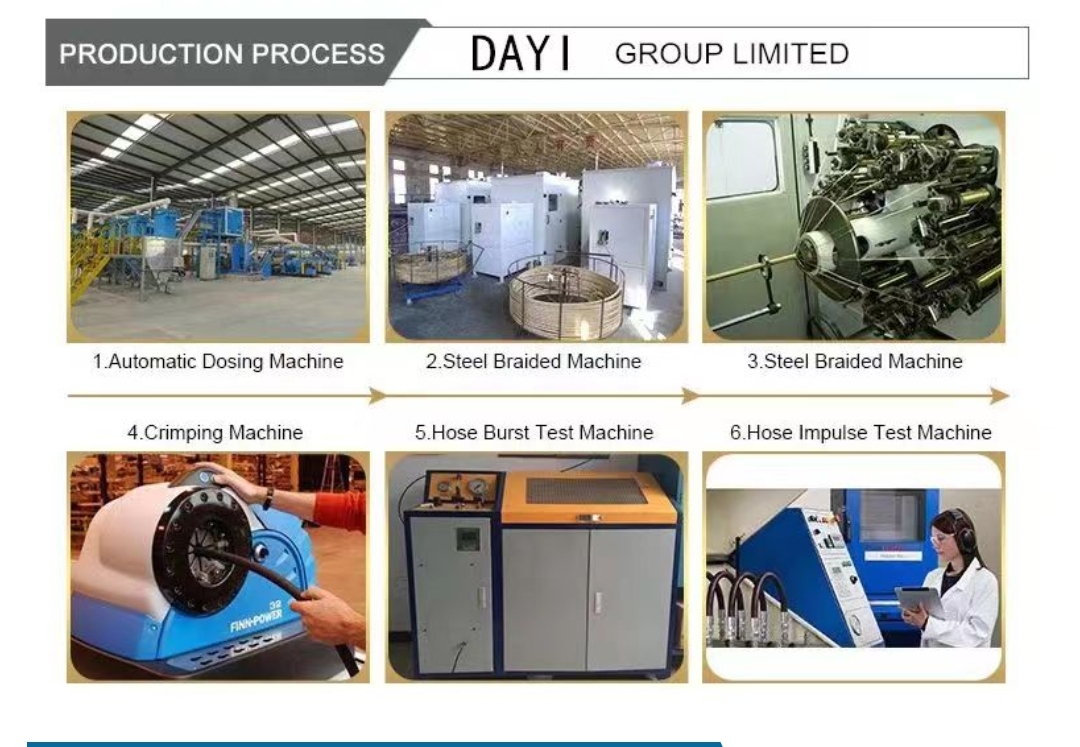
Manufacturing processes primarily involve cold forming techniques – specifically, deep drawing and swaging – to shape the raw material into the desired ferrule geometry. Cold forming improves the material’s grain structure, enhancing its strength and fatigue resistance. Precise control of the forming process, including lubrication, die design, and drawing speed, is essential to prevent cracking or distortion. Following forming, ferrules typically undergo heat treatment (hardening and tempering) to achieve the specified hardness and ductility. Surface finishing, such as phosphate coating or zinc plating, is often applied to improve corrosion resistance. Critical parameters monitored during manufacturing include material tensile strength, yield strength, elongation, hardness (measured by Rockwell C or Vickers scales), and dimensional accuracy (verified through coordinate measuring machines – CMMs). Quality control standards emphasize non-destructive testing (NDT) methods like magnetic particle inspection (MPI) and ultrasonic testing (UT) to detect surface or internal flaws. Post-processing operations may include machining to ensure precise fitment and consistent sealing characteristics. The internal surface of the ferrule is often knurled or roughened to enhance the mechanical interlocking with the hose reinforcement layers during crimping.
Performance & Engineering
The performance of a hydraulic hose pipe ferrule is inextricably linked to its ability to withstand high internal pressure and external mechanical loads. Force analysis during hose assembly and operation reveals that ferrules are subjected to significant radial compressive stresses during crimping, and tensile stresses when the hose is pressurized. The ferrule’s geometry, material strength, and crimp quality directly influence its resistance to these stresses. Finite Element Analysis (FEA) is widely used during the design phase to optimize ferrule geometry and predict stress distribution under various loading conditions.
Environmental resistance is another critical performance aspect. Exposure to temperature extremes, corrosive fluids, and UV radiation can degrade the ferrule material and compromise its integrity. Material selection, surface treatments, and protective coatings play a vital role in mitigating these effects. Compliance with industry standards such as SAE J514 (for hydraulic hose) and ISO 6802 (for hydraulic accessories) ensures that ferrules meet minimum performance requirements. Functional implementation involves the precise crimping process, where the ferrule is permanently attached to the hose reinforcement layers using a hydraulic crimping machine. The crimp depth, ovality, and overall crimp profile are critical parameters that must be carefully controlled to achieve a leak-proof seal and prevent hose blow-off. The proper selection of crimping dies and tooling is also crucial for ensuring consistent crimp quality. Consideration must also be given to the fluid compatibility of the ferrule material with the hydraulic fluid being used, preventing galvanic corrosion or material degradation.
Technical Specifications
| Parameter | Metric (Carbon Steel) | Metric (Stainless Steel 316) | Testing Standard |
|---|---|---|---|
| Material | SAE 1020 | ASTM A476 Type 316 | ASTM A938 |
| Tensile Strength (MPa) | 500-600 | 830-930 | ASTM E8 |
| Yield Strength (MPa) | 300-400 | 550-650 | ASTM E8 |
| Hardness (Rockwell C) | 35-45 | 85-95 | ASTM E18 |
| Elongation (%) | 15-25 | 30-40 | ASTM E8 |
| Corrosion Resistance (Salt Spray Test – Hours) | 48-72 | 1000+ | ASTM B117 |
Failure Mode & Maintenance
Hydraulic hose pipe ferrule failure typically manifests in several forms. Fatigue cracking, initiated by cyclic loading and stress concentrations, is a common failure mode, particularly in high-pressure applications. Creep, a time-dependent deformation under sustained stress, can also lead to ferrule loosening and leakage. Corrosion, especially in systems using incompatible fluids or operating in harsh environments, can weaken the ferrule material and accelerate crack propagation. Improper crimping – insufficient crimp depth, ovality, or die misalignment – is a significant contributor to premature failure, resulting in leakage or hose blow-off. Another failure mechanism is galling, a form of wear that occurs when dissimilar metals are subjected to high contact pressure and sliding motion.
Maintenance best practices focus on preventative measures and early detection of potential issues. Regular visual inspections for signs of corrosion, cracking, or deformation are crucial. Leak testing, using pressure testing equipment, can identify compromised ferrule seals. Proper hose assembly procedures, including the use of calibrated crimping machines and qualified technicians, are essential. The selection of compatible fluids and the implementation of a regular fluid analysis program can help prevent corrosion. In cases of suspected ferrule failure, the hose assembly should be removed from service immediately and replaced with a new, properly crimped assembly. Detailed failure analysis, including metallographic examination and fracture surface analysis, can help identify the root cause of the failure and prevent recurrence. The use of protective coatings on exposed ferrule surfaces can also extend their service life.
Industry FAQ
Q: What is the primary difference between carbon steel and stainless steel ferrules, and when should each be used?
A: Carbon steel ferrules offer a cost-effective solution for general-purpose hydraulic systems operating in benign environments. Stainless steel ferrules, particularly those made from 316, provide superior corrosion resistance, making them ideal for applications involving corrosive fluids (e.g., saltwater, acidic solutions) or exposure to harsh weather conditions. Stainless steel is also preferred for high-pressure applications where enhanced strength and durability are required.
Q: How does crimp quality affect the performance and longevity of a hydraulic hose assembly?
A: Crimp quality is paramount. An inadequate crimp (insufficient depth or ovality) will result in leakage or hose blow-off. An over-crimp can damage the hose reinforcement layers, reducing their strength and potentially leading to premature failure. Proper crimping requires calibrated crimping machines, correctly sized dies, and skilled technicians who adhere to established crimping procedures.
Q: What types of non-destructive testing (NDT) are commonly used to inspect hydraulic hose pipe ferrules?
A: Magnetic particle inspection (MPI) is used to detect surface cracks in ferromagnetic materials like carbon steel. Ultrasonic testing (UT) can detect both surface and subsurface flaws in a variety of materials, including stainless steel. Visual inspection, using magnification, is also a common NDT method for identifying surface defects.
Q: What is the role of surface treatments (e.g., phosphate coating, zinc plating) in enhancing ferrule performance?
A: Surface treatments provide a protective barrier against corrosion, extending the service life of the ferrule. Phosphate coating improves paint adhesion and provides mild corrosion resistance. Zinc plating offers a sacrificial layer of protection, preventing corrosion of the underlying steel. The choice of surface treatment depends on the specific operating environment and fluid compatibility requirements.
Q: What standards govern the dimensional tolerances and material specifications for hydraulic hose pipe ferrules?
A: Several standards are relevant. SAE J514 defines the performance requirements for hydraulic hose, indirectly influencing ferrule specifications. ISO 6802 covers hydraulic accessories, including ferrules. ASTM standards (e.g., ASTM A938 for steel tube drawing) specify material properties and testing procedures. Manufacturer’s specifications often build upon these standards to ensure consistent quality and performance.
Conclusion
Hydraulic hose pipe ferrules, despite their relatively small size, are indispensable components in fluid power systems. Their performance is dictated by a complex interplay of material science, manufacturing precision, and engineering design. Chinese manufacturers have become key players in the global supply chain, offering cost-competitive solutions. However, ensuring consistent quality requires adherence to stringent standards, rigorous quality control measures, and a thorough understanding of potential failure modes.
Moving forward, advancements in materials science – such as the development of high-strength, corrosion-resistant alloys – and manufacturing techniques – like automated crimping processes and advanced NDT methods – will further enhance the reliability and longevity of hydraulic hose pipe ferrules. Continued emphasis on standardized testing, detailed failure analysis, and proactive maintenance practices will be critical for maximizing system performance and minimizing the risk of costly downtime.