
Apr . 01, 2024 17:55 Back to list
china hydraulic hose manufacturer manufacturers Performance Analysis
Introduction
Hydraulic hoses manufactured in China represent a significant and rapidly evolving segment of the global fluid power industry. These hoses are critical components in a wide array of applications, spanning construction equipment, agricultural machinery, industrial manufacturing, and even aerospace. This technical guide provides an in-depth examination of Chinese hydraulic hose manufacturing, encompassing material science, production methodologies, performance characteristics, failure analysis, and relevant industry standards. The core performance parameters—pressure rating, temperature resistance, and fluid compatibility—are paramount, driving continuous improvement in material selection and manufacturing processes. A key pain point for procurement managers involves ensuring consistent quality and adherence to international specifications when sourcing from a diverse Chinese manufacturing landscape. Understanding the nuances of hose construction, reinforcement types, and quality control procedures is therefore crucial for effective procurement and long-term operational reliability. This guide aims to provide that understanding.
Material Science & Manufacturing
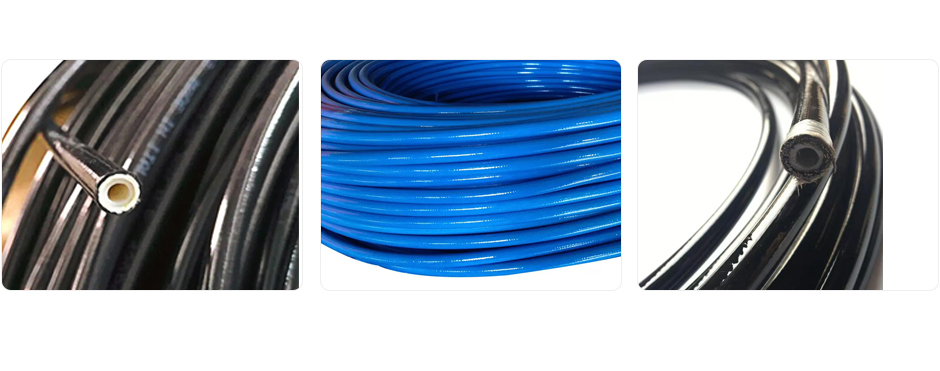
The production of hydraulic hoses begins with the selection of appropriate materials. The inner tube, typically constructed from synthetic rubbers like nitrile (NBR), ethylene propylene diene monomer (EPDM), or fluorocarbon (FKM – Viton®), determines fluid compatibility. NBR offers good resistance to petroleum-based fluids, EPDM excels in phosphate ester hydraulic fluids, and FKM provides superior resistance to high temperatures and aggressive chemicals. Reinforcement layers, providing the hose's strength and pressure-bearing capacity, are commonly composed of high-tensile steel wire (single or multiple spiral layers), textile braids (typically polyester or aramid), or a combination of both. The outer cover, generally made of chlorinated polyethylene (CPE) or polyurethane, provides abrasion, weathering, and ozone resistance. Manufacturing processes vary based on hose type. Spiral hoses utilize a continuous winding of high-tensile wire onto a mandrel, followed by vulcanization of the inner tube and outer cover. Braided hoses employ interwoven textile plies, also vulcanized around a central core. Key parameters in manufacturing include precise control of rubber compound formulation (polymer ratios, filler content, and curing agents), wire tension during winding, and vulcanization temperature and time. Improper vulcanization can lead to reduced rubber elasticity and compromised adhesion between layers. Maintaining consistent batch-to-batch material properties and rigorous in-process quality checks are essential to minimize defects.
Performance & Engineering
Hydraulic hose performance is governed by several key engineering principles. Burst pressure, working pressure, and safety factor are critical parameters, dictated by the application’s operating conditions. Burst pressure represents the hose’s ultimate failure point, while working pressure is the maximum allowable continuous operating pressure, typically a fraction of the burst pressure (e.g., 4:1 safety factor). Hose bend radius is another crucial consideration; exceeding the minimum bend radius induces stress concentrations, leading to premature failure. Environmental resistance, particularly to temperature extremes, UV exposure, and ozone, must also be evaluated. Finite Element Analysis (FEA) is increasingly employed to model hose behavior under various load conditions and identify potential weak points. Compliance requirements, such as those stipulated by SAE J517 (USA) and EN 853/857 (Europe), dictate minimum performance standards. The selection of appropriate end fittings (crimped, swaged, or field-attachable) is also critical; mismatched fittings can create leakage paths or induce stress risers. Proper hose assembly requires calibrated crimping equipment and adherence to manufacturer’s specifications to ensure a secure and leak-proof connection. Consideration must be given to fluid velocity within the hose; excessive velocity can lead to erosion and increased pressure drop.
Technical Specifications
| Parameter | Unit | SAE 100R1AT | SAE 100R2AT |
|---|---|---|---|
| Working Pressure | MPa | 20.7 | 34.5 |
| Burst Pressure | MPa | 82.7 | 138.0 |
| Temperature Range | °C | -40 to +100 | -40 to +121 |
| Inner Tube | Material | NBR | NBR |
| Reinforcement | Type | Single Wire Spiral | Multiple Wire Spiral |
| Cover | Material | CPE | CPE |
Failure Mode & Maintenance
Hydraulic hose failures commonly manifest as burst, leakage, or reduced performance. Burst failures are typically initiated by exceeding the working pressure, damage to the reinforcement layers (e.g., from abrasion or corrosion), or fatigue cracking due to cyclic loading. Leakage can occur at end fittings due to improper crimping, damaged seals, or corrosion. Reduced performance can stem from internal degradation of the hose lining, restricting fluid flow. Common failure modes include: 1) Fatigue cracking: Initiated by repeated bending and pressure cycling. 2) Erosion: Caused by abrasive particles in the fluid stream. 3) Chemical degradation: Resulting from incompatibility between the hose material and the hydraulic fluid. 4) Oxidation: Degradation of the rubber material due to exposure to oxygen and ozone. 5) Permeation: Fluid migration through the hose wall. Preventive maintenance is critical. Regular visual inspections should identify any signs of abrasion, cracking, or leakage. Hose assemblies should be replaced periodically based on service life recommendations (typically 5-7 years). Proper storage conditions (cool, dry, and dark) are essential to prevent premature degradation. When replacing hoses, always use compatible end fittings and ensure proper crimping. Regular fluid analysis can detect contamination and prevent internal damage.
Industry FAQ
Q: What are the key differences between spiral and braided hydraulic hose construction, and when would you choose one over the other?
A: Spiral hoses utilize a continuous single or multiple wire helix, providing higher pressure ratings and greater flexibility in tight spaces. They excel in high-pressure, high-impulse applications like construction equipment. Braided hoses, employing interwoven textile or wire plies, are generally more cost-effective and suitable for lower-pressure applications requiring excellent kink resistance, such as agricultural machinery and industrial tools.
Q: How does the choice of inner tube material impact hose performance and longevity?
A: The inner tube material must be chemically compatible with the hydraulic fluid. NBR is versatile for petroleum oils but may degrade with phosphate ester fluids. EPDM is ideal for phosphate esters but has limited oil resistance. FKM offers the broadest chemical compatibility but is more expensive. Selecting the wrong material leads to swelling, softening, or cracking, ultimately causing hose failure.
Q: What quality control measures should I look for when sourcing hydraulic hoses from China?
A: Prioritize manufacturers with ISO 9001 certification. Request material test reports (MTRs) for reinforcement wire and rubber compounds. Inquire about burst pressure testing procedures and sample testing reports. Look for consistent batch-to-batch quality and traceability. A thorough factory audit can verify manufacturing processes and quality control systems.
Q: What is the significance of the hose 'dash size' and how does it relate to flow capacity?
A: The dash size (e.g., -6, -8, -10) refers to the inner diameter of the hose in sixteenths of an inch. A larger dash size equates to a larger inner diameter, and thus a higher flow capacity. However, increasing the dash size also increases the hose's outer diameter and minimum bend radius.
Q: How can I mitigate the risk of hose damage due to abrasion or external factors?
A: Employ hose guards or sleeves in areas prone to abrasion. Ensure proper hose routing to avoid contact with sharp edges or moving parts. Regularly inspect hoses for wear and tear. Choose a hose cover material (e.g., CPE or polyurethane) appropriate for the operating environment.
Conclusion
The selection and implementation of hydraulic hoses manufactured in China require a comprehensive understanding of material science, manufacturing processes, performance characteristics, and potential failure modes. Procurement professionals must prioritize quality control, adherence to international standards (SAE, EN), and compatibility with the specific hydraulic system requirements. A proactive approach to maintenance, including regular inspections and timely replacements, is essential for maximizing hose lifespan and minimizing downtime.
Looking ahead, advancements in rubber compound technology and reinforcement materials will continue to drive improvements in hose performance and durability. Increasingly sophisticated FEA modeling and non-destructive testing techniques will enable more accurate prediction of hose behavior under extreme conditions. By staying abreast of these developments and adopting best practices in hose management, industries can leverage the cost-effectiveness of Chinese manufacturing while ensuring the highest levels of reliability and safety.