
Apr . 01, 2024 17:55 Back to list
china hydraulic hose manufacturer factories Technical Performance Analysis
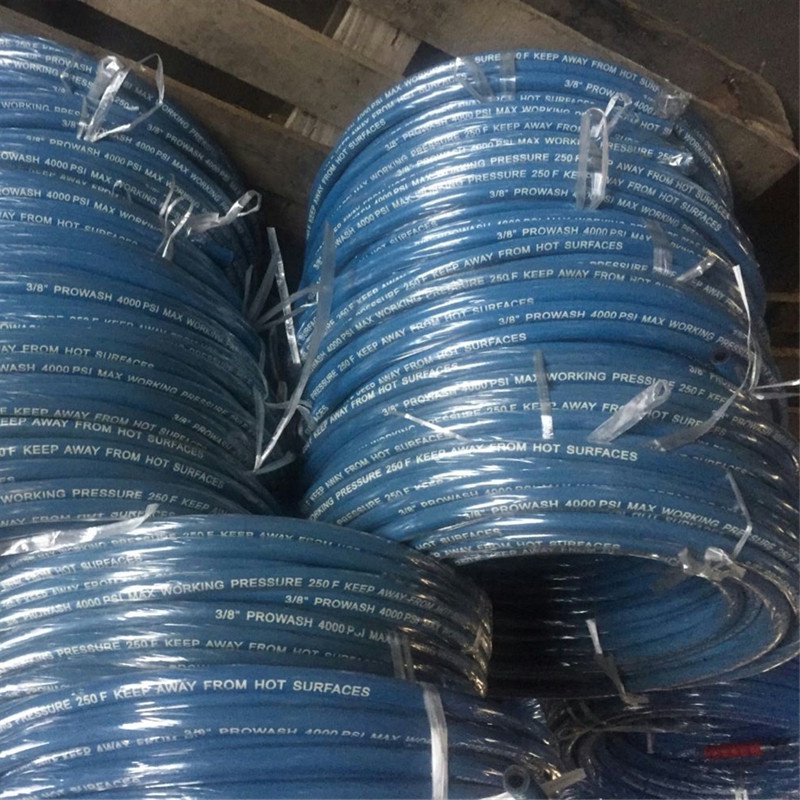
Introduction
Hydraulic hoses, critical components in fluid power systems, transmit pressurized fluid to operate machinery across diverse industrial sectors. China hydraulic hose manufacturer factories represent a significant global supply source, offering a broad range of hose types – from simple rubber constructions to complex multi-layered designs incorporating steel wire reinforcement. This guide provides a comprehensive technical overview of these hoses, focusing on material science, manufacturing processes, performance characteristics, failure modes, and relevant industry standards. The industry currently faces challenges including fluctuating raw material costs (particularly synthetic rubber and steel), increasing demands for higher operating pressures and temperatures, and the imperative for environmentally sustainable manufacturing practices. Understanding these nuances is crucial for effective procurement, application engineering, and preventative maintenance.
Material Science & Manufacturing
The core material in most hydraulic hoses is synthetic rubber, predominantly nitrile butadiene rubber (NBR) for oil resistance, though ethylene propylene diene monomer (EPDM) is used where resistance to water, steam, and phosphate ester hydraulic fluids is required. Other materials include polychloroprene (Neoprene) for its balance of properties and fluorocarbon elastomers (FKM/Viton) for extreme temperature and chemical resistance. Reinforcement layers are critical; high-tensile steel wire (typically drawn from carbon steel) provides the pressure resistance. Textile braids (typically polyester or aramid fibers) offer flexibility and burst strength. The manufacturing process begins with rubber compounding, where raw rubber is mixed with reinforcing fillers (carbon black, silica), plasticizers, antioxidants, and curatives. This mixture is then extruded into a tube. Reinforcement layers are applied via spiral winding of wire or braiding of textiles. Multiple layers are common, with an outer cover providing abrasion and weather resistance. Key process parameters include extrusion temperature, curing time & temperature (vulcanization), and winding/braiding tension. Precise control is vital; under-curing leads to reduced strength, while over-curing causes brittleness. Quality control includes dimensional checks, burst pressure testing, impulse testing, and rubber hardness verification. The use of advanced process control systems and automated inspection are becoming increasingly prevalent in Chinese manufacturing facilities to enhance consistency and reduce defects.

Performance & Engineering
Hydraulic hose performance is dictated by several factors. Burst pressure is the maximum pressure the hose can withstand before rupture, a critical safety parameter. Working pressure is a fraction of burst pressure (typically 1/4), defining the safe operating limit. Impulse pressure, characterized by cyclical pressure spikes, is also crucial, necessitating hoses with robust reinforcement layers to prevent fatigue failure. Temperature range defines the operational limits; exceeding these limits degrades rubber properties, reducing hose life. Flexibility, measured by bend radius, impacts ease of installation and routing. Fluid compatibility is paramount; incorrect fluid selection can cause swelling, softening, or degradation of the rubber. Engineering considerations involve force analysis under pressure, calculating hoop stress in the hose wall and tensile stress in the reinforcement layers. Finite Element Analysis (FEA) is commonly used to optimize hose designs for specific applications. Compliance requirements vary by industry and region, including standards from SAE International (J517, J1926), EN 853, and DIN EN 489. Hose assemblies, including fittings, must be tested to ensure leak-free performance and structural integrity under pressure.
Technical Specifications
| Parameter | Unit | Typical Value (NBR Hose, Steel Wire Reinforcement) | Typical Value (EPDM Hose, Textile Braid Reinforcement) |
|---|---|---|---|
| Working Pressure | MPa | 20 | 10 |
| Burst Pressure | MPa | 80 | 40 |
| Temperature Range | °C | -40 to +100 | -30 to +120 |
| Inner Diameter | mm | 19 | 13 |
| Outer Diameter | mm | 28 | 19 |
| Minimum Bend Radius | mm | 150 | 80 |
Failure Mode & Maintenance
Hydraulic hose failures can stem from several causes. Fatigue cracking occurs due to repeated pressure cycles, particularly near fittings. Pinholes develop due to localized abrasion or corrosion. Bursting results from exceeding the working pressure. Twisting or kinking restricts fluid flow and weakens the hose. Degradation arises from fluid incompatibility, UV exposure, or extreme temperatures. Oxidation causes rubber to become brittle and crack. Common failure analysis techniques include visual inspection, microscopic examination of fracture surfaces, and chemical analysis of rubber compounds. Preventative maintenance is crucial. Regular visual inspections for cracks, abrasions, and leaks are essential. Proper hose routing, avoiding sharp bends and contact with hot surfaces, is vital. Correct fluid selection and regular fluid analysis help prevent degradation. Hose assemblies should be replaced at recommended intervals or after any significant damage. Proper torqueing of fittings is critical to prevent leaks and ensure secure connections. Implementing a hose management program, including hose tracking and replacement schedules, significantly improves system reliability and reduces downtime.
Industry FAQ
Q: What is the impact of steel wire helix versus spiral reinforcement on hose performance?
A: Steel wire helix reinforcement provides higher burst pressure and resistance to kinking but reduced flexibility compared to spiral reinforcement. Spiral reinforcement offers greater flexibility for tight routing but generally has lower burst pressure capability. The choice depends on the application’s pressure, temperature, and routing requirements.
Q: How do different synthetic rubbers (NBR, EPDM, FKM) affect fluid compatibility?
A: NBR offers excellent resistance to petroleum-based oils but limited resistance to phosphate ester fluids and high temperatures. EPDM provides good resistance to water, steam, and phosphate ester fluids but is not suitable for petroleum oils. FKM (Viton) offers the broadest chemical resistance, including petroleum oils, high temperatures, and aggressive chemicals, but is the most expensive.
Q: What are the implications of using non-compatible fittings with hydraulic hoses?
A: Using incompatible fittings can lead to leaks, reduced burst pressure, and premature failure. Fittings must be designed to properly crimp onto the hose, creating a secure and leak-free seal. Using the wrong crimp size or type can damage the hose reinforcement and compromise its integrity.
Q: How does temperature affect the service life of a hydraulic hose?
A: Elevated temperatures accelerate rubber degradation, reducing flexibility and increasing the risk of cracking. Low temperatures can make the rubber brittle and more susceptible to damage. Operating within the specified temperature range is crucial for maximizing hose life.
Q: What role does impulse pressure play in hose selection and what testing is used to evaluate it?
A: Impulse pressure, or pressure spikes, can cause fatigue failure in hydraulic hoses, especially those with textile reinforcement. Hoses are tested for impulse resistance by subjecting them to repeated pressure cycles at a specified frequency and amplitude. The hose must withstand a defined number of cycles without failure.
Conclusion
China hydraulic hose manufacturer factories produce a diverse array of products serving global industrial needs. Understanding the intricate interplay between material science, manufacturing processes, and performance characteristics is crucial for selecting the appropriate hose for a given application. Attention to detail regarding fluid compatibility, operating pressure, temperature range, and proper installation practices are paramount to ensuring long-term reliability and minimizing costly downtime.
The industry is evolving towards higher performance materials, more sophisticated manufacturing techniques, and a greater emphasis on sustainability. Continued innovation in rubber compounding, reinforcement technologies, and quality control measures will be vital to meet the increasing demands of modern hydraulic systems. Proactive hose management programs and adherence to relevant industry standards will remain essential for maximizing operational efficiency and ensuring safety.