
Apr . 01, 2024 17:55 Back to list
china hydraulic hose connector Performance Analysis
Introduction
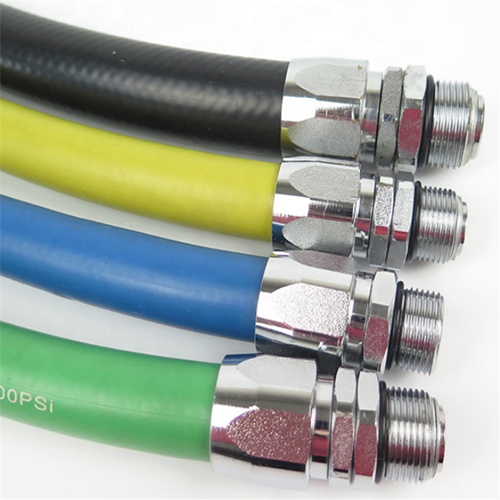
China hydraulic hose connectors represent a critical component in fluid power systems, facilitating the secure and leak-proof connection between hydraulic hoses and equipment. These connectors are integral to a broad spectrum of industries, including construction, agriculture, manufacturing, and automotive. They are not simply mechanical fittings; their performance directly impacts system efficiency, safety, and longevity. The manufacturing landscape in China has become a significant global source for these components, offering a wide range of materials, configurations, and pressure ratings. The core performance characteristics of these connectors – pressure capacity, temperature resistance, and corrosion protection – are paramount. This guide provides an in-depth examination of these connectors, covering material science, manufacturing processes, performance engineering, potential failure modes, and relevant industry standards.
Material Science & Manufacturing
The predominant materials used in China hydraulic hose connector construction are carbon steel (typically ASTM A105, equivalent to GB/T 8163), stainless steel (304, 316, conforming to ASTM A276/A286 and GB/T 1220), and brass (HPb59-1, matching GB/T 523). Carbon steel offers high tensile strength and cost-effectiveness, making it suitable for general-purpose applications. Stainless steel provides superior corrosion resistance, crucial in harsh environments or with aggressive fluids. Brass is utilized for its machinability and compatibility with certain hydraulic fluids. Manufacturing processes vary based on connector type and material. Forging is common for high-pressure connectors, creating a dense, strong component. Machining, including CNC turning and milling, refines dimensions and creates threaded connections. Welding (SMAW, GTAW, or laser welding conforming to AWS D1.1 and GB/T 8162) is used to assemble complex connector bodies. Surface treatments, such as zinc plating (ASTM B633, GB/T 13912) or passivation (ASTM 967, GB/T 26804), enhance corrosion resistance. Key parameter control during manufacturing includes dimensional accuracy (thread pitch, outer diameter), material hardness (Rockwell C scale), and weld integrity (non-destructive testing via radiography and ultrasonic inspection). Heat treatment processes, such as quenching and tempering, are critical for achieving the desired mechanical properties in steel connectors.

Performance & Engineering
The performance of a hydraulic hose connector is governed by several engineering principles. Stress analysis, utilizing Finite Element Analysis (FEA) software, is employed to ensure the connector can withstand operating pressures without yielding or fracturing. Thread engagement calculations, based on the Unified National Standard Thread (UNS) or metric threads, determine the required thread length and tightening torque to achieve a secure connection. Burst pressure testing, according to ISO 3766, is essential to verify the connector's ability to withstand pressures significantly exceeding the rated working pressure. Fatigue testing, performed under cyclic pressure loading, assesses the connector’s long-term durability. Environmental resistance is a crucial consideration. Connectors exposed to corrosive environments require materials and coatings resistant to oxidation, chemical attack, and galvanic corrosion. Compliance with industry standards, such as SAE J518 (for hydraulic hose fittings) and DIN 3915 (for metric fittings), is mandatory. Proper sealing is vital to prevent fluid leakage. Sealing mechanisms include O-rings (NBR, EPDM, Viton, conforming to AS568/ISO 3601-1) and metal-to-metal seals. The choice of sealing material depends on fluid compatibility and temperature requirements.
Technical Specifications
| Parameter | Unit | Carbon Steel (A105) | Stainless Steel (316) |
|---|---|---|---|
| Maximum Working Pressure | MPa | 25 | 35 |
| Burst Pressure | MPa | 75 | 105 |
| Tensile Strength | MPa | 600 | 800 |
| Yield Strength | MPa | 300 | 550 |
| Operating Temperature Range | °C | -20 to 120 | -60 to 200 |
| Thread Type | - | UNF, Metric | UNF, Metric |
Failure Mode & Maintenance
Common failure modes for hydraulic hose connectors include thread stripping, corrosion, fatigue cracking, and leakage. Thread stripping typically results from over-tightening or the use of incompatible threads. Corrosion can occur due to exposure to corrosive fluids or environments. Fatigue cracking arises from cyclic pressure loading and is exacerbated by stress concentrations. Leakage can stem from damaged O-rings, improper sealing, or cracks in the connector body. Failure analysis often reveals root causes related to material defects, manufacturing flaws, or improper installation. Preventive maintenance is crucial. Regular visual inspections should identify signs of corrosion, damage, or leakage. Torque checks, using a calibrated torque wrench, ensure proper thread engagement. Lubrication of threads with a compatible grease prevents galling and facilitates disassembly. Replacement of connectors exhibiting signs of wear or damage is essential. Proper storage of connectors in a clean, dry environment protects against corrosion. For carbon steel connectors, periodic application of a protective coating can extend service life. In cases of persistent leakage, a full system pressure test should be conducted to identify underlying issues.
Industry FAQ
Q: What is the impact of fluid compatibility on connector material selection?
A: Fluid compatibility is paramount. Incompatible fluids can cause swelling, degradation, or corrosion of the connector material and seals, leading to leakage and failure. For example, phosphate ester fluids require specific materials like stainless steel and fluorocarbon elastomers (Viton) due to their aggressive chemical properties. Refer to fluid manufacturer's specifications for recommended materials.
Q: How does thread form affect the connector’s performance under high pressure?
A: The thread form (UNF, metric) and thread engagement length directly influence the connector's ability to withstand high pressure. A deeper thread engagement provides greater resistance to stripping. The thread angle also plays a role, with sharper angles offering higher clamping force. Proper thread cleaning and lubrication are also critical.
Q: What are the key considerations for selecting a connector for a pulsating pressure system?
A: Pulsating pressure systems introduce cyclic stresses that can lead to fatigue failure. Connectors for these applications should be made from high-strength materials with excellent fatigue resistance. Proper dampening and shock absorption mechanisms may also be necessary. Frequent inspections are vital.
Q: What are the advantages and disadvantages of using different surface treatments (e.g., zinc plating vs. passivation)?
A: Zinc plating provides sacrificial corrosion protection for carbon steel connectors, but the coating can be damaged over time. Passivation enhances the corrosion resistance of stainless steel by forming a protective oxide layer, but it offers limited protection against chloride attack. The choice depends on the operating environment and cost considerations.
Q: How important is proper torque application during installation and what are the risks of over or under-tightening?
A: Proper torque application is critical. Under-tightening can lead to leakage, while over-tightening can strip threads or damage the connector body. Always use a calibrated torque wrench and refer to the connector manufacturer's recommended torque specifications. Using a torque multiplier can assist with achieving accurate torque on large connectors.
Conclusion
China hydraulic hose connectors are complex engineering components requiring careful consideration of material science, manufacturing processes, and performance characteristics. The selection of appropriate materials, adherence to stringent manufacturing controls, and rigorous testing are essential for ensuring reliable operation and preventing premature failure. Understanding potential failure modes and implementing proactive maintenance procedures are crucial for maximizing the service life and minimizing downtime.
The continued evolution of hydraulic systems demands ongoing innovation in connector design and materials. Future advancements may focus on developing lighter-weight, higher-strength materials, improving corrosion resistance, and integrating smart sensing capabilities for real-time monitoring of connector performance. Adherence to international standards and a commitment to quality control will remain paramount for manufacturers and users alike.