
Apr . 01, 2024 17:55 Back to list
china high pressure rubber hydraulic hose Performance Analysis

Introduction
High pressure rubber hydraulic hose, manufactured in China, represents a critical component in fluid power systems across diverse industries including construction, agriculture, mining, and manufacturing. These hoses are engineered to safely transmit hydraulic fluid under extreme pressures, facilitating the operation of heavy machinery and automated processes. Positioned within the industrial supply chain between raw material suppliers (rubber, steel, synthetic polymers) and original equipment manufacturers (OEMs), the quality and reliability of these hoses directly impact system performance, safety, and operational efficiency. Core performance characteristics encompass burst pressure, working pressure, temperature range, fluid compatibility, and resistance to abrasion and kinking. The increasing demand for higher operational efficiency and stringent safety regulations drives continuous advancements in hose design and manufacturing techniques.
Material Science & Manufacturing
The construction of high pressure rubber hydraulic hose involves a complex interplay of material science and precision manufacturing. The core materials typically include an inner tube, reinforcement layers, and an outer cover. The inner tube, responsible for fluid containment, is commonly composed of oil-resistant synthetic rubbers like nitrile butadiene rubber (NBR), chloroprene rubber (CR), or fluoroelastomers (FKM) depending on the fluid being conveyed. NBR offers good resistance to petroleum-based fluids, while CR excels in heat resistance and weathering, and FKM provides superior chemical resistance for aggressive media. Reinforcement layers, crucial for withstanding high pressure, are typically braided or spiraled high-tensile steel wire. The number of layers and wire gauge directly correlate with the hose’s pressure rating. The outer cover, providing abrasion, ozone, and weathering protection, is typically made of synthetic rubber compounds like styrene-butadiene rubber (SBR) or ethylene propylene diene monomer (EPDM). Manufacturing processes include extrusion for the inner tube and outer cover, calendaring for reinforcement layers, and braiding or spiraling of steel wire. Critical parameters during manufacturing involve maintaining precise rubber compound ratios, controlling extrusion temperatures and pressures, ensuring consistent wire tension during braiding, and conducting rigorous quality control checks, including burst pressure testing and dimensional inspections. Chemical compatibility of the inner tube with the target hydraulic fluid is paramount to prevent swelling, degradation, and eventual failure. Precise vulcanization timing and temperature are essential to achieve optimal rubber cross-linking for desired mechanical properties.
Performance & Engineering
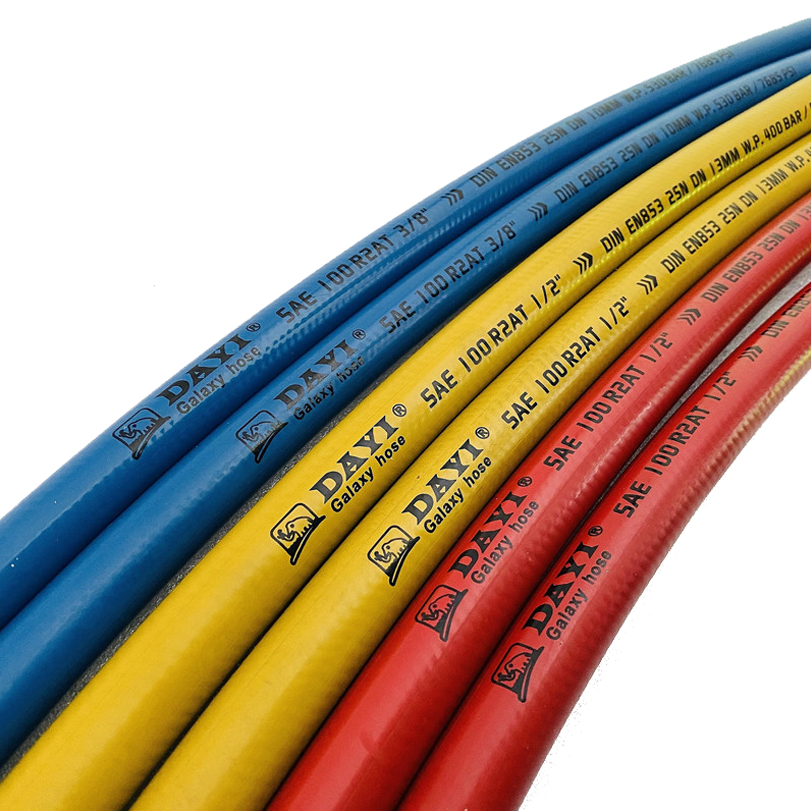
The performance of high pressure rubber hydraulic hose is dictated by rigorous engineering principles encompassing stress analysis, fluid dynamics, and materials behavior. Force analysis is critical in determining the required reinforcement strength to withstand the internal pressure. The hoop stress within the hose wall increases linearly with pressure and radius, demanding robust reinforcement. Fatigue analysis is crucial, considering cyclic loading conditions in typical hydraulic systems. Hose flexing, pulsation, and vibration contribute to fatigue stress, potentially leading to premature failure. Environmental resistance is another key consideration. Exposure to extreme temperatures, UV radiation, ozone, and corrosive substances can degrade rubber compounds and reduce hose lifespan. The hose must maintain its integrity and flexibility within the specified operating temperature range. Compliance requirements, such as those stipulated by SAE (Society of Automotive Engineers) standards and EN (European Norms) standards, mandate specific performance criteria related to burst pressure, minimum working pressure, impulse testing, and dimensional accuracy. Functional implementation dictates the hose’s end fitting configuration (e.g., crimped, swaged, or field-attachable). Proper fitting selection and installation are essential for leak-free operation and preventing fitting blow-off under pressure. The bend radius of the hose must also be carefully considered to avoid kinking and excessive stress concentration.
Technical Specifications
| Parameter | Unit | Typical Value (DN13 - 1/2" ID) | Testing Standard |
|---|---|---|---|
| Working Pressure | MPa | 20.5 | SAE J517 |
| Burst Pressure | MPa | 82.7 | SAE J517 |
| Temperature Range | °C | -40 to +100 | SAE J517 |
| Inner Tube Material | - | NBR (Nitrile Butadiene Rubber) | ASTM D2000 |
| Reinforcement | - | 2 High-Tensile Steel Wire Braids | ASTM A938 |
| Outer Cover Material | - | SBR (Styrene Butadiene Rubber) | ASTM D2000 |
Failure Mode & Maintenance
High pressure rubber hydraulic hose is susceptible to several failure modes in practical applications. Fatigue cracking, induced by repeated flexing and pressure cycling, is a common cause of failure. Delamination, the separation of reinforcement layers from the inner tube or outer cover, reduces the hose’s burst strength. Degradation of the rubber compound, accelerated by exposure to heat, ozone, and UV radiation, leads to loss of elasticity and cracking. Oxidation of the rubber, particularly in the presence of oxygen and metal catalysts, causes hardening and brittleness. Kinking, resulting from excessive bending or improper routing, restricts fluid flow and creates stress concentrations. Abrasion, caused by contact with abrasive surfaces, wears away the outer cover, exposing the reinforcement layers. Maintenance solutions include regular visual inspections for cracks, abrasions, and leaks. Hose should be replaced if any signs of damage are observed. Proper routing and support are essential to prevent kinking and abrasion. Maintaining system cleanliness, including using appropriate filters, prevents contamination that can accelerate hose degradation. Avoiding exceeding the specified working pressure and temperature limits is critical. Periodic pressure testing can identify hoses nearing the end of their service life. Proper storage in a cool, dark, and dry environment prolongs hose lifespan.
Industry FAQ
Q: What is the significance of the 'dash size' (e.g., -6, -8, -10) in hydraulic hose identification?
A: The dash size refers to the nominal inner diameter of the hose in sixteenths of an inch. For instance, a -6 hose has a nominal inner diameter of 6/16 inch, or 3/8 inch. This is a critical parameter for ensuring compatibility with fittings and maintaining appropriate flow rates for the hydraulic system.
Q: How does temperature affect the working pressure rating of a hydraulic hose?
A: Generally, as temperature increases, the working pressure rating of a hydraulic hose decreases. Elevated temperatures can reduce the rubber’s tensile strength and elasticity, compromising its ability to withstand pressure. Manufacturers provide derating factors to adjust the working pressure based on operating temperature.
Q: What is the difference between a braided and spiral-wound hydraulic hose?
A: Braided hoses utilize multiple layers of woven steel wire, offering good flexibility and resistance to kinking. Spiral-wound hoses consist of a single continuous strand of high-tensile wire spiraled around the inner tube, providing higher pressure ratings and greater flexibility in large diameter sizes. However, spiral wound hoses are more susceptible to kinking if bent sharply.
Q: What is the role of hose guards and sleeves in hydraulic hose protection?
A: Hose guards and sleeves provide external protection against abrasion, cuts, and exposure to harsh environments. They significantly extend the hose's service life by preventing damage to the outer cover and protecting the reinforcement layers from corrosion.
Q: How do I properly select a hydraulic hose for a specific application involving corrosive fluids?
A: Selecting a hose compatible with the corrosive fluid is crucial. Fluoroelastomers (FKM) or PTFE (polytetrafluoroethylene) inner tubes offer excellent resistance to a wide range of chemicals. Refer to chemical compatibility charts provided by hose manufacturers to ensure the chosen material is suitable for the specific fluid in use.
Conclusion
China-manufactured high pressure rubber hydraulic hose constitutes a vital element in numerous industrial applications demanding reliable fluid power transmission. Its performance is intrinsically linked to a complex interplay of material science, meticulous manufacturing processes, and adherence to stringent engineering principles. Understanding the impact of factors like material selection, reinforcement configuration, operating temperature, and fluid compatibility is paramount to ensuring optimal hose performance and preventing premature failure.
Future advancements in hydraulic hose technology will likely focus on developing more durable and chemically resistant rubber compounds, incorporating smart monitoring systems for predictive maintenance, and enhancing manufacturing processes to improve quality control and reduce costs. Continued adherence to international standards and a commitment to ongoing research and development will solidify the position of China as a leading global supplier of high-performance hydraulic hose solutions.