
Apr . 01, 2024 17:55 Back to list
china high pressure oil hose Performance Engineering
Introduction
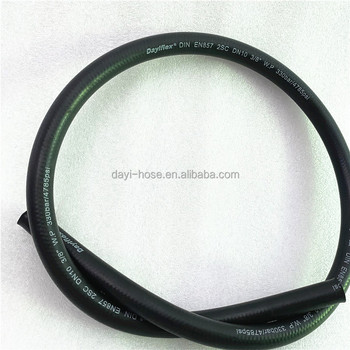
High-pressure oil hose, manufactured in China, represents a critical component in hydraulic systems across diverse industrial applications, including construction machinery, agricultural equipment, oil and gas exploration, and manufacturing processes. These hoses are engineered to safely and reliably transmit hydraulic fluid under extreme pressures and challenging environmental conditions. The technical position of these hoses within the industry chain lies between the hydraulic pump/power unit and the hydraulic actuators (cylinders, motors), facilitating power transmission. Core performance characteristics – including working pressure, burst pressure, temperature resistance, and fluid compatibility – directly dictate the operational efficiency and safety of the overall hydraulic system. The industry faces ongoing challenges related to maintaining consistent quality, achieving cost-effectiveness, and complying with increasingly stringent safety and environmental regulations. A key pain point is the balance between cost optimization and ensuring the hose can withstand the rigors of continuous, high-pressure operation without premature failure, leading to downtime and potential safety hazards.
Material Science & Manufacturing
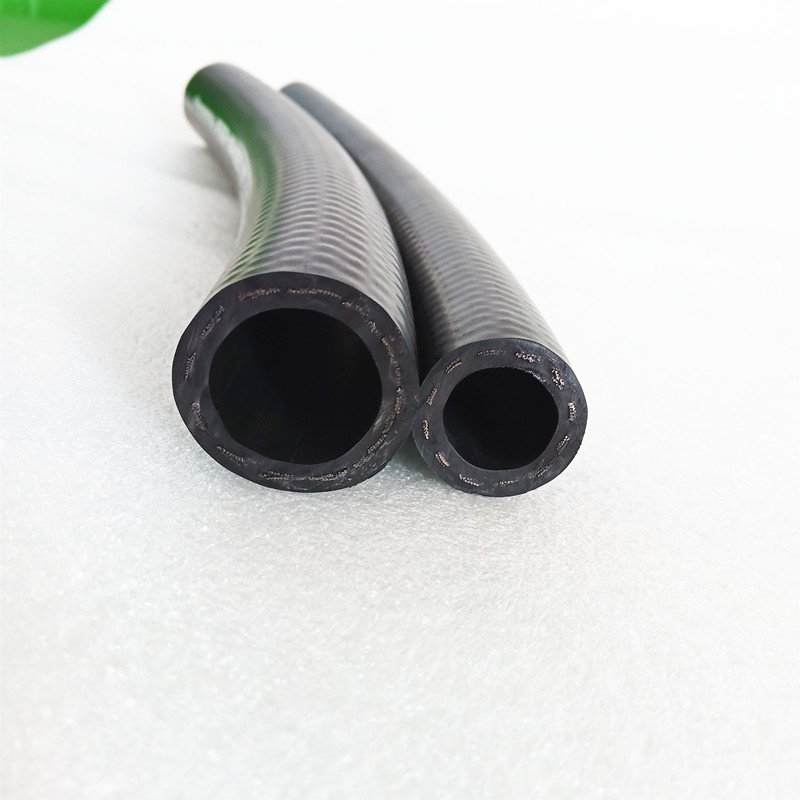
The construction of a high-pressure oil hose typically involves multiple layers, each with specific material properties. The inner tube, which directly contacts the hydraulic fluid, is commonly made from a specialized synthetic rubber compound – typically nitrile rubber (NBR), chlorinated polyethylene rubber (CM), or fluoroelastomer (FKM/Viton) – selected for its resistance to the specific hydraulic fluid being used. NBR offers good resistance to petroleum-based fluids, while CM provides improved resistance to heat and ozone. FKM provides superior resistance to a wider range of chemicals and high temperatures, but at a higher cost. The reinforcement layer is crucial for pressure resistance, typically consisting of multiple braids or spirals of high-tensile steel wire. The number and configuration of these layers directly impact the hose’s working and burst pressures. The outer cover is usually composed of synthetic rubber – such as styrene-butadiene rubber (SBR) or polyurethane (PU) – providing abrasion resistance, weathering protection, and oil resistance.
Manufacturing processes begin with the extrusion of the inner tube to the required diameter and wall thickness. The reinforcement layers are then applied through a braiding or spiral winding process, requiring precise tension control to ensure uniform pressure distribution. The outer cover is subsequently extruded over the reinforcement layer. Critical parameters during manufacturing include maintaining consistent rubber compound mixing ratios, controlling extrusion temperatures to prevent material degradation, achieving proper adhesion between layers (typically using adhesives), and ensuring precise winding tension of the steel reinforcement. Curing is a crucial step, involving vulcanization of the rubber compounds to achieve the desired elasticity, strength, and chemical resistance. Final inspection includes hydrostatic testing to verify the hose's ability to withstand its rated working pressure, impulse testing to assess fatigue resistance, and dimensional checks to confirm adherence to specifications. Post-curing processes like surface treatment and marking are also performed.
Performance & Engineering
The performance of a high-pressure oil hose is governed by several key engineering considerations. Force analysis focuses on hoop stress within the hose walls, calculated using the Barlow’s formula (P = 2St/D, where P is pressure, S is tensile strength, t is wall thickness, and D is diameter). This dictates the required wall thickness to withstand the maximum operating pressure with an adequate safety factor. Environmental resistance is paramount; exposure to temperature extremes (both high and low), UV radiation, ozone, and corrosive fluids can degrade the rubber compounds, leading to reduced flexibility, cracking, and ultimately, failure. Temperature ranges must be carefully considered when selecting the appropriate rubber compound. The hose must also exhibit resistance to kinking and twisting, which can restrict fluid flow and create localized stress concentrations.
Compliance requirements, such as those specified by SAE (Society of Automotive Engineers) standards and EN (European Norms) standards, dictate minimum performance criteria for burst pressure, impulse pressure, temperature range, and fluid compatibility. These standards often involve rigorous testing procedures to ensure safety and reliability. Functional implementation requires consideration of hose length, bend radius, and fitting compatibility. Excessive bending can lead to fatigue failure, while incorrect fitting installation can compromise the seal and cause leakage. Dynamic applications necessitate consideration of impulse pressure – the pressure surges that can occur during rapid valve switching or actuator movements – and the hose's ability to withstand these cyclic loads without failure. Hose assembly integrity is vital, ensuring proper crimping of fittings to create a secure, leak-proof connection.
Technical Specifications
| Parameter | Unit | Specification Range (Typical) | Testing Standard |
|---|---|---|---|
| Working Pressure | MPa | 16 - 70 | SAE J517, EN 853 |
| Burst Pressure | MPa | 48 - 210 | SAE J517, EN 853 |
| Temperature Range | °C | -40 to +100 (NBR), -30 to +125 (CM), -20 to +150 (FKM) | SAE J517, EN 853 |
| Inner Tube Material | - | NBR, CM, FKM | ASTM D2000 |
| Reinforcement Material | - | Steel Wire (1SP, 2SP, 4SP, 6SP) | ASTM A938 |
| Outer Cover Material | - | SBR, PU | ASTM D2000 |
Failure Mode & Maintenance
High-pressure oil hoses are susceptible to several failure modes. Fatigue cracking, occurring due to repeated pressure cycles and flexing, is a common issue, particularly at the fitting crimp areas. Delamination, the separation of layers, can result from improper bonding during manufacturing or exposure to corrosive fluids. Degradation of the rubber compounds due to exposure to heat, ozone, and UV radiation leads to reduced flexibility and eventual cracking. Oxidation, especially in the outer cover, causes hardening and embrittlement. Pinholes can develop in the inner tube due to internal pressure and material defects. Impact damage from external sources can cause localized rupture.
Preventative maintenance is crucial. Regular visual inspections should be conducted to identify signs of cracking, abrasion, swelling, or leakage. The hose should be checked for proper bend radius to avoid kinking and excessive stress. Fittings should be inspected for tightness and corrosion. Hydraulic fluid should be regularly analyzed to ensure compatibility with the hose materials and to detect contamination. Hose replacement should be performed according to the manufacturer's recommendations or when signs of degradation are observed. Proper storage is also essential; hoses should be stored in a cool, dry, and dark environment, away from ozone sources and direct sunlight. When replacing a hose, ensure the new hose has the same or higher pressure rating and is compatible with the hydraulic fluid being used. Crimping of fittings must be performed correctly using calibrated equipment.
Industry FAQ
Q: What is the significance of the ‘SP’ designation in hose reinforcement (e.g., 4SP, 6SP)?
A: The ‘SP’ designation refers to the number of spiral plies of steel wire used in the reinforcement layer. A higher SP number indicates more reinforcement, resulting in a higher pressure rating and improved fatigue resistance. For example, a 6SP hose has six spiral plies and will typically withstand higher pressures than a 4SP hose of the same inner diameter.
Q: How does fluid compatibility affect hose lifespan?
A: Fluid compatibility is critical. Using a hose with an inner tube material that is not compatible with the hydraulic fluid can lead to swelling, softening, or chemical degradation of the rubber, resulting in premature failure. Always verify the hose manufacturer's fluid compatibility chart before selecting a hose.
Q: What are the consequences of exceeding the hose's working pressure?
A: Exceeding the working pressure significantly increases the risk of hose rupture, potentially causing serious injury to personnel and damage to equipment. A burst hose releases hydraulic fluid under high pressure, creating a dangerous spray hazard. Consistent operation near the maximum working pressure also reduces hose lifespan.
Q: What is the correct procedure for installing hose fittings?
A: Proper fitting installation is crucial for hose integrity. Fittings must be correctly sized for the hose and crimped using calibrated crimping equipment and dies. Insufficient crimping can lead to leakage, while over-crimping can damage the hose reinforcement. Always follow the hose and fitting manufacturer’s instructions.
Q: How often should high-pressure oil hoses be replaced?
A: Replacement frequency depends on operating conditions, fluid type, and hose usage. As a general guideline, hoses should be replaced every 3-5 years, or sooner if signs of degradation are observed, such as cracking, swelling, or leakage. Regular inspections and preventative maintenance can help determine the optimal replacement schedule.
Conclusion
China-manufactured high-pressure oil hose represents a vital component in a wide range of hydraulic systems. Understanding the material science, manufacturing processes, performance characteristics, and potential failure modes is essential for ensuring reliable and safe operation. Proper selection, installation, and maintenance, guided by industry standards and best practices, are paramount for maximizing hose lifespan and minimizing the risk of costly downtime and potential hazards.
The ongoing trend towards higher operating pressures and more demanding environmental conditions necessitates continuous innovation in hose materials and manufacturing techniques. Future developments will likely focus on utilizing advanced polymers, incorporating smart sensing technologies for real-time condition monitoring, and developing more robust and durable hose constructions to meet the evolving needs of the industrial sector.