
Apr . 01, 2024 17:55 Back to list
china high pressure hydraulic hose factories Performance Analysis
Introduction
High-pressure hydraulic hoses manufactured in China represent a significant portion of the global market, serving a diverse range of industries including construction, agriculture, mining, and manufacturing. These hoses are critical components in hydraulic systems, responsible for transmitting fluid power to actuators and motors. Their performance directly impacts the efficiency, reliability, and safety of the equipment they serve. The Chinese manufacturing base has rapidly expanded in capacity and technological sophistication, becoming a primary supplier due to competitive pricing and increasing adherence to international quality standards. This guide provides a comprehensive technical overview of these hoses, covering material science, manufacturing processes, performance characteristics, failure modes, and relevant industry standards. A key industry pain point lies in consistent quality control across varying manufacturers, and ensuring that hoses meet stringent safety and performance requirements for demanding applications. Another critical concern is the correct selection of hose materials and construction for specific fluid compatibility and operating conditions. Furthermore, understanding the long-term degradation mechanisms and implementing preventative maintenance are vital for maximizing hose service life and minimizing costly downtime.
Material Science & Manufacturing
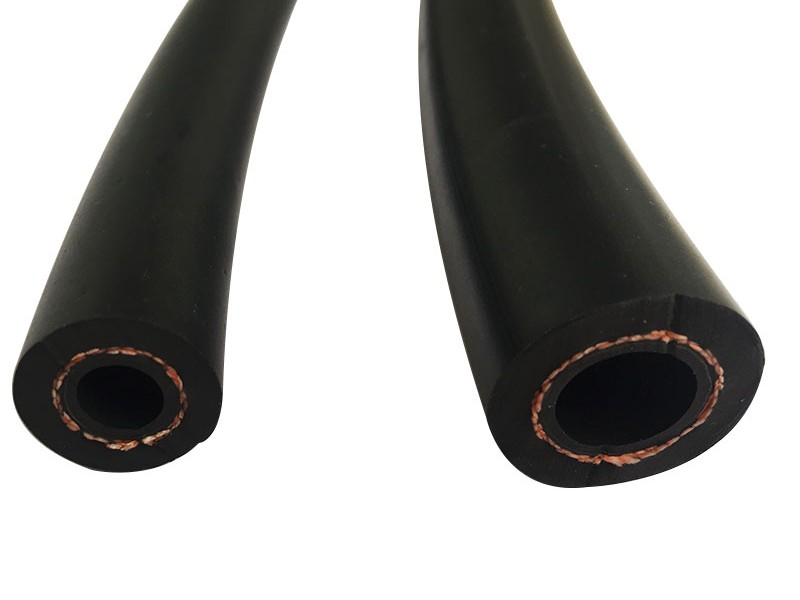
High-pressure hydraulic hoses are typically constructed from multiple layers, each serving a specific function. The inner tube, in direct contact with the hydraulic fluid, is commonly made from synthetic rubbers such as Nitrile Rubber (NBR), Ethylene Propylene Diene Monomer (EPDM), or Fluorocarbon Rubber (FKM/Viton). NBR offers excellent resistance to petroleum-based oils but limited temperature range. EPDM excels in water and phosphate ester fluid compatibility and high-temperature resistance. FKM provides the highest level of chemical resistance and temperature tolerance, but at a higher cost. Reinforcement layers are critical for withstanding high pressures. These typically consist of multiple braids or spirals of high-tensile steel wire. The number and configuration of these layers directly correlate to the hose’s pressure rating. A protective outer cover, often made from Chloroprene rubber (CR) or Polyurethane (PU), provides abrasion, ozone, and weathering resistance. Manufacturing processes begin with the extrusion of the inner tube. Precise control of rubber compound formulation, mixing ratios, and extrusion temperature is crucial for achieving consistent wall thickness and surface smoothness. The reinforcement layers are then applied through a braiding or spiral winding process. Accurate tension control during winding is essential for maintaining dimensional stability and preventing premature failure. Finally, the outer cover is extruded, and the hose undergoes a curing process (vulcanization) to enhance its mechanical properties and chemical resistance. Key parameter control includes maintaining precise die temperatures, cooling rates, and cure times. Failure to control these parameters can lead to defects like porosity, incomplete vulcanization, and inconsistent reinforcement layer adhesion.
Performance & Engineering
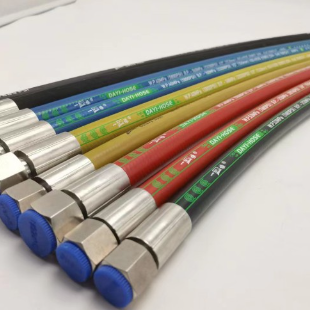
The performance of a hydraulic hose is governed by its ability to withstand internal pressure, external damage, and environmental factors. Burst pressure, the maximum pressure the hose can withstand before rupture, is a critical specification. Working pressure is typically a fraction of the burst pressure, determined by a safety factor (typically 4:1). Hose diameter impacts flow rate and pressure drop; smaller diameters increase velocity but also increase pressure loss due to friction. Tensile strength and elongation at break define the hose's resistance to stretching and tearing. Fatigue resistance is paramount in applications involving cyclical loading, such as hydraulic cylinders. Environmental resistance encompasses factors like temperature extremes, ozone exposure, and fluid compatibility. Hydraulic hose design necessitates careful consideration of force analysis. Bending radius is a critical parameter; exceeding the minimum bend radius can cause kinking, leading to flow restriction and eventual failure. Twisting can induce internal stress, reducing hose life. Proper hose routing and support are essential to minimize stress concentrations. Compliance requirements dictate adherence to specific industry standards (discussed in the footer). For example, SAE J517 specifies pressure ratings, construction requirements, and testing procedures for hydraulic hoses. Functional implementation requires correct coupling selection. Couplings must be compatible with the hose material and fluid type, and properly crimped to ensure a leak-free connection. Improper crimping can lead to premature failure at the coupling joint.
Technical Specifications
| Parameter | Unit | NBR Hose (Typical) | EPDM Hose (Typical) |
|---|---|---|---|
| Working Pressure | MPa | 20 | 25 |
| Burst Pressure | MPa | 80 | 100 |
| Temperature Range | °C | -40 to +100 | -50 to +135 |
| Reinforcement | - | 2 Wire Braid | 4 Spiral Wire |
| Inner Tube Material | - | Nitrile Rubber (NBR) | Ethylene Propylene Diene Monomer (EPDM) |
| Outer Cover Material | - | Chloroprene Rubber (CR) | Polyurethane (PU) |
Failure Mode & Maintenance
Hydraulic hose failures can manifest in several ways. Fatigue cracking, caused by repeated bending and pressure cycling, is a common failure mode. Delamination, the separation of reinforcement layers from the inner tube or outer cover, weakens the hose and can lead to catastrophic rupture. Chemical degradation occurs when the hose material is incompatible with the hydraulic fluid, resulting in swelling, softening, and loss of strength. Oxidation, caused by exposure to oxygen and ozone, leads to hardening and cracking of the rubber compounds. Abrasion damages the outer cover, exposing the reinforcement layers to corrosion and weakening the hose. Hose kinking restricts flow and generates excessive heat, accelerating degradation. To mitigate these failures, preventative maintenance is crucial. Regular visual inspections should be conducted to identify signs of cracking, abrasion, or swelling. Hose routing should be optimized to minimize bending and twisting. Fluid contamination can significantly reduce hose life; proper filtration is essential. Hoses should be replaced at recommended intervals, even if no visible damage is present. When replacing hoses, ensure the new hose is compatible with the hydraulic fluid and operating conditions. Proper crimping of couplings is critical; use calibrated crimping tools and follow manufacturer's recommendations. In the event of a hose rupture, immediate shutdown of the hydraulic system is necessary to prevent injury and equipment damage. A thorough failure analysis should be conducted to determine the root cause and prevent recurrence.
Industry FAQ
Q: What is the impact of impulse pressure on hydraulic hose life?
A: Impulse pressure, or pressure spikes, significantly reduces hydraulic hose life. These pressure fluctuations generate dynamic stress on the hose reinforcement layers, accelerating fatigue failure. Choosing a hose rated for impulse pressure exceeding the system's peak pressure is crucial. Implementing pulsation dampeners in the hydraulic system can also mitigate impulse pressure effects.
Q: How does fluid velocity affect hose performance?
A: Higher fluid velocity increases pressure drop and generates heat. Excessive velocity can lead to erosion of the inner tube, particularly with abrasive fluids. Selecting the appropriate hose diameter to maintain a reasonable fluid velocity (typically below 5-7 m/s) is vital.
Q: What are the key considerations when selecting a hose for high-temperature applications?
A: For high-temperature applications, choose a hose with an inner tube material specifically designed for high-temperature resistance, such as FKM or specialized EPDM compounds. Ensure the outer cover is also rated for the expected temperature range. Consider using heat shielding to protect the hose from external heat sources.
Q: What is the best method for verifying the integrity of a hydraulic hose after installation?
A: Perform a pressure test after installation, gradually increasing the pressure to the working pressure and holding for a specified period. Visually inspect the hose and couplings for leaks. Use a leak detection fluid to identify small leaks that may not be visible.
Q: How does the type of hydraulic fluid affect hose compatibility?
A: Hydraulic fluid compatibility is paramount. Incorrect fluid selection can cause the inner tube to swell, soften, or degrade, leading to failure. Always consult the hose manufacturer’s compatibility chart to ensure the hose material is compatible with the specific hydraulic fluid being used.
Conclusion
China-manufactured high-pressure hydraulic hoses represent a crucial component in numerous industrial applications. Understanding the intricacies of their material science, manufacturing processes, and performance characteristics is vital for ensuring reliable and safe operation. Proper hose selection, installation, and preventative maintenance are paramount for maximizing service life and minimizing the risk of costly failures.
The ongoing advancements in materials and manufacturing techniques within the Chinese hydraulic hose industry are continually enhancing product quality and performance. Continued focus on rigorous quality control, adherence to international standards, and comprehensive failure analysis will be essential for maintaining competitiveness and meeting the evolving demands of the global market.