
Apr . 01, 2024 17:55 Back to list
china gasoline hose Performance Analysis

Introduction
China gasoline hose, commonly referred to as fuel transfer hose, represents a critical component in the safe and efficient delivery of gasoline and related fuel products. Positioned within the downstream petroleum industry supply chain, these hoses bridge the gap between storage facilities, transport vehicles (tanker trucks), and dispensing stations. Its primary function is to provide a flexible, leak-proof conduit for fuel transfer, and its performance is dictated by a complex interplay of material science, manufacturing precision, and adherence to stringent safety standards. Core performance characteristics include burst pressure, chemical resistance to gasoline and its additives (including ethanol blends), resistance to abrasion and weathering, and static dissipation to prevent ignition hazards. The industry currently faces challenges related to increasing ethanol content in gasoline, demanding enhanced hose compatibility, and maintaining cost-effectiveness while meeting evolving regulatory requirements. The proliferation of alternative fuels also necessitates research and development into new hose materials and designs.
Material Science & Manufacturing
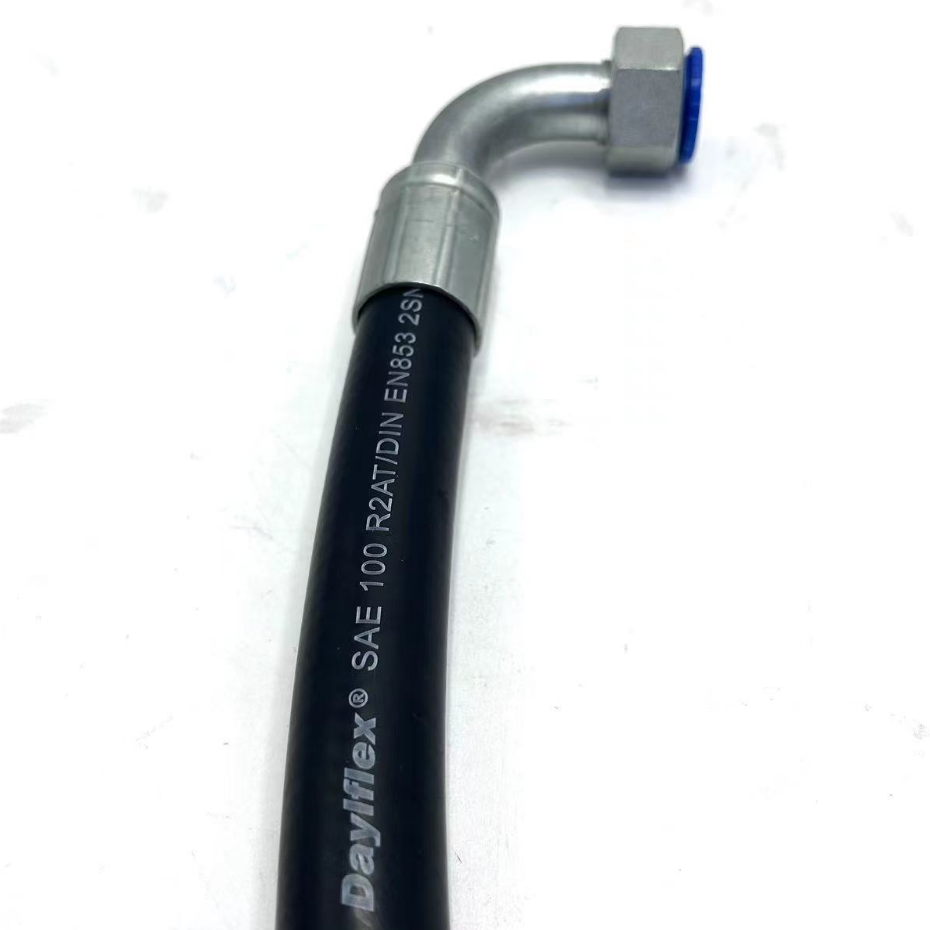
The construction of china gasoline hose typically involves a multi-layered design utilizing several key materials. The inner tube, the layer in direct contact with fuel, is commonly composed of a Nitrile Rubber (NBR) compound, chosen for its excellent resistance to aliphatic and aromatic hydrocarbons prevalent in gasoline. However, as ethanol content rises, specialized NBR formulations or alternative elastomers like Fluoroelastomers (FKM) and Hydrogenated Nitrile Butadiene Rubber (HNBR) are increasingly employed to prevent swelling, cracking, and degradation. The reinforcement layer is crucial for pressure resistance and typically consists of multiple plies of high-tensile synthetic fiber, such as polyester or nylon, spirally wound or braided. The cover layer, providing external protection against abrasion, weathering, and ozone cracking, is usually made from Chloroprene Rubber (CR) – also known as Neoprene – offering robust durability and resistance to environmental factors.
Manufacturing processes begin with compounding the rubber materials, precisely blending elastomers, fillers (such as carbon black for reinforcement and UV protection), plasticizers, curing agents, and antioxidants. The inner tube is then extruded through a die to achieve the desired inner diameter and wall thickness. Following extrusion, the reinforcement layers are applied, either through spiraling or braiding. The outer cover is subsequently extruded over the reinforced tube. Critical parameters during manufacturing include temperature control during extrusion to ensure proper material flow and adhesion, precise winding/braiding tension for consistent reinforcement, and accurate curing times and temperatures to achieve optimal rubber vulcanization. Quality control involves rigorous testing of each layer and the final assembled hose for dimensional accuracy, burst pressure, tensile strength, and chemical resistance. Specific control parameters include Mooney viscosity of rubber compounds, ply adhesion strength, and dimensional tolerances measured via laser scanning.
Performance & Engineering
The performance of china gasoline hose is fundamentally governed by principles of fluid mechanics and material stress analysis. The hose must withstand internal pressure generated during fuel transfer, necessitating a robust reinforcement structure. Burst pressure ratings, typically expressed in PSI or Bar, are determined through hydrostatic testing according to industry standards. The hose also experiences external stresses due to bending, twisting, and kinking during handling and operation. Fatigue analysis is crucial to assess the hose’s long-term durability under cyclic loading conditions.
Environmental resistance is paramount. Exposure to ultraviolet (UV) radiation from sunlight can cause polymer degradation, leading to cracking and loss of flexibility. Ozone cracking is another concern, particularly in areas with high atmospheric ozone concentrations. Temperature fluctuations also impact hose performance; extreme cold can reduce flexibility, while high temperatures can accelerate degradation. Furthermore, static electricity buildup during fuel flow can create a spark hazard. Therefore, hoses are engineered with conductive materials, often carbon black incorporated into the rubber compound, to provide static dissipation and minimize the risk of ignition. Compliance requirements, such as those set by the National Fire Protection Association (NFPA) in the US and EN 12572 in Europe, dictate specific performance criteria related to flame resistance, electrical conductivity, and chemical compatibility. Force analysis includes calculating hoop stress within the hose wall and shear stress within the reinforcement layers under various operating pressures.
Technical Specifications
| Parameter | Unit | Typical Value (China Gasoline Hose) | Test Standard |
|---|---|---|---|
| Working Pressure | PSI | 300 | SAE J30BL |
| Burst Pressure | PSI | 900 | SAE J30BL |
| Inner Tube Material | - | NBR/HNBR | ASTM D2000 |
| Reinforcement | Ply | 6 | SAE J30BL |
| Cover Material | - | CR (Neoprene) | ASTM D2000 |
| Electrical Conductivity | Ω/m | < 100 | EN 12572 |
| Tensile Strength (Cover) | MPa | >10 | ISO 37 |
Failure Mode & Maintenance
Failure modes in china gasoline hose are diverse and often related to environmental factors, operating conditions, and material degradation. Common failure modes include: Fatigue Cracking: Caused by repeated bending and flexing, leading to crack initiation and propagation in the reinforcement layers or rubber compounds. Abrasion: Damage to the outer cover from contact with rough surfaces, reducing its protective capability. Chemical Degradation: Swelling, cracking, or softening of the inner tube due to prolonged exposure to gasoline or its additives, particularly ethanol. Ozone Cracking: Surface cracking of the outer cover due to reaction with ozone in the atmosphere. Kinking/Crushing: Collapse of the hose internal diameter due to excessive bending or external pressure, restricting fuel flow. Delamination: Separation of the layers within the hose structure, compromising its structural integrity.
Preventative maintenance is critical to extend hose lifespan and ensure safe operation. Regular visual inspections should be conducted to identify signs of wear, cracking, or damage. Hoses should be stored in a cool, dry, and dark environment away from direct sunlight and ozone sources. Avoid sharp bends or kinks during handling and operation. After each use, hoses should be drained of fuel and cleaned with a mild detergent solution. Hoses exhibiting any signs of damage or degradation should be immediately removed from service and replaced. Routine pressure testing can also help detect leaks or weakening of the hose structure. Replacement intervals should be determined based on operating conditions, frequency of use, and manufacturer recommendations. Records of inspections and maintenance activities should be maintained for traceability and compliance purposes.
Industry FAQ
Q: What is the impact of increasing ethanol content in gasoline on hose compatibility?
A: Higher ethanol concentrations can cause swelling and degradation of standard NBR rubber compounds used in inner tubes. This leads to increased permeability, reduced burst pressure, and ultimately, hose failure. Hoses specifically designed for ethanol blends utilize specialized NBR formulations, HNBR, or FKM materials that exhibit superior resistance to ethanol-induced degradation. Choosing a hose rated for the specific ethanol concentration is crucial.
Q: How does temperature affect the performance of gasoline hoses?
A: Low temperatures can reduce the flexibility of the hose, making it more susceptible to kinking and cracking. High temperatures can accelerate polymer degradation and reduce the hose's burst pressure rating. Hose materials should be selected to withstand the expected operating temperature range. Avoid exposing hoses to extreme temperatures whenever possible.
Q: What is the significance of electrical conductivity in gasoline hoses?
A: Electrical conductivity is essential to prevent the buildup of static electricity during fuel transfer, which could create a spark and ignite flammable vapors. Gasoline hoses are typically engineered with conductive materials, such as carbon black, to dissipate static charge and minimize the risk of ignition.
Q: What are the key differences between SAE J30BL and EN 12572 standards for gasoline hoses?
A: SAE J30BL is a North American standard focusing on performance requirements for fuel transfer hoses, primarily concerning burst pressure, tensile strength, and chemical resistance. EN 12572 is a European standard that includes similar requirements but also places greater emphasis on flame resistance and electrical conductivity, with specific testing protocols for these parameters.
Q: How can I determine the appropriate hose working pressure for my application?
A: The working pressure of the hose must exceed the maximum pressure expected during fuel transfer, including dynamic pressure surges. Consider the pump pressure, elevation differences, and potential for pressure spikes. A safety factor of at least 4:1 is generally recommended, meaning the hose’s working pressure should be at least four times the maximum anticipated operating pressure.
Conclusion
China gasoline hose is a complex engineered product critical for the safe and reliable transfer of fuel. Its performance is inextricably linked to material selection, meticulous manufacturing processes, and adherence to rigorous industry standards. The increasing demand for compatibility with ethanol-blended fuels, coupled with the need for enhanced durability and safety features, drives continuous innovation in hose design and materials.
As the petroleum industry evolves and embraces alternative fuels, future development of gasoline hoses will focus on expanding chemical compatibility, improving resistance to environmental degradation, and optimizing cost-effectiveness. Furthermore, advancements in non-destructive testing techniques will enable more precise quality control and predictive maintenance, extending hose lifespan and minimizing the risk of catastrophic failures. Thorough understanding of these technical aspects is paramount for procurement managers and engineers alike to ensure optimal performance and compliance.