
Apr . 01, 2024 17:55 Back to list
china four wire spiral high pressure hydraulic hose Performance Analysis
Introduction
China four wire spiral high-pressure hydraulic hose represents a critical component in fluid power systems across a diverse range of industries, including construction, agriculture, mining, and manufacturing. This hose type is characterized by its robust construction, employing multiple layers of reinforcement—specifically four spirally wound steel wires—embedded within a flexible rubber compound. Its primary function is the safe and efficient transmission of hydraulic fluid under extreme pressure and temperature conditions. The product’s technical position within the industry chain is as a downstream component reliant on raw materials like synthetic rubber, high-tensile steel wire, and specialized chemical additives. Core performance metrics center around burst pressure, working pressure, temperature range, and resistance to fluid compatibility. A primary industry pain point is maintaining consistent quality control across varying manufacturing facilities and ensuring compliance with international safety standards. Achieving reliable long-term performance in demanding applications is another key focus, requiring careful material selection and process monitoring to prevent premature failure due to fatigue, abrasion, or chemical attack.
Material Science & Manufacturing
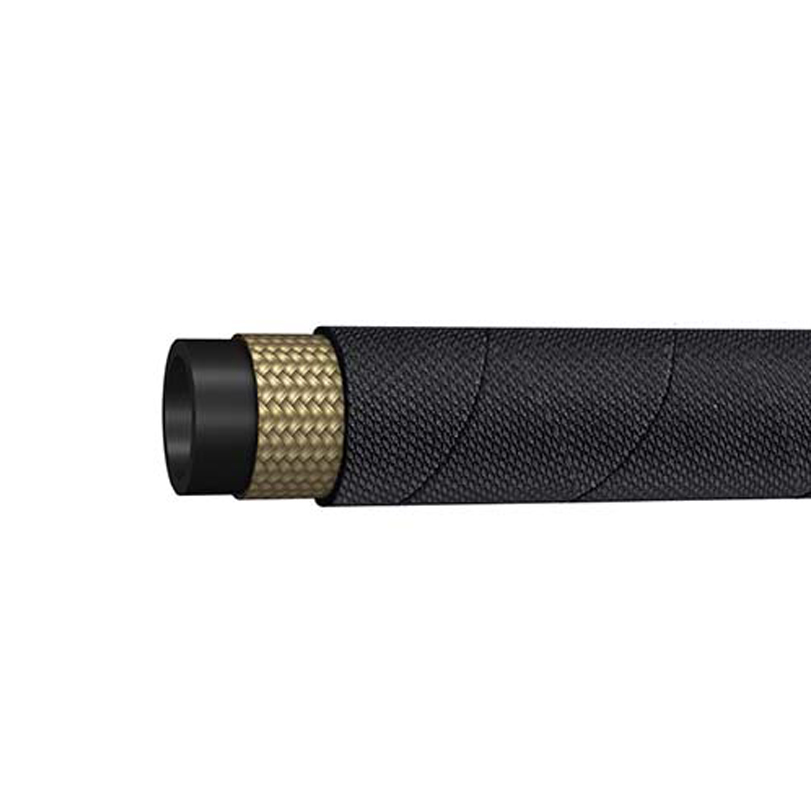
The core material of a four-wire spiral hose is typically a synthetic rubber compound, most commonly a blend of nitrile rubber (NBR), styrene-butadiene rubber (SBR), or a combination thereof, tailored to the specific fluid compatibility requirements of the application. NBR provides excellent resistance to petroleum-based oils, while SBR offers good abrasion resistance and cost-effectiveness. The steel wire used for reinforcement is high-tensile steel, typically drawn to precise diameters to achieve optimal strength and flexibility. Manufacturing begins with the extrusion of the inner and outer rubber layers. The inner layer must provide a smooth, impermeable barrier resistant to fluid permeation and corrosion. The four steel wire helices are then spirally wound onto a mandrel, precisely spaced and tensioned to provide the hose's pressure-withstanding capability. This is a critical step; inconsistent wire tension leads to localized stress concentrations and potential failure points. Subsequently, the outer rubber cover is extruded, encapsulating the steel wires and providing protection against abrasion, weathering, and ozone attack. Key process parameters include extrusion temperature, cure time and pressure, wire tension, and dimensional accuracy. Post-curing quality control measures include hydrostatic pressure testing, impulse testing, and dimensional inspection to ensure conformance to specifications. The chemical compatibility of the rubber compound with the intended hydraulic fluid is validated through immersion testing.
Performance & Engineering
The performance of a four-wire spiral hose is governed by several critical engineering principles. The burst pressure is determined by the tensile strength of the steel wires and the adhesion between the rubber compound and the wire surface. Hoop stress analysis, based on Barlow’s formula, is used to calculate the maximum allowable working pressure, typically a safety factor of 4:1 applied to the burst pressure. Fatigue resistance is a major concern in dynamic applications, requiring consideration of cyclic loading and the hose's ability to withstand repeated pressure fluctuations. Finite element analysis (FEA) is employed to model stress distribution within the hose under various loading conditions, identifying potential weak points and optimizing the reinforcement configuration. Environmental resistance involves assessing the hose's performance in extreme temperatures, exposure to UV radiation, and resistance to ozone cracking. Compliance requirements often mandate adherence to standards like SAE J517, EN 856, or DIN EN 856, which specify minimum performance criteria for burst pressure, temperature range, and fluid compatibility. Proper hose routing and installation are crucial to prevent kinking, twisting, and abrasion, which can significantly reduce its service life. The hose’s flexibility, quantified by its bend radius, must be considered to ensure smooth fluid flow and minimize pressure drop.
Technical Specifications
| Parameter | Unit | Specification Range (Typical) | Test Standard |
|---|---|---|---|
| Working Pressure | MPa | 31.5 – 63 | SAE J517 / EN 856 |
| Burst Pressure | MPa | 126 – 252 | SAE J517 / EN 856 |
| Temperature Range | °C | -40 to +100 | SAE J517 / EN 856 |
| Inner Tube Material | - | NBR, SBR | ASTM D2000 |
| Reinforcement | - | Four Spiral Steel Wire | ASTM A931 |
| Outer Cover Material | - | CR (Chloroprene Rubber) | ASTM D2000 |
Failure Mode & Maintenance
Common failure modes in four-wire spiral hydraulic hoses include burst failure due to exceeding the working pressure, fatigue cracking from repeated bending and pressure cycling, abrasion damage from external contact, and permeation leading to fluid loss and environmental contamination. Fatigue cracking often initiates at stress concentration points, such as areas of localized deformation or imperfections in the wire winding. Internal corrosion can occur if incompatible fluids are used, degrading the rubber compound and reducing the hose’s strength. External abrasion can damage the cover, exposing the steel wires to corrosion. Oxidation of the rubber compound, particularly in high-temperature environments, can lead to hardening and cracking. Maintenance recommendations include regular visual inspections for signs of wear, abrasion, or swelling. Hose connections should be checked for leaks and proper torque. Hoses should be replaced if any signs of damage are detected or if they have exceeded their recommended service life. Proper storage in a cool, dry, and dark environment helps prevent degradation. Avoid kinking or twisting the hose during handling and installation. When replacing a hose, ensure that the new hose has the same or higher pressure rating and is compatible with the hydraulic fluid.
Industry FAQ
Q: What is the impact of hydraulic fluid type on the lifespan of a four-wire spiral hose?
A: Hydraulic fluid type significantly impacts hose lifespan. Incompatible fluids can cause swelling, softening, or hardening of the inner tube material, leading to leaks and eventual failure. For example, using petroleum-based fluids in a hose designed for synthetic fluids can cause rapid degradation. Always verify fluid compatibility with the hose manufacturer’s specifications and use the recommended fluid type.
Q: How does impulse pressure affect the service life compared to static pressure?
A: Impulse pressure, or pressure spikes, has a much more detrimental effect on service life than static pressure. Repeated pressure surges create cyclic stress on the hose reinforcement, accelerating fatigue cracking. Hoses designed for high-impulse applications typically incorporate specialized construction features, such as tighter wire winding and more robust rubber compounds, to mitigate this effect. Static pressure, while still a critical factor, does not induce the same level of stress cycling.
Q: What are the best practices for preventing abrasion damage in harsh environments?
A: Preventing abrasion involves several strategies. Use abrasion-resistant hose covers when operating in environments with sharp objects or rough surfaces. Implement hose guards or sleeves to protect the hose from contact with abrasive materials. Ensure proper hose routing to minimize contact with potential abrasion points. Regularly inspect hoses for signs of wear and replace them proactively.
Q: Can a four-wire spiral hose be repaired if it develops a minor leak?
A: Repairing a four-wire spiral hose is generally not recommended. The structural integrity of the hose is compromised once the steel wire reinforcement is exposed or damaged. Attempting to patch a leak is a temporary fix and poses a significant safety risk due to potential catastrophic failure. Replacement is the safest and most reliable option.
Q: What is the role of the steel wire helix angle in hose performance?
A: The steel wire helix angle is crucial for achieving both flexibility and pressure-withstanding capability. A steeper helix angle provides greater flexibility, allowing the hose to bend more easily, but reduces its ability to resist hoop stress. A shallower helix angle increases pressure resistance but reduces flexibility. Manufacturers carefully optimize the helix angle based on the intended application and performance requirements.
Conclusion
China four-wire spiral high-pressure hydraulic hoses are engineered for demanding fluid power applications, leveraging a robust combination of material science and precision manufacturing. Their performance is dictated by the interplay of internal pressure, external conditions, and the inherent properties of the constituent materials. Maintaining adherence to industry standards and implementing preventative maintenance strategies are paramount for ensuring long-term reliability and operational safety.
Future development trends in this sector likely include the incorporation of advanced rubber compounds with enhanced chemical resistance and temperature stability, as well as the integration of smart sensing technologies for real-time monitoring of hose condition and performance. These advancements will contribute to increased efficiency, reduced downtime, and enhanced safety in hydraulic systems across various industries.