
Apr . 01, 2024 17:55 Back to list
china flexible hydraulic hose Performance Analysis
Introduction
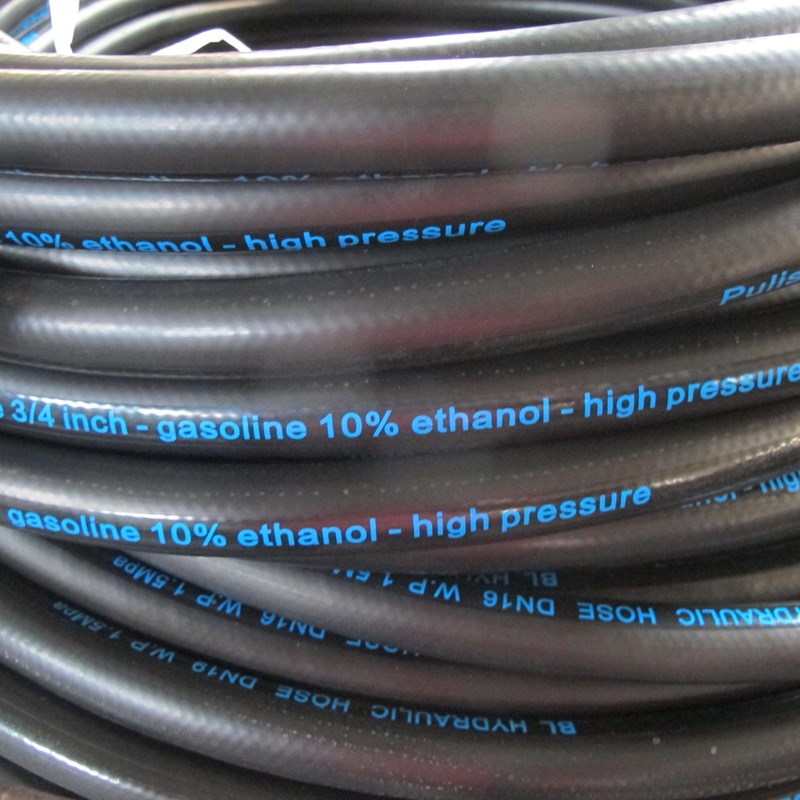
China flexible hydraulic hose represents a critical component in fluid power systems across a diverse range of industries, including construction, agriculture, manufacturing, and automotive. These hoses are engineered to convey hydraulic fluid under high pressure, facilitating the transmission of power for various applications such as lifting, steering, and braking. Their position in the supply chain is downstream from raw material suppliers (rubber, steel, synthetic polymers) and upstream from end-users integrating the hoses into complex machinery. Core performance characteristics center around pressure rating, burst pressure, temperature range, fluid compatibility, and resistance to abrasion and kinking. The market is characterized by increasing demand for higher performance, longer lifespan, and improved safety features, alongside competitive pricing pressures. A significant industry pain point revolves around consistent quality control and adherence to international safety standards given the varied manufacturing capabilities among Chinese producers. Another key challenge is material degradation due to exposure to harsh operating environments and improper fluid selection.
Material Science & Manufacturing
The construction of a china flexible hydraulic hose typically involves several layers, each contributing to its overall performance. The innermost layer, or tube, is usually composed of synthetic rubber compounds such as nitrile rubber (NBR), ethylene propylene diene monomer (EPDM), or fluorocarbon rubber (FKM), selected for their compatibility with the hydraulic fluid being conveyed. NBR provides good resistance to petroleum-based fluids, while EPDM excels in phosphate ester fluid compatibility, and FKM offers superior resistance to high temperatures and aggressive chemicals. The reinforcement layer provides the strength necessary to withstand high pressures. This is typically constructed from multiple plies of high-strength steel wire, spirally wound or braided. The number and gauge of the steel wires directly impact the hose’s burst pressure. An intermediate layer, often utilizing synthetic textiles, provides adhesion between the tube and the reinforcement. Finally, the outer cover, typically made of chloroprene rubber (CR), provides abrasion resistance, weather protection, and resistance to ozone degradation.
Manufacturing processes begin with extrusion of the inner tube and outer cover. The steel wire reinforcement is then applied through a winding or braiding process, controlled by precise tension and pitch parameters. The layers are then vulcanized—a process of cross-linking the rubber polymers using heat and pressure—to bond the components together and achieve the desired mechanical properties. Key parameters during vulcanization include temperature, pressure, and cure time. Improper control of these parameters can lead to under-cured rubber, resulting in reduced strength and flexibility, or over-cured rubber, leading to brittleness and cracking. Post-vulcanization, hoses undergo rigorous testing, including pressure testing, impulse testing, and bend testing, to ensure they meet specified performance standards. Quality control relies heavily on statistical process control (SPC) to monitor critical parameters throughout the manufacturing process.

Performance & Engineering
The performance of a flexible hydraulic hose is fundamentally governed by principles of fluid mechanics and materials science. The hose must withstand significant internal pressure without failure. This is determined by the hoop stress within the hose wall, which is a function of the internal pressure and the hose’s radius and wall thickness. Burst pressure is typically several times the working pressure, providing a safety factor. Impulse pressure, caused by sudden valve closures or pump pulsations, creates dynamic stresses that can lead to fatigue failure over time. Hose manufacturers employ finite element analysis (FEA) to model stress distributions under various loading conditions and optimize hose construction to minimize stress concentrations.
Environmental resistance is critical. Exposure to extreme temperatures can affect the rubber compounds’ flexibility and strength. Ozone degradation can cause cracking in the outer cover. Exposure to hydraulic fluids containing water can lead to corrosion of the steel reinforcement. Fluid compatibility is paramount; incompatible fluids can cause swelling, softening, or degradation of the rubber materials. Compliance requirements vary depending on the application and geographical region. For example, SAE J517 (USA) and EN 856 (Europe) specify standards for pressure ratings, burst pressures, and performance characteristics. The selection of the appropriate hose for a given application requires careful consideration of these factors, as well as the operating temperature, fluid type, and potential exposure to abrasion or chemicals.
Technical Specifications
| Parameter | Unit | SAE J517 (Typical) | EN 856 (Typical) |
|---|---|---|---|
| Working Pressure | MPa | 10 - 35 | 6 - 25 |
| Burst Pressure | MPa | 30 - 105 | 18 - 75 |
| Temperature Range | °C | -40 to +100 | -40 to +120 |
| Inner Tube Material | - | NBR, EPDM | NBR, EPDM |
| Reinforcement | - | Steel Wire Braid (1-6 layers) | Steel Wire Spiral/Braid |
| Outer Cover Material | - | CR | CR |
Failure Mode & Maintenance
Failure modes in flexible hydraulic hoses are diverse. Fatigue cracking, often initiated at the steel wire reinforcement due to repeated bending and pressure cycling, is a common failure mechanism. This is exacerbated by improper hose routing or excessive bending radius. Delamination, the separation of the hose layers, can occur due to inadequate bonding during vulcanization or degradation of the adhesive layers. Abrasion, caused by contact with abrasive surfaces, can wear through the outer cover and expose the reinforcement, leading to corrosion. Oxidation and degradation of the rubber materials due to exposure to oxygen, ozone, or UV radiation can reduce flexibility and strength. Internal fluid contamination can cause erosion of the inner tube and damage to system components. Pinholes can develop in the inner tube due to corrosion or manufacturing defects.
Preventative maintenance is crucial. Regular visual inspections should be conducted to identify signs of abrasion, cracking, or swelling. Hose routing should be optimized to minimize bending and prevent contact with abrasive surfaces. Hydraulic fluid should be regularly filtered to remove contaminants. Hoses should be replaced at recommended intervals, even if no visible signs of damage are present. When replacing hoses, it’s essential to ensure compatibility with the hydraulic fluid. Proper installation techniques, including correct torque settings for fittings, are critical to prevent leaks and premature failure. Following manufacturer’s recommendations for storage and handling is also essential to maintain hose integrity.
Industry FAQ
Q: What is the impact of impulse pressure on hose lifespan?
A: Impulse pressure significantly reduces hose lifespan. Each pressure surge creates stress waves within the hose wall, leading to fatigue. High impulse pressures require hoses with reinforced construction and materials specifically designed to dampen these fluctuations. Mitigation strategies include using accumulators to reduce pressure spikes and selecting hoses with appropriate impulse ratings.
Q: How does fluid contamination affect hose performance?
A: Fluid contamination is a major contributor to hose failure. Abrasive particles cause erosion of the inner tube, leading to leaks and reduced flow. Water contamination can promote corrosion of the steel reinforcement. Regular filtration is essential to maintain fluid cleanliness. Particle counters can be used to monitor contamination levels.
Q: What are the key differences between spiral and braided reinforcement?
A: Braided reinforcement offers higher flexibility, making it suitable for applications with tight bends. Spiral reinforcement provides higher pressure ratings and better resistance to kinking. The choice depends on the specific application requirements.
Q: What is the significance of the hose’s bend radius?
A: Exceeding the minimum bend radius creates excessive stress on the hose wall, leading to premature failure. Improper bending can cause kinking, restricting flow and potentially rupturing the hose. Always adhere to the manufacturer’s recommended bend radius.
Q: What are the benefits of using fluorocarbon rubber (FKM) as an inner tube material?
A: FKM offers superior resistance to high temperatures, aggressive chemicals, and petroleum-based fluids. It’s ideal for applications where other rubber materials would degrade rapidly. However, FKM is more expensive than NBR or EPDM.
Conclusion
China flexible hydraulic hoses are essential components in countless industrial applications, demanding careful consideration of material selection, manufacturing processes, and performance characteristics. The longevity and reliability of these hoses are directly tied to the integrity of the materials used, the precision of the manufacturing controls, and adherence to rigorous quality assurance procedures. Understanding the potential failure modes—ranging from fatigue cracking to fluid-induced degradation—is paramount for implementing effective preventative maintenance strategies.
Looking ahead, the industry is likely to see increased demand for hoses with improved performance, extended lifecycles, and enhanced environmental resistance. Innovations in rubber compound technology, reinforcement materials, and manufacturing processes will play a crucial role in meeting these challenges. Furthermore, stricter adherence to international standards and a greater emphasis on traceability will be essential to ensure consistent quality and safety in the increasingly competitive global marketplace.