
Apr . 01, 2024 17:55 Back to list
china flexible high pressure hydraulic hose Performance Analysis
Introduction
China flexible high pressure hydraulic hose constitutes a critical component in fluid power systems across diverse industrial applications, ranging from construction machinery and agricultural equipment to manufacturing and oil & gas exploration. Its function is to transmit hydraulic fluid, facilitating power transfer and control within these systems. This guide provides an in-depth technical overview of these hoses, encompassing material science, manufacturing processes, performance characteristics, failure modes, and relevant industry standards. A key differentiator in the market is the balance between cost-effectiveness achieved through Chinese manufacturing and adherence to internationally recognized performance and safety benchmarks. Core performance indicators include working pressure, burst pressure, temperature range, and fluid compatibility. Understanding these parameters is vital for ensuring operational efficiency and safety in demanding applications. The industry currently faces challenges related to consistently achieving high levels of dimensional accuracy and maintaining long-term fluid resistance in varying environmental conditions.
Material Science & Manufacturing
The construction of a flexible high-pressure hydraulic hose typically involves four primary layers. The innermost layer, the tube, is generally composed of a synthetic rubber compound resistant to the hydraulic fluid being used. Common materials include nitrile rubber (NBR), chlorinated polyethylene rubber (CM), and ethylene propylene diene monomer (EPDM). NBR provides excellent resistance to petroleum-based fluids, CM to ozone and weathering, and EPDM is suitable for phosphate ester fluids. The second layer is a reinforcement layer, crucial for withstanding high pressures. This layer commonly utilizes high-tensile steel wire, often spiraled or braided, though textile reinforcements (aramid or polyester fibers) are also employed in lower-pressure applications. The number of braids or the ply construction directly correlates to the hose’s pressure rating. The third layer, the intermediate cover, provides bonding between the reinforcement and the outer cover, and adds additional protection. Finally, the outer cover, typically made from abrasion-resistant synthetic rubbers like polyurethane or neoprene, protects the hose from environmental factors, including abrasion, ozone, and UV radiation. Manufacturing processes involve extrusion of the inner tube and outer cover, followed by precise winding or braiding of the reinforcement layer. Critical parameters during manufacturing include maintaining consistent rubber compound formulations, accurate control of wire tension during braiding, and proper vulcanization to ensure optimal bonding and performance. Quality control emphasizes dimensional accuracy, burst pressure testing, and impulse testing to validate performance against specifications.

Performance & Engineering
Performance of high-pressure hydraulic hoses is governed by several key engineering principles. Hose pressure ratings, specified as working pressure and burst pressure, are determined through rigorous testing based on standards like SAE J517. Working pressure represents the maximum pressure the hose can safely handle during continuous operation, while burst pressure is the pressure at which the hose fails catastrophically. Force analysis considers hoop stress within the hose wall due to internal pressure, requiring adequate reinforcement to prevent failure. Environmental resistance is critical; exposure to extreme temperatures, UV radiation, and chemicals can degrade the rubber compounds, reducing flexibility and increasing the risk of cracking. Hose end fittings are also integral to performance. Proper crimping, utilizing standardized dies and procedures, is vital to ensure a leak-free and secure connection. The selection of fitting material (carbon steel, stainless steel) depends on fluid compatibility and environmental conditions. Compliance requirements vary by region. In Europe, the Machinery Directive (2006/42/EC) dictates safety standards. In North America, regulations are often industry-specific, governed by organizations like the Hydraulic Fluid Power Society (HFPS). Impulse testing simulates pressure spikes common in hydraulic systems, assessing the hose's ability to withstand repeated pressure fluctuations without failure. Fatigue life is a crucial factor, dictating the hose's expected service life under cyclical loading conditions.
Technical Specifications
| Parameter | Unit | Specification Range (Typical) | Test Standard |
|---|---|---|---|
| Working Pressure | MPa | 16 - 420 | SAE J517 / EN 856 |
| Burst Pressure | MPa | 48 - 1260 | SAE J517 / EN 856 |
| Temperature Range | °C | -40 to +100 | SAE J517 / EN 856 |
| Inner Tube Material | - | NBR, CM, EPDM | ASTM D2000 |
| Reinforcement Material | - | Steel Wire (Spiral/Braided) | SAE J517 |
| Outer Cover Material | - | Polyurethane, Neoprene | ASTM D2000 |
Failure Mode & Maintenance
Failure modes in high-pressure hydraulic hoses are diverse and often interconnected. Fatigue cracking, initiated by repeated flexing and pressure cycles, is a common failure mechanism, particularly near the hose ends. This is exacerbated by improper hose routing, leading to excessive bending. Delamination, the separation of layers within the hose wall, can occur due to inadequate bonding during manufacturing or prolonged exposure to extreme temperatures. Degradation of the rubber compounds, caused by exposure to ozone, UV radiation, or incompatible fluids, results in loss of flexibility and increased susceptibility to cracking. Oxidation of the steel wire reinforcement can reduce its tensile strength, compromising the hose’s pressure-holding capacity. Abrasion, caused by contact with abrasive surfaces, damages the outer cover, exposing the reinforcement to corrosion. Improper installation, such as over-tightening or improper crimping of fittings, also contributes to premature failure. Preventative maintenance includes regular visual inspections for signs of wear, cracking, or swelling. Hose routing should be optimized to minimize bending and abrasion. Fluid compatibility should be verified to prevent degradation of the rubber compounds. Replace hoses at recommended intervals, based on operating conditions and manufacturer guidelines. Crimped fittings should be inspected for proper seal integrity and re-crimped if necessary. Periodic pressure testing can identify potential weaknesses before catastrophic failure occurs.
Industry FAQ
Q: What is the impact of fluid incompatibility on hose lifespan?
A: Fluid incompatibility is a primary driver of hose failure. Exposure to fluids not recommended by the hose manufacturer can cause swelling, softening, or degradation of the inner tube material. This leads to reduced pressure capacity, increased permeability, and ultimately, hose rupture. It’s crucial to verify fluid compatibility before use, consulting the hose manufacturer's specifications and the fluid’s material safety data sheet (MSDS).
Q: How does temperature affect the performance of a hydraulic hose?
A: Temperature extremes significantly impact hose performance. High temperatures accelerate the degradation of rubber compounds, reducing flexibility and increasing the risk of cracking. Low temperatures can cause rubber to become brittle and less resilient. Exceeding the hose's specified temperature range reduces its burst pressure and working life.
Q: What are the key considerations when selecting hose end fittings?
A: Fitting selection is crucial for ensuring a leak-free and reliable connection. Material compatibility with the fluid and the hose is paramount. Fitting pressure ratings must meet or exceed the hose's working pressure. Proper crimping procedures, utilizing calibrated dies, are essential for achieving a secure seal. Fitting type (e.g., threaded, flanged, quick-disconnect) should align with the system’s requirements.
Q: What are the common causes of hose twisting during operation?
A: Hose twisting is a common issue that can lead to premature failure. It's often caused by improper hose routing, inadequate swivel connections, or rotational forces within the hydraulic system. Twisting induces stress in the hose reinforcement, reducing its fatigue life. Using swivel fittings and ensuring proper hose alignment can mitigate this problem.
Q: How do I interpret the markings on a hydraulic hose?
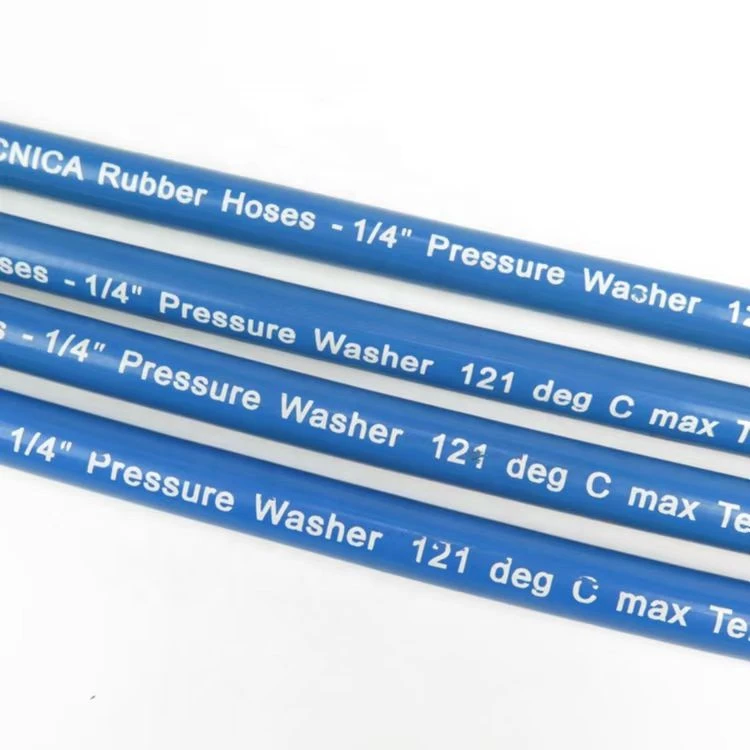
A: Hose markings contain vital information about the hose’s specifications and compliance. They typically include the manufacturer’s name, hose type, working pressure, burst pressure, temperature range, and relevant industry standards (e.g., SAE, EN). Understanding these markings is essential for proper selection and application of the hose.
Conclusion
China flexible high-pressure hydraulic hoses are vital components in numerous industrial applications, demanding careful consideration of material science, manufacturing precision, and performance characteristics. The interplay between the inner tube’s fluid resistance, the reinforcement layer’s strength, and the outer cover’s environmental protection dictates the hose's overall reliability and service life. Addressing common failure modes through preventative maintenance, proper installation, and adherence to industry standards is crucial for minimizing downtime and ensuring operational safety.
Looking forward, advancements in hose technology will likely focus on developing more durable and chemically resistant rubber compounds, optimizing reinforcement designs for increased flexibility and burst pressure, and implementing smart monitoring systems for predictive maintenance. Further research into the long-term effects of bio-based hydraulic fluids on hose materials is also warranted, reflecting a growing emphasis on sustainable industrial practices. Maintaining a rigorous approach to quality control and adherence to international standards will remain paramount for manufacturers and end-users alike.