
Apr . 01, 2024 17:55 Back to list
china en857 2sc Hydraulic Hose Performance Analysis
Introduction
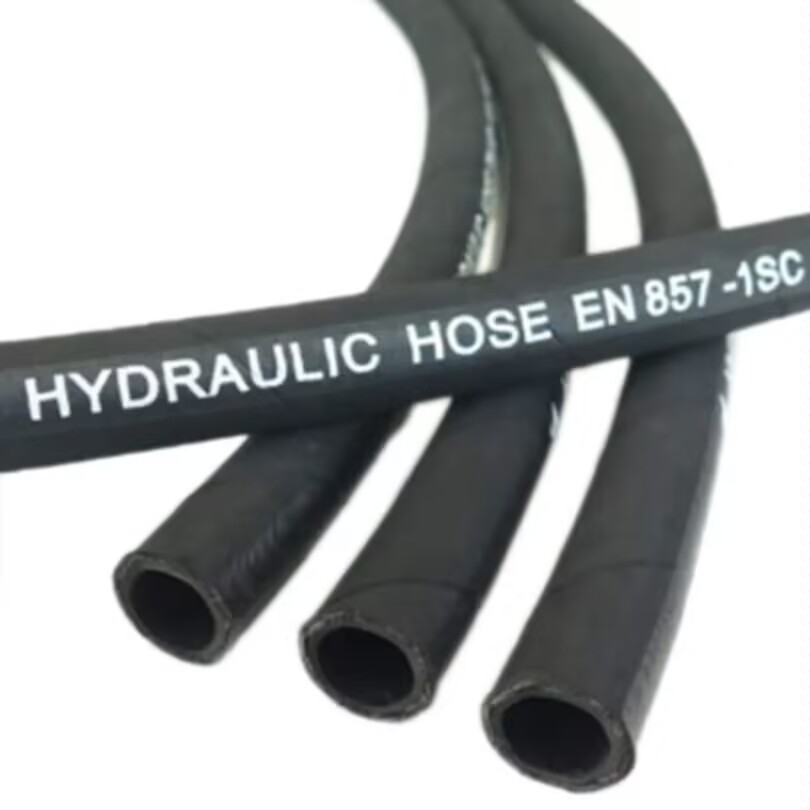
China EN857 2SC refers to a two-skin-coat (2SC) hydraulic hose manufactured in accordance with the European standard EN 857 and commonly produced in China. These hoses are designed for conveying hydraulic fluids under high pressure in industrial, mobile machinery, and agricultural applications. The ‘2SC’ designation signifies a synthetic rubber inner tube, a high-tensile steel wire spiral reinforcement, and an abrasion and weather-resistant synthetic rubber outer cover. Their technical position within the fluid power industry chain is critical – serving as the primary pathway for hydraulic power transmission from pumps to actuators. Core performance characteristics revolve around burst pressure, working pressure, impulse resistance, and temperature range, directly impacting the reliability and safety of hydraulic systems. A key industry pain point is consistent quality control during manufacturing, particularly regarding reinforcement layer integrity and cover adhesion, as these directly relate to hose lifespan and potential catastrophic failure. Furthermore, understanding chemical compatibility with various hydraulic fluids is crucial, as incompatibility can lead to swelling, softening, or degradation of the hose materials.
Material Science & Manufacturing
The manufacturing of China EN857 2SC hoses begins with the inner tube, typically composed of a nitrile rubber (NBR) compound selected for its excellent resistance to petroleum-based hydraulic fluids. NBR’s acrylonitrile content is a key parameter; higher content increases fluid resistance but reduces flexibility at low temperatures. The reinforcement layer consists of a continuously wound high-tensile steel wire, spiraled to provide pressure resistance. The wire’s tensile strength and surface treatment are critical – proper galvanization or passivation prevents corrosion and ensures adequate adhesion with the surrounding rubber compounds. The outer cover is usually a blend of synthetic rubbers like chloroprene (CR) or styrene-butadiene rubber (SBR), chosen for abrasion resistance, weathering protection, and oil resistance. Manufacturing processes include extrusion of the inner tube and outer cover, followed by spiraling of the reinforcement wire. Critical parameter control includes extrusion temperature, wire tension during spiraling, and vulcanization time and temperature. Vulcanization, a chemical process involving sulfur, crosslinks the rubber molecules, enhancing strength and elasticity. A failure to properly control vulcanization leads to inadequate physical properties. Quality control involves dimensional checks, pressure testing to several times the working pressure, and impulse testing to simulate hydraulic shock.
Performance & Engineering
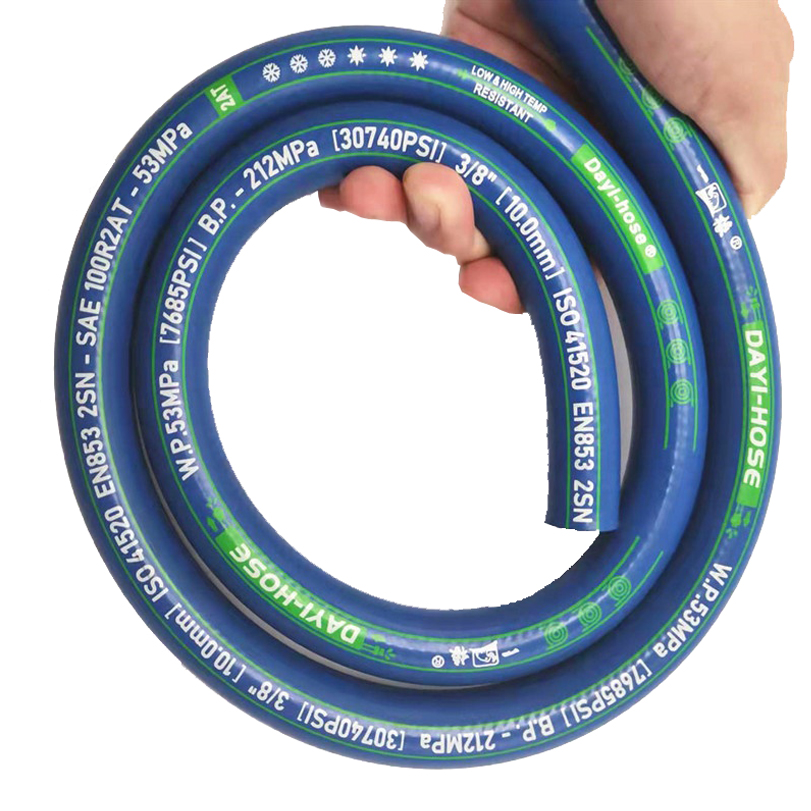
Performance of EN857 2SC hoses is governed by hydraulic principles and material properties. Burst pressure, the maximum pressure the hose can withstand before rupture, is determined by the reinforcement layer and the tensile strength of the materials. Working pressure, significantly lower than burst pressure, is defined by the hose’s intended application and is typically 1/4 of the burst pressure. Impulse resistance, crucial in applications with hydraulic shock, is assessed through repeated pressure cycles. The hose must withstand these cycles without leakage or degradation. Environmental resistance is critical, particularly in outdoor applications. Exposure to UV radiation, ozone, and extreme temperatures can degrade the rubber compounds. Engineering considerations include hose bend radius – exceeding the minimum bend radius stresses the reinforcement layer and reduces lifespan. Hose fitting compatibility is paramount. Incorrect fittings can lead to leakage or catastrophic failure. Compliance requirements under EN 857 specify testing procedures and performance criteria for burst pressure, impulse testing, and temperature range. Finite element analysis (FEA) is increasingly used during the design phase to optimize reinforcement layer geometry and predict stress distribution under various loading conditions, improving hose performance and reliability.
Technical Specifications
| Parameter | Unit | EN 857 2SC Specification | Typical Range (China Production) |
|---|---|---|---|
| Working Pressure | MPa | Up to 31.5 | 10 - 31.5 |
| Burst Pressure | MPa | ≥ 3 x Working Pressure | ≥ 3 x Working Pressure (Verified by testing) |
| Temperature Range | °C | -40 to +100 | -40 to +100 |
| Inner Tube Material | - | NBR | NBR |
| Reinforcement | - | Steel Wire Spiral | High-Tensile Steel Wire Spiral |
| Outer Cover Material | - | CR/SBR | CR/SBR |
Failure Mode & Maintenance
Common failure modes in EN857 2SC hoses include burst failure due to exceeding the working pressure, impulse failure from repeated pressure surges, and degradation of the rubber compounds due to environmental exposure or fluid incompatibility. Fatigue cracking in the reinforcement layer can occur over time due to cyclic loading. Delamination between the rubber layers and the reinforcement layer is a critical failure mode, often initiated by poor adhesion during manufacturing or exposure to aggressive fluids. Oxidation of the rubber compounds leads to hardening and cracking. Maintenance strategies involve regular visual inspection for signs of wear, abrasion, or cracking. Proper hose routing and support are essential to prevent kinking and excessive bending. Regularly checking fitting connections for leaks is critical. Fluid compatibility should be verified before use, and hoses should be replaced if they show signs of swelling or softening. Impulse hose guards should be used in applications with significant hydraulic shock. Routine pressure testing can identify weakened hoses before catastrophic failure. Record keeping of hose installation dates and service history is recommended to facilitate proactive replacement schedules.
Industry FAQ
Q: What is the impact of different steel wire gauges on the burst pressure of an EN857 2SC hose?
A: The steel wire gauge directly correlates with burst pressure. A thicker gauge wire provides increased tensile strength, enabling the hose to withstand higher internal pressures. However, increasing wire gauge also reduces the hose's flexibility. Hose manufacturers carefully balance wire gauge with overall hose diameter and rubber compound selection to achieve the desired pressure rating and flexibility characteristics. Higher pressure applications require heavier gauge wire.
Q: How does the choice of outer cover material affect the lifespan of the hose in outdoor applications?
A: The outer cover material is critical for protecting the hose from environmental degradation. CR (Chloroprene) offers superior resistance to ozone, UV radiation, and weathering compared to SBR (Styrene-Butadiene Rubber). In harsh outdoor environments, a CR cover significantly extends the hose’s lifespan. SBR is generally more cost-effective and offers good abrasion resistance, making it suitable for indoor or sheltered applications.
Q: What are the consequences of using a hose with a bend radius that is too small?
A: Exceeding the minimum bend radius places excessive stress on the reinforcement layer and the inner tube. This can lead to premature fatigue failure, cracking, and ultimately, hose rupture. Repeated bending beyond the specified radius accelerates wear and tear, significantly reducing hose lifespan. Proper hose routing and support are vital to maintain the specified bend radius.
Q: How important is fluid compatibility when selecting an EN857 2SC hose?
A: Fluid compatibility is paramount. Using a hose with an incompatible fluid can cause the inner tube to swell, soften, or degrade. This compromises the hose’s pressure rating and can lead to leaks or catastrophic failure. NBR is generally compatible with petroleum-based hydraulic fluids, but specific fluid additives can affect its performance. Always consult a fluid compatibility chart before selecting a hose.
Q: What are the key differences between EN 857 1SN, 2SN, and 2SC hoses?
A: EN 857 defines different hose constructions based on reinforcement layers. 1SN hoses have a single layer of steel wire braiding. 2SN hoses have two layers of steel wire braiding, offering higher pressure ratings than 1SN. 2SC hoses use a steel wire spiral reinforcement, providing even higher pressure capability and greater flexibility compared to 2SN, albeit generally at a higher cost. The 'SC' designation is specifically for spiral construction.
Conclusion
China EN857 2SC hydraulic hoses represent a critical component in fluid power systems, providing reliable fluid conveyance under high pressure. Their performance is intrinsically linked to material selection, manufacturing precision, and adherence to stringent quality control measures. Understanding the influence of parameters like reinforcement wire gauge, rubber compound composition, and environmental factors is crucial for engineers and procurement managers alike.
Ultimately, selecting the appropriate EN857 2SC hose demands a thorough evaluation of the application’s operating conditions, fluid compatibility requirements, and budgetary constraints. Proactive maintenance, including regular inspections and adherence to recommended bend radii and pressure limits, is vital to maximize hose lifespan and prevent catastrophic failures, thereby ensuring the safety and efficiency of hydraulic systems.