
Apr . 01, 2024 17:55 Back to list
China EN854 1TE Hose Performance Analysis
Introduction
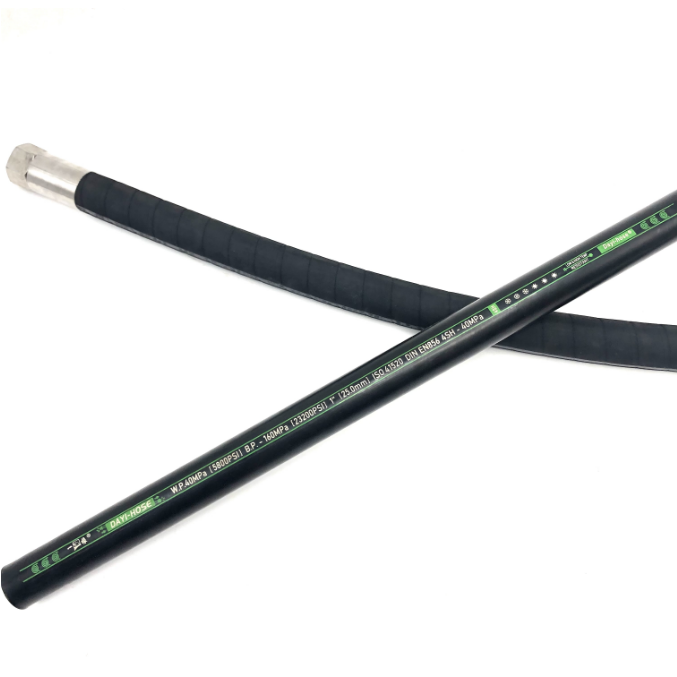
China EN854 1TE refers to a hydraulic hose assembly conforming to the European standard EN 854, specifically categorized as 1TE. This designation denotes a hose with a textile braid reinforcement and a synthetic rubber inner tube, designed for medium-pressure applications. Within the broader industrial landscape, these hoses represent a critical component in fluid power systems, serving diverse sectors including construction machinery, agricultural equipment, mining operations, and manufacturing facilities. Their primary function is the reliable and safe transmission of hydraulic fluid, enabling the operation of actuators, motors, and other hydraulic components. Core performance characteristics include pressure rating, temperature resistance, and resistance to fluid degradation. A key challenge within the industry lies in consistently achieving high levels of dimensional accuracy, burst pressure, and impulse resistance while maintaining cost-effectiveness, particularly given the competitive manufacturing landscape in China. Furthermore, ensuring compliance with both EN 854 and relevant regional safety regulations is paramount.
Material Science & Manufacturing
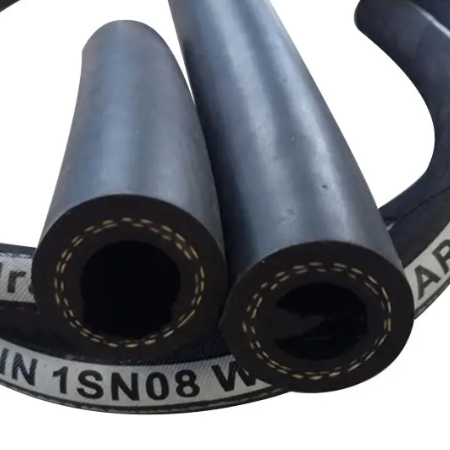
The manufacturing of China EN854 1TE hoses involves several key material science considerations and precise manufacturing processes. The inner tube is typically constructed from a synthetic rubber compound, commonly a nitrile rubber (NBR) or a styrene-butadiene rubber (SBR) blend, selected for their compatibility with hydraulic fluids and resistance to oil swelling. The NBR offers excellent resistance to petroleum-based fluids, while SBR provides good abrasion resistance and lower cost. Reinforcement is provided by one or more layers of high-tensile textile braiding, usually polyester or nylon, chosen for their strength-to-weight ratio and flexibility. The outer cover consists of a synthetic rubber compound, often a chloroprene rubber (CR) or polyurethane (PU), providing protection against abrasion, weathering, ozone, and chemical exposure.
The manufacturing process typically begins with extrusion of the inner tube. Precise control of extrusion parameters—temperature, pressure, and screw speed—is crucial to achieve consistent wall thickness and smooth inner surface finish. The textile braid is then applied over the inner tube, utilizing a helical winding machine. Tension control during braiding is vital to ensure uniform reinforcement distribution and prevent hose distortion. Following braiding, the outer cover is extruded over the braided structure. Curing is performed in an autoclave or continuous vulcanizing process, setting the rubber compounds and bonding the layers together. Key parameters monitored during curing include temperature, time, and pressure. Post-curing, the hose undergoes dimensional inspection, pressure testing, and leak testing to verify conformance to EN 854 specifications. Quality control checkpoints throughout the process include raw material verification (tensile strength, elongation, hardness), in-process dimensional measurements, and final product performance testing.
Performance & Engineering
The performance of China EN854 1TE hoses is dictated by several engineering considerations, primarily focusing on burst pressure, working pressure, impulse resistance, and temperature range. Burst pressure is a critical safety parameter, representing the pressure at which the hose will rupture. Working pressure, typically specified as a fraction of the burst pressure (e.g., 1/4), defines the maximum sustained pressure the hose can safely handle during normal operation. Impulse resistance, also known as pulsation resistance, is essential for applications involving pulsating flow, where repeated pressure surges can lead to fatigue failure. This is assessed through impulse testing, subjecting the hose to cyclic pressure loads.
Finite Element Analysis (FEA) is routinely employed in the design process to optimize hose geometry and reinforcement layout for maximum pressure capacity and minimal weight. Material selection also plays a key role. The textile braid’s angle of weave significantly affects both pressure resistance and flexibility. A steeper angle provides higher pressure resistance but reduces flexibility. Environmental resistance is also crucial. Hoses operating in harsh environments must withstand exposure to chemicals, UV radiation, and extreme temperatures. Chemical compatibility testing is conducted to ensure the rubber compounds do not degrade when exposed to specific hydraulic fluids. Temperature range specifications define the allowable operating temperature limits, impacting both the mechanical properties and fluid compatibility of the hose materials. Compliance with EN 854 mandates rigorous testing protocols for all performance parameters, ensuring consistency and safety.
Technical Specifications
| Parameter | Unit | EN 854 1TE Specification | Typical China Manufacturing Range |
|---|---|---|---|
| Working Pressure | MPa | Up to 16 | 10 – 16 |
| Burst Pressure | MPa | ≥ 4 x Working Pressure | ≥ 4 x Working Pressure (Typically 40-64) |
| Temperature Range | °C | -40 to +100 | -40 to +100 |
| Inner Tube Material | - | NBR, SBR | NBR, SBR |
| Reinforcement | - | Textile Braid (Polyester/Nylon) | Polyester/Nylon (1-layer) |
| Outer Cover Material | - | CR, PU | CR |
Failure Mode & Maintenance
Failure modes in China EN854 1TE hoses are diverse, but common causes include burst due to exceeding pressure limits, fatigue cracking from repeated pressure cycling, abrasion damage from external sources, and degradation of rubber compounds due to chemical exposure or UV radiation. Fatigue cracking typically initiates at stress concentrations, such as braid terminations or areas of localized deformation. Burst failure is often a result of weakening of the reinforcement due to corrosion or damage. Internal degradation can occur if the hose is incompatible with the hydraulic fluid, leading to swelling, softening, and eventual failure. External abrasion can compromise the outer cover, exposing the reinforcement to corrosion and further accelerating failure.
Preventative maintenance is crucial for extending hose life. Regular visual inspections should be conducted to identify signs of abrasion, cracking, or swelling. Pressure testing should be performed periodically to verify the hose’s pressure capacity. Proper hose routing and support are essential to minimize stress and abrasion. Avoid sharp bends and ensure the hose is not subjected to excessive tension or twisting. Fluid compatibility should be verified before use. If a hose shows signs of damage, it should be replaced immediately. When storing hoses, protect them from direct sunlight, extreme temperatures, and contact with corrosive materials. Proper handling during installation and removal is also vital, avoiding kinking or stretching of the hose. Records of inspection and maintenance should be maintained for traceability and performance monitoring.
Industry FAQ
Q: What is the significance of the “TE” designation in EN 854 1TE?
A: The “TE” designation indicates that the hose utilizes a textile braid reinforcement. This differentiates it from hoses with wire braid (1SW) or spiral wire reinforcement (2SN), each offering different pressure and flexibility characteristics. Textile braid offers a good balance of strength and flexibility for medium-pressure applications.
Q: How does the choice of inner tube material (NBR vs. SBR) impact the hose’s performance?
A: NBR (Nitrile Butadiene Rubber) provides superior resistance to petroleum-based hydraulic fluids, making it ideal for applications where compatibility with these fluids is critical. SBR (Styrene-Butadiene Rubber) is generally more cost-effective and offers good abrasion resistance but may have lower oil resistance. The selection depends on the specific fluid being used and the operating environment.
Q: What is the recommended service life for a China EN854 1TE hose?
A: The service life varies significantly based on operating conditions. However, a typical recommended service life is 5-7 years, provided the hose is properly maintained and operated within its specified limits. Regular inspections are crucial to identify potential issues before failure occurs.
Q: How does temperature affect the working pressure of an EN 854 1TE hose?
A: Working pressure decreases as temperature increases. Exceeding the maximum operating temperature can significantly reduce the hose’s burst pressure and shorten its lifespan. Always refer to the manufacturer’s specifications for temperature derating factors.
Q: What are the common causes of impulse failure in hydraulic hoses?
A: Impulse failure is often caused by repeated pressure surges or pulsations in the hydraulic system. This leads to fatigue cracking in the reinforcement layers. Proper accumulator selection, pulsation dampeners, and hose routing can mitigate impulse loads and prevent premature failure.
Conclusion
China EN854 1TE hoses are a ubiquitous component in hydraulic systems, offering a cost-effective solution for medium-pressure fluid transfer. Their performance and reliability are intrinsically linked to the careful selection of materials, precise manufacturing control, and adherence to stringent quality standards outlined in the EN 854 specification. Understanding the nuances of material properties, manufacturing processes, and potential failure modes is critical for ensuring safe and efficient operation.
Looking forward, advancements in rubber compound technology and reinforcement materials will likely lead to improved hose performance, increased durability, and extended service life. Furthermore, the integration of sensor technologies for real-time monitoring of hose condition and pressure levels will enable predictive maintenance strategies, minimizing downtime and enhancing overall system reliability. Continued focus on quality control and adherence to international standards will remain paramount in maintaining the competitiveness of China-manufactured EN854 1TE hoses within the global market.