
Apr . 01, 2024 17:55 Back to list
china cng hose Performance Analysis

Introduction
China CNG hose refers to a reinforced flexible conduit specifically designed for the safe and efficient transfer of Compressed Natural Gas (CNG) in vehicular applications and refueling infrastructure. Positioned as a critical component within the alternative fuel supply chain, it occupies a specialized niche between the CNG storage tank and the vehicle's engine or the refueling dispenser. Its core performance revolves around maintaining high pressure integrity, ensuring leak-proof operation, and demonstrating resistance to the permeation of CNG. The growing adoption of CNG as a cleaner fuel alternative necessitates hoses capable of withstanding the unique challenges presented by this gaseous fuel, including high operating pressures (typically 20-25 MPa or 2900-3625 psi), temperature fluctuations, and potential exposure to corrosive environments. This guide provides a comprehensive technical overview of China CNG hose, encompassing material science, manufacturing processes, performance characteristics, failure modes, and relevant industry standards.
Material Science & Manufacturing
The construction of China CNG hoses typically involves a multi-layered composite structure, each layer serving a specific function. The innermost layer, in direct contact with the CNG, is commonly composed of a fluoropolymer (such as PTFE or PFA) due to its exceptional resistance to CNG permeation and chemical compatibility. This layer minimizes gas loss and prevents degradation from the fuel’s constituents. The intermediate layers constitute the reinforcement structure, essential for withstanding high pressures. These are often fabricated from high-tensile strength synthetic fibers, specifically Aramid (Kevlar) or steel wire helices. Aramid provides excellent strength-to-weight ratio and flexibility, while steel wire offers superior pressure containment. The outermost layer, providing environmental protection, is typically a blend of synthetic rubbers, such as Chloroprene (CR) or Ethylene Propylene Diene Monomer (EPDM), offering resistance to abrasion, ozone, UV radiation, and weathering. Manufacturing processes begin with the extrusion of the inner fluoropolymer layer, followed by the precise winding or braiding of the reinforcing fibers or wires. The outer rubber layer is then applied via extrusion or molding. Critical process parameters include fiber tension during winding (affecting burst pressure), vulcanization temperature and time (determining rubber elasticity and durability), and dimensional control (ensuring consistent internal diameter and wall thickness). Post-manufacturing, stringent pressure testing (hydrostatic and pneumatic) is performed to verify leak-tightness and compliance with safety standards. Material selection is driven by a trade-off between permeation rates, pressure resistance, flexibility, and cost.
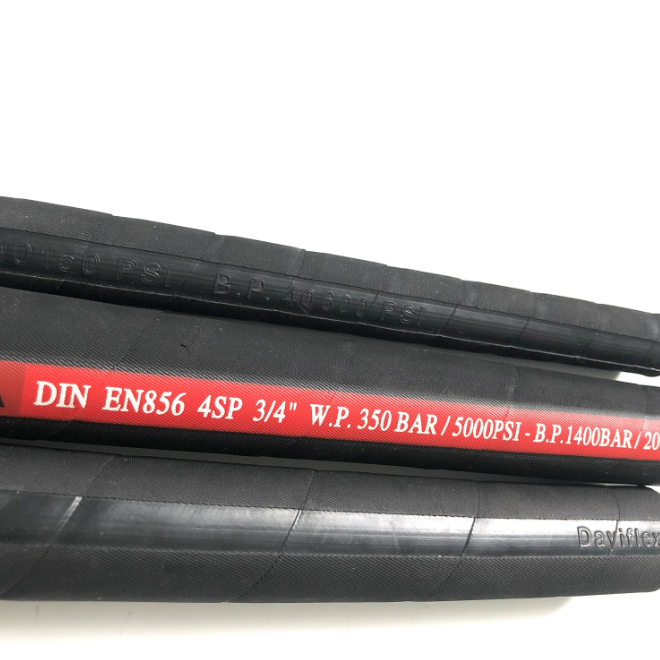
Performance & Engineering
The performance of China CNG hose is governed by several critical engineering parameters. Burst pressure is a paramount concern, defined as the pressure at which the hose fails catastrophically. This is dictated by the strength of the reinforcing layers and is typically several times the maximum operating pressure. Permeation rate, measured in standard cubic centimeters per minute (sccm), quantifies the amount of CNG that diffuses through the hose wall over a given time period. Low permeation rates are essential to minimize fuel loss and maintain environmental integrity. Flexibility, quantified by bend radius, influences ease of installation and maneuverability. The hose must be able to withstand repeated bending without kinking or compromising its structural integrity. Temperature resistance is another crucial factor, as CNG systems operate under varying ambient conditions. The hose material must maintain its mechanical properties across a defined temperature range, typically -40°C to +80°C. Furthermore, the hose must exhibit resistance to impact, abrasion, and ozone degradation. Force analysis involves calculating hoop stress within the hose wall under pressure, which informs material selection and layer configuration. Compliance with national and international safety regulations, such as those set forth by the China National Petroleum and Natural Gas Corporation (CNPC) and international standards (see section 7), is mandatory. Finite element analysis (FEA) is frequently employed to optimize hose design and predict performance under various loading conditions.
Technical Specifications
| Parameter | Unit | Typical Value (China CNG Hose) | Test Standard |
|---|---|---|---|
| Maximum Working Pressure (MWP) | MPa | 20-25 | GB/T 38364 |
| Burst Pressure | MPa | 60-75 | GB/T 38364 |
| Permeation Rate (CNG) | sccm/m | < 5 | ISO 11623 |
| Minimum Bend Radius | mm | 300-500 | Internal Testing |
| Operating Temperature Range | °C | -40 to +80 | GB/T 38364 |
| Inner Tube Material | - | PTFE/PFA | Material Specification |
Failure Mode & Maintenance
China CNG hose is susceptible to several failure modes during its service life. Fatigue cracking, induced by repeated pressure cycling and bending, is a common issue, particularly at connection points. This initiates from microscopic flaws in the reinforcing layers or at the interface between layers. Permeation-induced plasticization can lead to swelling of the inner liner, increasing permeation rates and potentially compromising structural integrity over extended exposure to CNG. Delamination, the separation of layers within the hose structure, can occur due to inadequate adhesion between materials or thermal stress. Oxidation of the outer rubber layer, caused by exposure to ozone and UV radiation, leads to cracking and loss of flexibility. Abrasion, resulting from contact with rough surfaces, can damage the outer layer and expose the reinforcing fibers. To mitigate these failures, regular visual inspections are crucial, looking for signs of cracking, swelling, abrasion, or delamination. Pressure testing (hydrostatic) should be conducted periodically to verify the hose’s integrity. Maintenance involves cleaning the hose with mild detergent and water, avoiding harsh chemicals or abrasive cleaners. Proper storage, shielded from sunlight and extreme temperatures, is essential to prolong hose life. Damaged hoses should be replaced immediately. Record keeping of inspections and maintenance activities is recommended to track hose performance and identify potential issues before they escalate.
Industry FAQ
Q: What is the typical service life of a China CNG hose, and what factors influence it?
A: The typical service life of a China CNG hose is 5-7 years, assuming proper maintenance and operating conditions. Factors influencing service life include operating pressure, temperature fluctuations, frequency of bending, exposure to UV radiation and ozone, and the quality of materials used in construction. Hoses subjected to more severe conditions will have a shorter service life.
Q: How does the Aramid fiber content affect the performance of the hose?
A: Higher Aramid fiber content generally increases the tensile strength and burst pressure of the hose. However, it can also reduce flexibility. The optimal Aramid content is a balance between these two properties, tailored to the specific application requirements. The quality and orientation of the Aramid fibers are also critical performance factors.
Q: What are the acceptable permeation rates for CNG hoses used in vehicle refueling applications?
A: Acceptable permeation rates are tightly regulated. ISO 11623 is a common reference. Generally, rates below 5 sccm/m are considered acceptable for vehicle refueling, but this can vary depending on local regulations and the specific refueling system design. Higher permeation rates lead to fuel loss and potentially pose environmental and safety concerns.
Q: What safety features are incorporated into China CNG hose designs to prevent catastrophic failure?
A: China CNG hose designs incorporate multiple safety features. These include multiple reinforcing layers, robust end fittings designed to withstand high pressures, and burst discs or pressure relief valves in some applications. Strict quality control during manufacturing, including hydrostatic testing, is also crucial to ensure safety.
Q: What is the significance of the fluoropolymer inner liner, and are there alternatives?
A: The fluoropolymer inner liner (PTFE or PFA) is critical due to its extremely low permeability to CNG, preventing fuel loss and maintaining fuel purity. Alternatives such as other fluoropolymers or specialized barrier polymers exist, but they often come with higher costs or reduced performance characteristics. The fluoropolymer liner also provides chemical resistance, preventing degradation from CNG components.
Conclusion
China CNG hose represents a crucial enabling technology for the expanding CNG vehicle market. Its intricate layered construction, utilizing advanced materials like fluoropolymers and high-tensile strength fibers, necessitates stringent manufacturing processes and rigorous quality control to ensure safe and reliable operation. Maintaining optimal performance requires a thorough understanding of the hose’s technical specifications, potential failure modes, and proper maintenance protocols.
Future developments in China CNG hose technology will likely focus on further reducing permeation rates, enhancing flexibility, and improving resistance to extreme temperatures and harsh environments. The integration of smart sensing technologies within the hose structure to monitor pressure, temperature, and structural integrity in real-time represents a promising area for innovation, allowing for proactive maintenance and enhanced safety.

