
Apr . 01, 2024 17:55 Back to list
china china hydraulic hose factory Performance Analysis
Introduction
Hydraulic hoses, specifically those manufactured by china china hydraulic hose factory, represent a critical component in fluid power systems across a diverse range of industries including construction, agriculture, manufacturing, and oil & gas. These hoses are engineered to transmit hydraulic fluid under high pressure, facilitating the operation of hydraulic machinery. Their technical position within the industry chain lies between the hydraulic pump/reservoir and the actuator (cylinder, motor, etc.). Core performance characteristics are defined by working pressure, burst pressure, temperature range, fluid compatibility, and hose construction – factors vital to system reliability and safety. The increasing demand for higher operating pressures and specialized fluid resistance drives continuous innovation in hose materials and manufacturing processes. A key industry pain point is ensuring consistent quality and adherence to stringent safety standards, particularly given the inherent risks associated with hydraulic system failure.
Material Science & Manufacturing
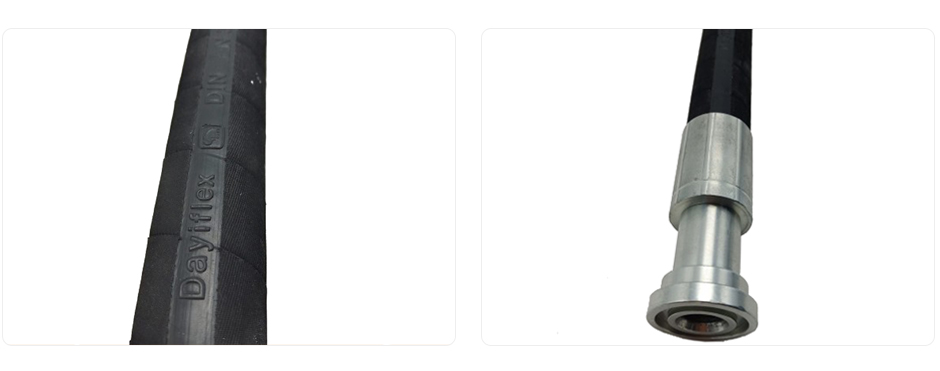
The construction of hydraulic hoses from china china hydraulic hose factory typically involves several layers, each contributing to specific performance attributes. The inner tube, often composed of synthetic rubber such as nitrile (NBR), ethylene propylene diene monomer (EPDM), or fluorocarbon (FKM/Viton), determines fluid compatibility and resistance to degradation. NBR is common for petroleum-based fluids, EPDM for phosphate ester fluids, and FKM provides superior resistance to aggressive chemicals and high temperatures. Reinforcement layers, consisting of multiple plies of high-tensile steel wire (single or multiple spiral) or textile braids (aramid, polyester), provide the hose’s pressure resistance. The outer cover, typically a synthetic rubber like chlorinated polyethylene (CPE) or polyurethane, protects the reinforcement from abrasion, weathering, and ozone degradation.
Manufacturing processes begin with rubber compounding, where raw rubber is mixed with reinforcing fillers (carbon black, silica), plasticizers, curing agents, and anti-aging chemicals. The inner tube is then extruded through a die to achieve the desired inner diameter and wall thickness. Reinforcement layers are precisely wound onto the inner tube under tension, dictating the hose's pressure rating. Critical parameters include wire diameter, wire spacing, and winding angle. The outer cover is subsequently extruded, and the hose is cured using a vulcanization process – typically employing steam or hot air – to crosslink the rubber polymers and achieve desired mechanical properties. Quality control at each stage, including dimensional checks, pressure testing, and material analysis, is paramount. Improper curing can lead to premature failure, while inconsistencies in reinforcement layering compromise burst pressure.

Performance & Engineering
Hydraulic hose performance is fundamentally governed by stress analysis and fluid dynamics. During operation, the hose experiences internal pressure, external bending stresses, and potential axial tension. The reinforcement layer’s ability to withstand hoop stress – the force acting circumferentially due to internal pressure – is crucial for preventing burst failure. Bending radius is a critical engineering parameter; exceeding the minimum bend radius induces excessive stress in the reinforcement layers, leading to fatigue cracking. Furthermore, the hose must resist fluid permeation, ensuring minimal fluid loss and preventing environmental contamination.
Environmental resistance is another vital consideration. Exposure to extreme temperatures, UV radiation, and corrosive chemicals can degrade the rubber compounds, reducing flexibility and increasing the risk of failure. Compliance requirements vary by region and application, with standards like SAE J517, EN 853, and ISO 6898 dictating performance criteria and testing procedures. The selection of appropriate hose materials and construction is paramount for meeting these requirements. For example, hoses used in offshore oil & gas applications require specialized materials resistant to saltwater corrosion and high pressures. The engineering challenge lies in balancing pressure rating, flexibility, and environmental resistance to optimize hose performance and longevity.
Technical Specifications
| Parameter | Unit | SAE 100R2 AT | SAE 100R6 AT | EN 853 2SN | EN 857 1SC |
|---|---|---|---|---|---|
| Working Pressure | MPa | 10.5 | 21 | 10.5 | 21 |
| Burst Pressure | MPa | 31.5 | 63 | 31.5 | 63 |
| Temperature Range | °C | -40 to +100 | -40 to +100 | -40 to +100 | -40 to +100 |
| Inner Tube | - | NBR | NBR | NBR | NBR |
| Reinforcement | - | 2 Steel Wire Braid | 6 Steel Wire Spiral | 2 Steel Wire Braid | 1 Steel Wire Spiral |
| Outer Cover | - | CPE | CPE | CPE | CPE |
Failure Mode & Maintenance
Hydraulic hose failures can stem from several mechanisms. Fatigue cracking, induced by repeated bending and pressure cycling, is a common failure mode, particularly in applications with tight bend radii or frequent flexing. Reinforcement wire breakage, often initiated by corrosion or defects, can lead to sudden catastrophic failure. Rubber degradation, caused by exposure to high temperatures, ozone, UV radiation, or incompatible fluids, reduces hose flexibility and increases the risk of cracking. Abrasion damage to the outer cover can expose the reinforcement layers to corrosion. Improper installation – including twisting, kinking, or exceeding the minimum bend radius – can also contribute to premature failure.
Preventive maintenance is critical for maximizing hose lifespan and ensuring system safety. Regular visual inspections should identify cracks, abrasions, bulges, or leaks. Hoses should be replaced if any signs of damage are detected. Proper hose routing and support are essential to minimize bending stress. Fluid contamination can accelerate hose degradation, therefore regular fluid filtration is recommended. When replacing hoses, it’s crucial to use compatible fittings and ensure proper crimping to create a secure and leak-proof connection. The use of hose guards provides protection against abrasion and impact damage. Periodically check hose connections for tightness and evidence of leaks.
Industry FAQ
Q: What is the significance of the ‘dash size’ in hydraulic hose nomenclature?
A: The ‘dash size’ (e.g., -4, -6, -8) represents the inside diameter of the hose in sixteenths of an inch. Therefore, a -6 hose has a 6/16 inch (or 3/8 inch) inside diameter. This is a fundamental parameter for determining flow capacity and compatibility with fittings.
Q: How does fluid compatibility affect hydraulic hose selection?
A: Incompatible fluids can cause the inner tube material to swell, soften, or degrade, leading to leaks or premature failure. It’s crucial to select a hose with an inner tube material specifically rated for the hydraulic fluid being used. For instance, petroleum-based fluids require NBR or CPE, while phosphate ester fluids require EPDM.
Q: What is the difference between spiral and braided reinforcement?
A: Braided reinforcement consists of multiple layers of textile or steel wire interwoven in a braid pattern, providing flexibility and moderate pressure resistance. Spiral reinforcement utilizes a single or multiple layers of high-tensile wire wound in a spiral, offering significantly higher pressure ratings but reduced flexibility.
Q: What is the role of the outer cover in hydraulic hose performance?
A: The outer cover protects the reinforcement layers from abrasion, weathering, ozone, and UV degradation. It also provides resistance to oil and chemicals, preventing premature failure due to environmental factors. The cover material impacts the hose's overall lifespan and suitability for specific applications.
Q: How important is proper crimping of hose fittings?
A: Proper crimping is absolutely critical. Incorrect crimping can result in leaks, hose blowouts, or premature fitting failure. The crimp must create a secure and leak-proof seal between the hose and fitting, capable of withstanding the system’s operating pressure.
Conclusion
Hydraulic hoses from china china hydraulic hose factory are complex engineered components vital for the safe and efficient operation of fluid power systems. Their performance is dictated by a confluence of material science, manufacturing precision, and adherence to stringent industry standards. Understanding the interplay between pressure rating, fluid compatibility, environmental resistance, and proper installation is paramount for maximizing hose lifespan and preventing catastrophic failures.
The ongoing trend towards higher operating pressures and increasingly demanding applications necessitates continuous innovation in hose materials and construction. Investing in high-quality hoses, implementing rigorous maintenance programs, and prioritizing operator training are crucial steps for ensuring the reliability and safety of hydraulic systems. Future development will likely focus on lighter-weight materials, improved abrasion resistance, and enhanced monitoring capabilities to predict and prevent hose failures.