
Apr . 01, 2024 17:55 Back to list
china china high pressure hydraulic hose Performance Analysis
Introduction
High pressure hydraulic hose is a critical component in fluid power systems, responsible for the safe and efficient transmission of pressurized fluids to actuate machinery across diverse industries including construction, agriculture, manufacturing, and automotive. China's manufacturing capacity has become a dominant force in global hydraulic hose production, offering a broad spectrum of hoses designed to meet stringent performance and safety requirements. This guide provides an in-depth technical analysis of china china high pressure hydraulic hose, covering material science, manufacturing processes, performance characteristics, failure modes, and relevant industry standards. Core performance centers around burst pressure, working pressure, impulse strength, and resistance to environmental factors, influencing system reliability and operational safety. The principal pain point in the industry revolves around consistent quality control, material traceability, and achieving extended service life in demanding applications, alongside adherence to evolving international safety regulations.
Material Science & Manufacturing
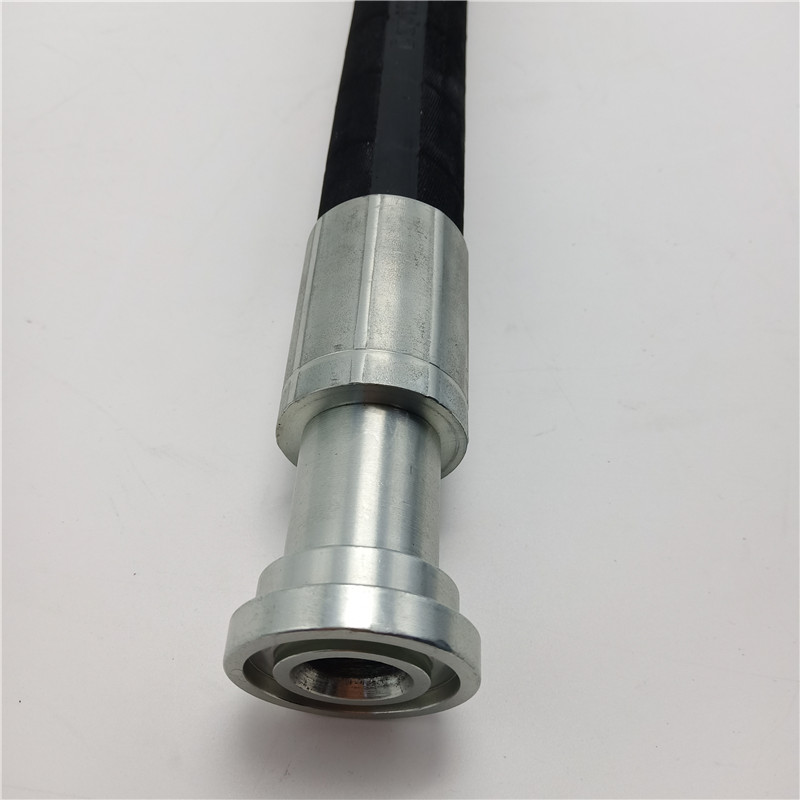
The construction of high pressure hydraulic hose fundamentally relies on a multi-layered design. The inner tube, typically composed of synthetic rubbers like nitrile (NBR), chloroprene (CR – Neoprene), or fluorocarbon (FKM – Viton), provides a fluid-resistant barrier. NBR is common for petroleum-based fluids, CR for moderate oil and weather resistance, and FKM for aggressive chemicals and high temperatures. Reinforcement layers, crucial for pressure containment, are commonly braided from high-strength steel wire. The number of braids directly correlates to the hose’s working pressure rating. Some hoses employ spiral-wound steel reinforcement for even higher pressure applications. An intermediate layer, often a synthetic rubber compound, bonds the reinforcement to the inner tube. Finally, the outer cover, usually a synthetic rubber like CR or polyurethane, provides abrasion, weather, and oil resistance.
Manufacturing processes begin with extrusion of the inner tube and outer cover. Precise control of temperature, pressure, and screw speed during extrusion is paramount to achieve consistent wall thickness and material homogeneity. Reinforcement braiding requires specialized high-speed braiding machines where steel wires are precisely interwoven. Spiral winding is executed using specialized machines ensuring uniform pitch and winding angle. Post-extrusion and braiding, the hose undergoes a bonding (vulcanization) process where heat and pressure fuse the layers together. Maintaining precise vulcanization temperatures and times is critical for optimal adhesion and hose integrity. Quality control throughout includes rigorous testing of raw materials (tensile strength, elongation, chemical resistance), dimensional checks on extruded components, and destructive burst pressure testing of finished hoses. Proper curing of the rubber compounds is a key parameter controlled using rheometers to ensure desired mechanical properties.

Performance & Engineering
The performance of high pressure hydraulic hose is dictated by several key engineering factors. Burst pressure, typically four times the working pressure, is a critical safety parameter. Working pressure is the maximum continuous operating pressure the hose can withstand. Impulse strength, the hose’s ability to withstand pressure fluctuations, is vital in systems with pumps or rapid valve operation. Fatigue life, the number of pressure cycles a hose can endure before failure, is crucial for long-term reliability. The hose's flexibility (bend radius) impacts installation and routing. Temperature range, dictated by the rubber compounds, defines the operational limits.
Force analysis involves calculating the hoop stress within the hose wall under internal pressure. This stress is proportional to the pressure and radius, and inversely proportional to the wall thickness. The reinforcement layer bears the majority of this stress. Finite element analysis (FEA) is used to model stress distribution within complex hose geometries and predict failure points. Environmental resistance is also vital; hoses must withstand exposure to oil, chemicals, UV radiation, ozone, and extreme temperatures. Compliance with industry standards like SAE J517 and EN 853 dictates performance requirements and testing procedures. Proper hose assembly, including selecting the correct fittings and crimping procedure, is crucial to achieve rated performance. Incorrect crimping can lead to premature failure due to fitting pull-out or hose deformation.
Technical Specifications
| Parameter | Unit | SAE 100R2 AT | SAE 100R6 | EN 853 1SN | EN 853 2SN |
|---|---|---|---|---|---|
| Working Pressure | MPa | 34.5 | 21.0 | 31.5 | 42.0 |
| Burst Pressure | MPa | 138 | 84 | 126 | 168 |
| Temperature Range | °C | -40 to +100 | -40 to +100 | -40 to +100 | -40 to +100 |
| Inner Tube | - | Synthetic Rubber (NBR) | Synthetic Rubber (NBR) | Synthetic Rubber (NBR) | Synthetic Rubber (NBR) |
| Reinforcement | - | Single Wire Braid | Multiple Wire Braid | Single Wire Braid | Double Wire Braid |
| Outer Cover | - | Synthetic Rubber (CRM) | Synthetic Rubber (CRM) | Synthetic Rubber (CRM) | Synthetic Rubber (CRM) |
Failure Mode & Maintenance
High pressure hydraulic hose failures are often attributed to several key modes. Fatigue cracking, induced by repeated pressure cycles, initiates at stress concentration points (e.g., fitting crimps, hose bends). Abrasion, caused by external contact with abrasive surfaces, degrades the outer cover, exposing the reinforcement. Pinholes in the inner tube can result from chemical attack or manufacturing defects, leading to fluid leakage. Fitting pull-out occurs when the crimp is insufficient to retain the fitting under pressure. Kinking, caused by excessive bending, can damage the reinforcement and lead to localized failure. Environmental degradation, including ozone cracking and UV exposure, weakens the rubber compounds. Oxidation of the rubber compounds leads to loss of elasticity and eventual cracking.
Preventive maintenance is crucial. Regular visual inspections should be conducted to identify signs of abrasion, cracking, bulging, or leakage. Hoses should be replaced at recommended intervals or after exposure to harsh conditions. Proper hose routing and support are essential to minimize bending and abrasion. Correct fitting selection and crimping procedures must be followed. Fluid contamination can accelerate hose degradation; therefore, filtration is vital. Avoid exceeding the hose’s rated working pressure and temperature. When storing hoses, protect them from UV light, ozone, and extreme temperatures. If a hose shows any signs of damage, it should be immediately removed from service and replaced.
Industry FAQ
Q: What is the significance of the 'dash size' in hydraulic hose specifications?
A: The dash size (e.g., -6, -8, -10) refers to the hose's inner diameter in sixteenths of an inch. A -8 hose has an 8/16 or 1/2 inch inner diameter. It's a critical parameter for determining flow rate and pressure drop in the system.
Q: How does steel wire braiding impact the hose's pressure rating?
A: Increasing the number of braids proportionally increases the hose’s pressure rating. Each additional braid layer adds strength and resistance to hoop stress. Single braid hoses are suitable for moderate pressure applications, while multiple braid hoses are used in high-pressure systems.
Q: What is the role of the outer cover material in hydraulic hose performance?
A: The outer cover protects the reinforcement from abrasion, environmental factors (UV, ozone, chemicals), and physical damage. The choice of cover material (e.g., CRM, polyurethane) depends on the application and the severity of the exposure conditions.
Q: What are the consequences of using an incorrect crimp specification for hose fittings?
A: An under-crimped fitting can lead to fitting pull-out, resulting in sudden fluid leakage and system failure. An over-crimped fitting can damage the hose reinforcement, creating stress concentration points and leading to premature failure.
Q: How do I determine the appropriate hydraulic hose for a specific application?
A: Consider the system's working pressure, temperature range, fluid compatibility, and environmental conditions. Select a hose with a working pressure at least four times the system's maximum operating pressure. Ensure the hose material is compatible with the fluid being conveyed. Factor in hose routing and potential abrasion risks when selecting the outer cover material.
Conclusion
china china high pressure hydraulic hose represents a sophisticated engineering product, vital for the reliable operation of numerous industrial systems. Its performance is critically dependent on material selection, meticulous manufacturing processes, and adherence to stringent quality control standards. Understanding the underlying principles of material science, reinforcement techniques, and failure modes is essential for selecting and maintaining these hoses effectively.
The continued development of hydraulic hose technology focuses on enhancing durability, reducing weight, and improving chemical resistance. Innovations in rubber compounds, reinforcement materials (such as synthetic fibers), and manufacturing techniques will further expand the capabilities of high-pressure hydraulic hose, meeting the evolving demands of modern industrial applications. Maintaining a proactive approach to inspection and preventative maintenance remains paramount for ensuring the long-term safety and efficiency of hydraulic systems.