
Apr . 01, 2024 17:55 Back to list
china car washing hose Performance Analysis
Introduction
China car washing hoses represent a significant segment within the broader industrial hose market, primarily constructed from PVC, rubber, or thermoplastic polyurethane (TPU). Their technical position lies in fluid conveyance systems for automotive cleaning applications, bridging the gap between water sources and spray nozzles. Core performance characteristics center around pressure resistance, flexibility, kink resistance, and abrasion resistance. The escalating demand for automated car wash systems and the growth of the detailing industry are primary drivers. A key pain point for consumers and car wash operators is hose durability – susceptibility to cracking, bursting, and material degradation under repeated use and exposure to varying temperatures and cleaning chemicals. Furthermore, consistent water flow and the prevention of leaks are critical operational parameters. The quality of materials and manufacturing processes directly impact the hose's lifespan and overall efficiency, making material selection and quality control crucial considerations.
Material Science & Manufacturing
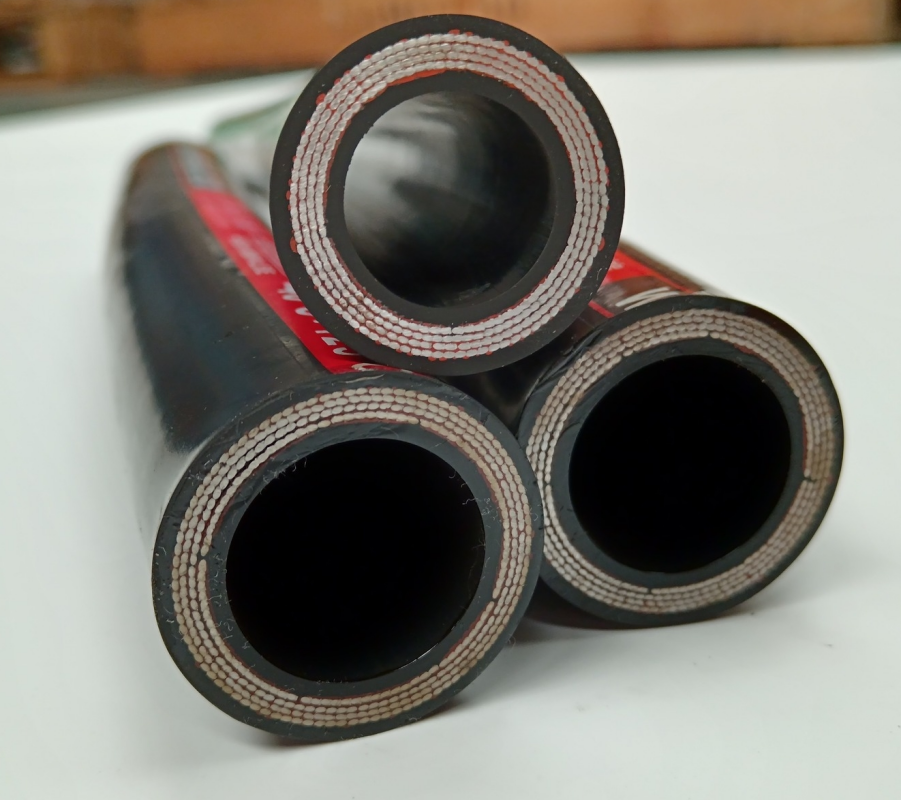
The dominant raw material for china car washing hoses is Polyvinyl Chloride (PVC), chosen for its cost-effectiveness, flexibility, and reasonable chemical resistance. However, higher-grade hoses utilize synthetic rubber compounds, notably Styrene-Butadiene Rubber (SBR) and Nitrile Butadiene Rubber (NBR), for improved flexibility at low temperatures and enhanced resistance to oils and solvents. TPU is emerging as a premium option, offering superior abrasion resistance and kink resistance, albeit at a higher cost. Reinforcement layers are critical. These typically consist of high-tensile polyester or nylon yarns spirally wound or braided within the hose structure. These yarns provide burst strength and prevent elongation under pressure.
Manufacturing processes vary depending on the material. PVC hoses are generally produced via extrusion, where molten PVC is forced through a die to create the hose profile. Rubber hoses are manufactured using a combination of extrusion and vulcanization. Vulcanization involves heating the rubber compound with sulfur to cross-link the polymer chains, enhancing strength, elasticity, and resistance to degradation. TPU hoses are often produced through extrusion or injection molding. Key parameters controlled during manufacturing include wall thickness consistency (critical for burst pressure), reinforcement yarn tension (affecting elongation and burst strength), and curing time/temperature (for rubber hoses, impacting material properties). Post-extrusion processes involve cutting, fitting with couplings (typically brass or plastic), and quality control checks for leaks and dimensional accuracy. Proper cooling rates are vital to avoid internal stresses that can lead to premature failure.

Performance & Engineering
The performance of a car washing hose is fundamentally governed by its ability to withstand internal pressure without failure. Force analysis involves assessing hoop stress (stress acting circumferentially around the hose) and longitudinal stress (stress along the hose length) under varying pressure conditions. Burst pressure is a critical engineering parameter, typically determined through hydrostatic testing according to industry standards. Flexibility is equally important, dictating ease of handling and maneuverability during use. Kink resistance minimizes flow restriction and maintains consistent water delivery. Abrasion resistance safeguards against damage from contact with vehicle surfaces and abrasive cleaning agents. Environmental resistance considers the hose's ability to withstand UV exposure, temperature fluctuations (from freezing to high summer temperatures), and chemical attack from detergents, soaps, and solvents.
Compliance requirements vary by region but generally include REACH (Registration, Evaluation, Authorisation and Restriction of Chemicals) for restricted substances, RoHS (Restriction of Hazardous Substances) for heavy metals, and phthalate-free formulations for consumer safety. Water hammer (pressure surge) is a significant concern. Hoses must be able to absorb these sudden pressure spikes without rupture. Material selection and reinforcement layer design play a crucial role in mitigating water hammer effects. Coupling integrity is also paramount; secure and leak-proof connections are essential for safe and efficient operation. Static electricity dissipation is a consideration in some applications to prevent sparking in flammable environments.
Technical Specifications
| Working Pressure (PSI) | Burst Pressure (PSI) | Tensile Strength (MPa) | Elongation at Break (%) |
|---|---|---|---|
| 150 | 450 | 15 | 300 |
| 200 | 600 | 20 | 400 |
| 250 | 750 | 25 | 450 |
| 300 | 900 | 30 | 500 |
| 350 | 1050 | 35 | 550 |
| 400 | 1200 | 40 | 600 |
Failure Mode & Maintenance
Common failure modes in car washing hoses include: Fatigue Cracking – caused by repeated flexing and pressure cycling, leading to crack initiation and propagation, particularly at connection points. Bursting – resulting from exceeding the working pressure or a weakened hose wall due to degradation. Kink Failure – localized stress concentration at a kink can lead to material rupture. UV Degradation – prolonged exposure to sunlight causes the polymer matrix to become brittle and lose its elasticity. Chemical Attack – exposure to harsh detergents and solvents can lead to swelling, softening, and cracking of the hose material. Abrasion Damage – external abrasion weakens the hose wall and increases susceptibility to leaks. Coupling Failure - corrosion or loosening of couplings can result in leaks or separation.
Preventative maintenance is crucial. This includes: Regular Inspection – visually inspect the hose for cracks, blisters, kinks, and abrasion damage. Pressure Monitoring – ensure that the operating pressure remains within the hose’s specified working pressure. Proper Storage – store the hose out of direct sunlight and away from extreme temperatures. Chemical Compatibility Check - verify that the cleaning chemicals used are compatible with the hose material. Coupling Tightness Check – periodically check and tighten couplings to prevent leaks. Rinsing – After each use, flush the hose with clean water to remove residual chemicals. If damage is detected, the hose should be replaced immediately. Avoid dragging the hose across abrasive surfaces. Properly drain the hose before storage to prevent internal corrosion or freezing.
Industry FAQ
Q: What is the impact of water temperature on the lifespan of a PVC car washing hose?
A: Elevated water temperatures can accelerate the degradation of PVC, leading to increased brittleness and reduced flexibility. Prolonged exposure to hot water (above 60°C / 140°F) will significantly shorten the hose's lifespan. Rubber and TPU hoses exhibit better temperature resistance, making them preferable for applications involving hot water.
Q: How does the reinforcement layer affect the burst pressure of the hose?
A: The reinforcement layer – typically polyester or nylon yarn – is the primary determinant of burst pressure. Higher yarn density and tensile strength directly correlate with increased burst resistance. The braiding angle and construction technique also influence performance. Spirally wound reinforcement provides good flexibility, while braided reinforcement offers higher burst strength.
Q: What are the key differences between SBR and NBR rubber hoses?
A: SBR (Styrene-Butadiene Rubber) is more cost-effective and offers good abrasion resistance. However, NBR (Nitrile Butadiene Rubber) provides superior resistance to oils, fuels, and solvents. NBR is the preferred choice for applications where exposure to these chemicals is anticipated.
Q: How important is UV resistance for an outdoor car wash hose?
A: UV resistance is critical for outdoor applications. Prolonged exposure to ultraviolet radiation causes polymer chain scission in PVC and rubber, leading to embrittlement, cracking, and loss of flexibility. UV stabilizers are added to the hose formulation to mitigate these effects, but their effectiveness diminishes over time. Darker colored hoses generally offer better UV protection than lighter ones.
Q: What coupling materials are most resistant to corrosion in a car wash environment?
A: Brass couplings offer excellent corrosion resistance in most car wash environments, although they can be susceptible to dezincification in some water chemistries. Stainless steel couplings provide superior corrosion resistance but are more expensive. High-quality plastic couplings (e.g., nylon or polypropylene) can be a cost-effective alternative, but their durability and resistance to cracking should be carefully evaluated.
Conclusion
China car washing hoses represent a complex engineering balance between cost, performance, and durability. Material selection, manufacturing processes, and reinforcement strategies all play critical roles in determining the hose's suitability for specific applications. Understanding the failure modes and implementing preventative maintenance procedures are essential for maximizing service life and minimizing downtime.
Future developments are likely to focus on enhancing UV resistance through advanced stabilizer technologies, increasing the use of TPU for improved abrasion and kink resistance, and incorporating smart features such as pressure sensors and leak detection systems. Continuous improvements in material science and manufacturing techniques will drive the evolution of these critical components within the automotive cleaning industry.