
Apr . 01, 2024 17:55 Back to list
china black wire braid hydraulic hose Performance Analysis

Introduction
China black wire braid hydraulic hose is a flexible conduit designed to transmit hydraulic fluid under pressure. This type of hose is a critical component in a wide range of industrial and mobile hydraulic systems, commonly used in construction machinery, agricultural equipment, material handling vehicles, and manufacturing processes. It’s distinguished by its reinforcement layers of high-tensile steel wire helically wound within the hose construction, providing exceptional pressure resistance and durability. Within the broader hose industry, wire braid hoses represent a cost-effective and reliable solution for medium to high-pressure applications, positioned between rubber hoses (lower pressure) and spiral-cut hoses (highest pressure) in terms of capability and price point. Core performance characteristics include burst pressure, working pressure, temperature range, and fluid compatibility. The prevalence of these hoses underscores the need for understanding their material science, manufacturing intricacies, performance parameters, and potential failure modes to ensure safe and efficient operation.
Material Science & Manufacturing
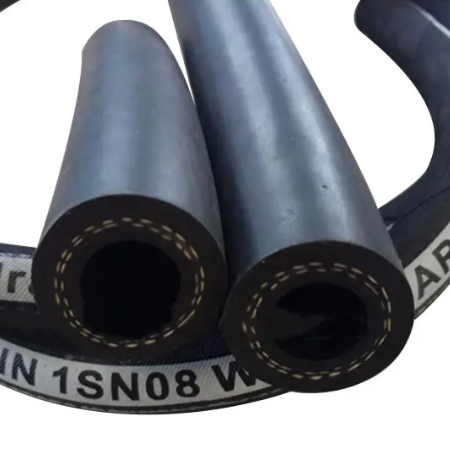
The construction of a china black wire braid hydraulic hose typically involves four key layers: the inner tube, the reinforcement layer, the outer cover, and potentially an intermediate layer. The inner tube is commonly composed of synthetic rubbers such as nitrile rubber (NBR) for oil-based hydraulic fluids, or ethylene propylene diene monomer (EPDM) for phosphate ester fluids, selected for their resistance to degradation and swelling. NBR offers excellent resistance to petroleum-based fluids, while EPDM exhibits superior resistance to heat, ozone, and weathering. The reinforcement layer consists of one or more braids of high-tensile steel wire, typically carbon steel. The number of braids directly impacts the hose’s pressure rating; increased braids provide greater strength. The outer cover is usually made of chloroprene rubber (CR) or a similar synthetic rubber, offering abrasion, weather, and oil resistance. An intermediate layer, often a fabric braid, can be incorporated to enhance flexibility and bonding between the inner tube and reinforcement.
Manufacturing processes begin with the extrusion of the inner tube. The steel wire braid is then helically wound over the extruded tube using a specialized braiding machine. Precise tension control during braiding is crucial to ensure uniform pressure distribution and prevent premature failure. An adhesive is applied between the tube and the braid to promote bonding. The outer cover is subsequently extruded over the braided reinforcement layer. Post-extrusion, the hose undergoes curing (vulcanization) in an autoclave or oven to crosslink the rubber compounds, enhancing their elasticity, strength, and temperature resistance. Key parameters monitored during manufacturing include wire tension, extrusion temperature, cure time, and dimensional accuracy. Quality control procedures include burst pressure testing, impulse testing, and dimensional inspection to verify compliance with industry standards.
Performance & Engineering
The performance of a wire braid hydraulic hose is governed by several critical engineering considerations. Burst pressure, typically four times the working pressure, is a fundamental specification indicating the hose’s ability to withstand extreme pressure spikes. Working pressure is the maximum continuous operating pressure specified by the manufacturer. Hose selection must account for the hydraulic system's maximum pressure, safety factors, and potential pressure surges. Temperature range is another crucial factor, as both high and low temperatures can degrade rubber compounds, reducing flexibility and increasing the risk of failure. Fluid compatibility is paramount; selecting a hose with an inner tube material resistant to the specific hydraulic fluid used is essential to prevent swelling, cracking, or chemical degradation.
Force analysis considers the internal pressure acting radially on the inner tube, counteracted by the tensile strength of the steel wire braid. The helical winding angle of the braid significantly affects its ability to resist hoop stress. Environmental resistance encompasses factors like ozone exposure, UV radiation, and chemical attack. Compliance requirements mandate adherence to industry standards such as SAE J517 (hydraulic hose – construction, performance, and testing), EN 853 (steel wire reinforced hydraulic hoses), and ISO 6898 (hydraulic fluids). Proper installation techniques, including correct bend radii and avoiding excessive twisting, are vital to ensure optimal performance and prevent premature failure. Fitting selection is also critical; mismatched fittings can lead to leakage or hose separation under pressure.
Technical Specifications
| Parameter | Unit | Typical Value (1/2" ID Hose) | Testing Standard |
|---|---|---|---|
| Inner Diameter | inch | 0.50 | SAE J1926 |
| Working Pressure | psi | 2000 | SAE J517 |
| Burst Pressure | psi | 8000 | SAE J517 |
| Temperature Range | °F | -40 to +212 | SAE J517 |
| Reinforcement | Layers | 2 | Visual Inspection |
| Cover Material | - | Chloroprene Rubber (CR) | ASTM D2000 |
Failure Mode & Maintenance
Wire braid hydraulic hoses are susceptible to several failure modes. Fatigue cracking, caused by repeated flexing and pressure cycling, is a common issue. The steel wire braid can experience localized stress concentrations leading to crack initiation and propagation. Abrasion, due to contact with abrasive surfaces, can damage the outer cover, exposing the reinforcement and increasing the risk of corrosion. Pinholes in the inner tube, often caused by contamination or chemical attack, can lead to fluid leakage. Hose separation, where the hose detaches from the fitting, is a critical failure mode often resulting from improper installation or mismatched fittings. Oxidation and degradation of the rubber compounds, particularly at elevated temperatures, can reduce flexibility and strength.
Preventative maintenance is crucial for extending hose life and ensuring safe operation. Regular visual inspections should be conducted to identify signs of abrasion, cracking, or swelling. Hoses should be replaced if any damage is detected. Proper routing and support are essential to prevent excessive bending and abrasion. Fluid contamination should be minimized through the use of filters and regular fluid changes. Hoses should be stored in a cool, dry environment away from direct sunlight and ozone sources. When replacing hoses, ensure the correct specifications are used and fittings are properly crimped. Periodic pressure testing can also help identify potential weaknesses before catastrophic failure occurs. Recordkeeping of inspection and replacement dates is recommended.
Industry FAQ
Q: What is the impact of using an incompatible hydraulic fluid with a nitrile rubber inner tube?
A: Using an incompatible fluid, such as glycol-based brake fluid, with a nitrile rubber (NBR) inner tube will cause significant swelling of the rubber. This swelling compromises the hose’s dimensional stability, reduces its burst pressure, and can lead to premature failure. The fluid breaks down the polymer chains within the NBR, leading to softening and loss of elasticity.
Q: How does the number of wire braids affect the hose’s performance?
A: Increasing the number of wire braids directly increases the hose’s pressure rating and resistance to hoop stress. Each additional braid layer provides greater tensile strength, allowing the hose to withstand higher internal pressures without deformation or rupture. However, increasing braid layers also reduces hose flexibility.
Q: What is the best practice for determining the appropriate bend radius for a wire braid hose?
A: The manufacturer’s specifications should always be consulted for the minimum bend radius. Exceeding the recommended bend radius creates excessive stress on the hose, particularly at the bend point, potentially leading to fatigue cracking and failure. A larger bend radius is generally preferred to minimize stress.
Q: How can I identify if a hose fitting is properly crimped?
A: A properly crimped fitting will exhibit a uniform and complete grip on the hose, without any gaps or indentations. Visual inspection should confirm that the crimp is symmetrical and that the fitting is securely attached. Leak testing under pressure is essential to verify the integrity of the connection.
Q: What is the role of the outer cover in protecting the hose?
A: The outer cover provides critical protection against abrasion, weathering, ozone exposure, and oil contamination. It shields the reinforcement layer from corrosion and mechanical damage, extending the hose’s service life. The cover material’s resistance to these environmental factors is crucial for maintaining hose integrity.
Conclusion
China black wire braid hydraulic hose represents a robust and versatile solution for medium to high-pressure hydraulic applications. Its performance is intricately linked to the material selection of its constituent layers – the inner tube's fluid compatibility, the steel wire braid's tensile strength, and the outer cover's environmental resistance. A comprehensive understanding of these material properties, coupled with adherence to proper manufacturing processes and installation techniques, is critical for ensuring reliable operation and preventing premature failure.
The continued optimization of wire braid hose technology focuses on enhancing burst pressure, improving flexibility, and extending service life. Future developments may include the incorporation of advanced materials, such as high-strength steel alloys and novel rubber compounds, alongside refined manufacturing processes. Maintaining strict adherence to international standards like SAE J517 and EN 853 will remain paramount in ensuring the quality and safety of these critical components in industrial and mobile hydraulic systems.