
Apr . 01, 2024 17:55 Back to list
china black hydraulic hose Performance Analysis

Introduction
China black hydraulic hose refers to reinforced rubber hoses manufactured in China, typically composed of synthetic rubber compounds and high-tensile strength steel wire reinforcement. These hoses are critical components in hydraulic systems across diverse industries, including construction, agriculture, manufacturing, and transportation. Their primary function is to convey hydraulic fluid under high pressure to transmit power and control. While often referred to simply as “black hydraulic hose,” variations exist based on reinforcement type, pressure rating, and end fitting configurations. The industry faces challenges concerning consistent quality control, material traceability, and compliance with international safety standards, requiring careful material selection and rigorous testing protocols. Core performance characteristics include burst pressure, working pressure, temperature range, and fluid compatibility, all of which directly impact system reliability and safety.
Material Science & Manufacturing
The core material of china black hydraulic hose is a synthetic rubber compound, predominantly based on nitrile rubber (NBR) for its excellent oil resistance, abrasion resistance, and temperature tolerance. Alternatives like styrene-butadiene rubber (SBR) may be used for specific applications demanding higher flexibility at lower temperatures. The rubber compound's formulation includes plasticizers, fillers (carbon black for reinforcement and UV protection), antioxidants, and curing agents (typically sulfur-based). Raw material quality, particularly the consistency of carbon black dispersion, significantly impacts hose performance.
Manufacturing begins with inner tube extrusion, where the rubber compound is forced through a die to create a seamless tube. This is followed by reinforcement application. The most common reinforcement method is spiral winding of high-tensile steel wire. The wire gauge and pitch (spacing) directly correlate to the hose's burst pressure rating. Alternative reinforcements include braided steel wire (offering greater flexibility) and textile cord (for lower-pressure applications). Subsequent layers involve a rubber cover extrusion, providing abrasion resistance, weather protection, and chemical compatibility. A key manufacturing parameter is the vulcanization process, where heat and pressure initiate cross-linking of the rubber molecules, transforming the plastic material into an elastic solid. Precise temperature and time control during vulcanization are crucial to achieve optimal mechanical properties. Post-vulcanization, the hose undergoes testing for pressure, leakage, and dimensional accuracy. End fittings, typically made of steel, are crimped onto the hose using specialized machinery, ensuring a secure and leak-proof connection. Quality control procedures at each stage are vital to ensure consistent product performance and minimize defects.
Performance & Engineering
The primary performance characteristic of hydraulic hose is its ability to withstand high internal pressure without failure. Force analysis involves calculating hoop stress within the hose wall, considering the internal pressure, hose diameter, and reinforcement structure. Burst pressure is typically rated at a 4:1 safety factor compared to the working pressure. Environmental resistance is also critical. Prolonged exposure to extreme temperatures (both high and low) can degrade the rubber compound, reducing its flexibility and increasing the risk of cracking. Exposure to UV radiation can cause surface oxidation and embrittlement. Chemical compatibility is paramount. Incompatible hydraulic fluids can cause swelling, softening, or degradation of the rubber, leading to leaks and failures. The hose’s bend radius must also be considered, as exceeding the minimum bend radius can cause kinking and internal damage. Compliance requirements vary by region, but generally adhere to standards like SAE J517 (USA) and EN 853 (Europe), specifying performance criteria and testing procedures. Failure analysis often reveals issues related to improper installation, exceeding pressure limits, or using incompatible fluids.
Technical Specifications
| Parameter | Unit | Typical Value (NBR, Spiral Wire Reinforcement) | Testing Standard |
|---|---|---|---|
| Working Pressure | MPa | 20 | SAE J517 |
| Burst Pressure | MPa | 80 | SAE J517 |
| Temperature Range | °C | -40 to +100 | SAE J517 |
| Inner Tube Material | - | Nitrile Rubber (NBR) | ASTM D2000 |
| Reinforcement | - | Spiral Steel Wire | SAE J517 |
| Cover Material | - | Nitrile Rubber (NBR) | ASTM D2000 |
Failure Mode & Maintenance
Common failure modes in china black hydraulic hose include fatigue cracking (caused by repeated flexing and pressure cycling), pinhole leaks (often initiated by abrasion or damage to the cover), and end fitting failures (resulting from improper crimping or corrosion). Delamination (separation of rubber layers) can occur due to poor bonding during manufacturing or exposure to incompatible fluids. Oxidation and ozone cracking are prevalent in hoses exposed to weathering. Internal corrosion can occur if moisture contaminates the hydraulic fluid. Failure analysis often involves microscopic examination of fracture surfaces to identify the root cause. Preventative maintenance is critical. Regular visual inspections should be conducted to check for signs of abrasion, cracking, or leaks. Hoses should be replaced if any damage is detected. Proper routing and support are essential to minimize bending stress. Hydraulic fluid should be regularly analyzed for contamination and replaced as needed. End fittings should be inspected for corrosion and tightened or replaced if necessary. Storage should be in a cool, dry, and dark environment to prevent degradation. Avoid kinking or sharply bending the hose during installation or operation.
Industry FAQ
Q: What is the impact of hydraulic fluid type on hose lifespan?
A: Hydraulic fluid compatibility is paramount. Using a fluid not specified by the hose manufacturer can cause swelling, softening, or degradation of the rubber compound, drastically reducing hose lifespan. Phosphate ester fluids, for example, require specialized hose constructions due to their aggressive chemical nature. Always verify fluid compatibility with the hose manufacturer’s data sheets.
Q: How does hose layline marking contribute to safety and maintenance?
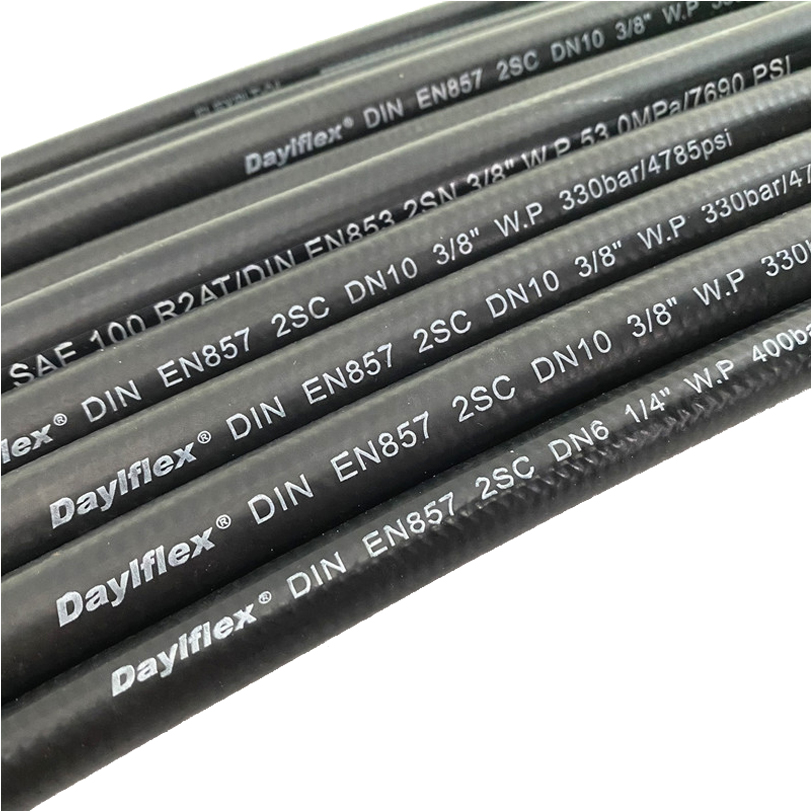
A: Layline markings, typically printed along the hose length, provide critical information such as manufacturer, manufacturing date, working pressure, and fluid type. This allows for traceability and facilitates proper maintenance scheduling and replacement. Missing or illegible layline markings compromise safety and traceability.
Q: What is the significance of impulse pressure rating in hydraulic hose selection?
A: Impulse pressure refers to the hose’s ability to withstand pressure spikes or surges in the hydraulic system. These pressure fluctuations can cause fatigue failure, even if the working pressure is within limits. Selecting a hose with an adequate impulse pressure rating is crucial for applications with frequent or significant pressure variations, such as those found in hammer drills or loaders.
Q: How do different reinforcement types (spiral vs. braided) affect hose performance?
A: Spiral wire reinforcement generally offers higher pressure ratings and better kink resistance compared to braided reinforcement. Braided reinforcement, however, provides greater flexibility and is often preferred in applications with tight bends. The selection depends on the specific system requirements and operating conditions.
Q: What is the best practice for storing unused hydraulic hose?
A: Unused hose should be stored in a cool, dry, and dark environment, away from direct sunlight, ozone sources, and extreme temperatures. Hose should be stored coiled loosely, avoiding sharp bends. Protect the hose from physical damage during storage, and ensure it’s inspected periodically for signs of degradation.
Conclusion
China black hydraulic hose represents a critical component in numerous industrial applications, demanding careful consideration of material science, manufacturing processes, and performance characteristics. The selection and maintenance of these hoses directly impact the reliability, safety, and efficiency of hydraulic systems. Understanding the potential failure modes and adhering to international standards are paramount to minimizing downtime and ensuring operational integrity.
Future advancements in hydraulic hose technology are likely to focus on developing more durable and chemically resistant rubber compounds, incorporating smart sensing capabilities for real-time monitoring of hose condition, and optimizing manufacturing processes for enhanced quality control. Continued adherence to rigorous testing protocols and industry standards will be crucial to maintaining the safety and performance of hydraulic systems utilizing these essential components.